 Snohomish
 Board & Batten in a Salt Air, High-Rain Climate
Ferndale sits close enough to the water that homes here deal with a different mix of weather than siding twenty miles inland. Salt-laden air off the Strait of Georgia, long stretches of driving rain, and short winter daylight that keeps north-facing walls damp for months all add up to a harder job for exterior siding than most manufacturers' generic installation guides assume. Board and batten is a striking look — clean vertical lines, strong shadow reveals, a modern-farmhouse or craftsman feel that works well on both older Whatcom County homes and new builds. But it is also a profile that, done wrong, traps water and fails early in exactly this kind of climate. Done right, it holds up for decades.
What Ferndale's Weather Actually Does to Siding
Three things drive most of the siding problems we see on service calls in this area:
- Salt air: corrodes exposed fasteners, staples, and untreated metal trim over time, especially on the sides of a house that face open water or prevailing wind.
- Driving rain: wind-driven rain doesn't just hit siding, it pushes water sideways and upward into seams, laps, and butt joints that would stay dry in a calmer climate.
- Moss and algae season: shaded walls, roof overhangs, and anything near mature trees stay damp long enough each winter for moss, lichen, and mildew to take hold on the wrong material.
None of these are exotic problems — they're just the normal cost of living in this part of Washington. The question is whether the siding and the installation were chosen with them in mind.
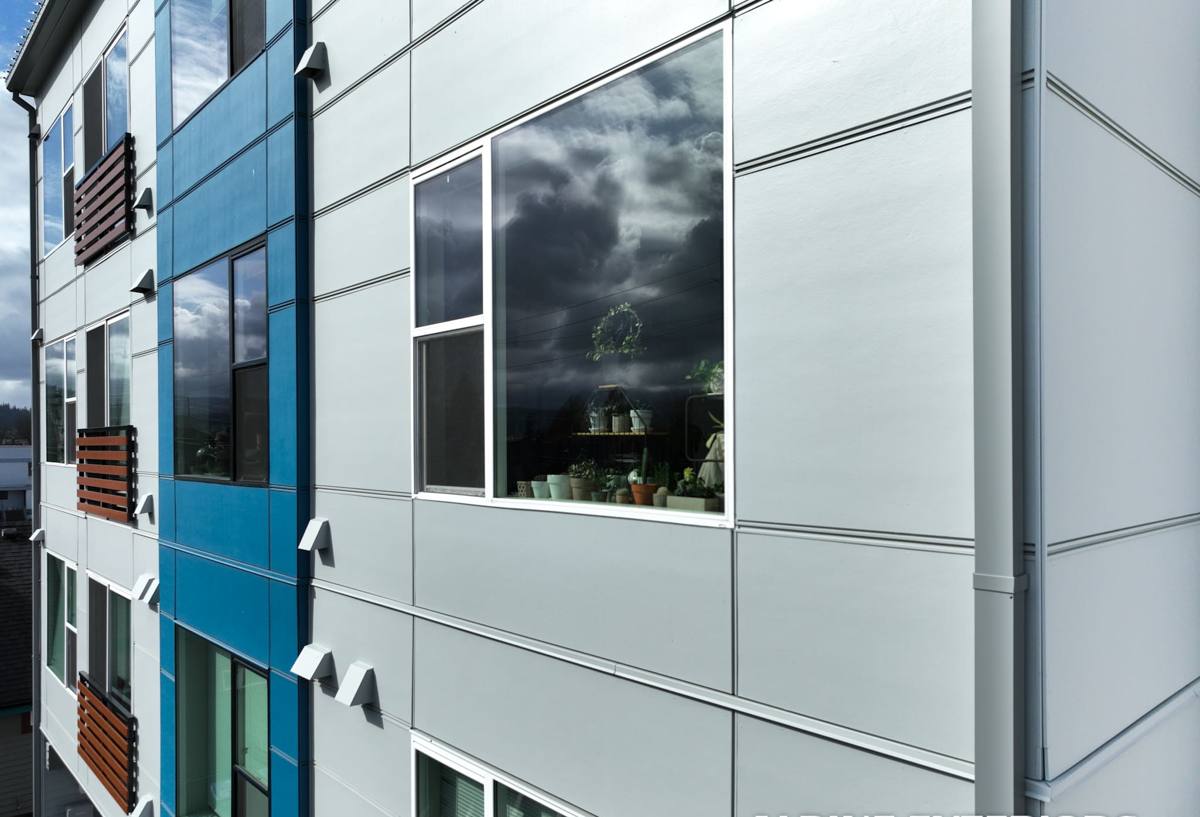
Why Vertical Profiles Need More Careful Water Management
Board and batten runs vertically, which changes how water moves across it compared to standard horizontal lap siding. Horizontal laps are designed to shed water downward, board over board, the way shingles do. A vertical panel-and-batten assembly relies more heavily on what's happening behind the boards and at the seams, because water can travel down a batten joint for the full height of a wall if there's nowhere for it to escape.
The Drainage Plane and Rainscreen Gap
In a climate with this much driving rain, we don't install board and batten directly against the wall sheathing. A correctly built wall behind vertical siding includes a weather-resistant barrier, properly lapped and taped, plus a drainage gap that lets any water that does get past the siding drip down and out instead of sitting against the sheathing. Skipping or shortchanging this step is the single biggest reason board and batten siding fails early in wet coastal climates — the siding itself can look fine while the wall behind it is rotting.
Flashing at Every Transition
Windows, doors, roof lines, and horizontal trim boards are where board and batten most often leaks. Each of these needs proper metal or self-adhered flashing integrated with the water-resistant barrier — not just caulk. Caulk is a maintenance item, not a waterproofing strategy, and in a climate with this much sustained rain it is not something we rely on as the primary defense.
Fastener and Hardware Choice
Because of the salt air here, fastener selection matters more than it would inland. We use corrosion-resistant fasteners rated for coastal exposure, and we pay attention to any exposed metal trim, flashing, or hardware so it won't streak, stain, or fail years before the siding does.
Why We Install Only James Hardie Fiber Cement for This Look
Board and batten can be built from several materials — cedar, engineered wood, vinyl, and fiber cement all offer some version of the look. We install James Hardie fiber cement exclusively, and for board and batten in this specific climate the reasons are concrete, not just brand preference:
- Fiber cement doesn't feed moss and mildew the way raw or lightly treated wood does. It's not organic material, so it doesn't give algae and moss a food source the way cedar can.
- Hardie's ColorPlus factory finish is baked on under controlled conditions, which holds up better against sustained damp exposure than field-applied paint, and it's backed by its own finish warranty.
- Hardie manufactures a formulation engineered specifically for wetter, milder climates like ours, rather than a one-size-fits-all product sold nationwide.
- It's non-combustible, which matters for insurance and code considerations even in a region where wildfire isn't the primary local risk.
- The product carries a strong, transferable manufacturer warranty when installed to spec — which is a real financial detail if you sell the home before the siding's useful life is up.
We don't install LP SmartSide, vinyl, or cedar board and batten. That's not because those products have no legitimate use — it's because we've standardized on one system we can install correctly, warranty confidently, and stand behind for every home we touch in this climate.
How Board & Batten Options Compare in This Climate
| Material | Moss/Algae Resistance | Salt Air Durability | Long-Term Maintenance |
|---|---|---|---|
| James Hardie fiber cement | High — non-organic surface, factory finish | High with correct fasteners and trim | Occasional wash; repaint only when the owner chooses a color change |
| Cedar board and batten | Lower — organic surface, moss-prone in shade | Moderate — needs regular sealing near salt air | Recurring staining/sealing on a multi-year cycle |
| Vinyl board and batten | Moderate — can host surface mildew in damp shade | Moderate — can become brittle over time | Low routine maintenance, but limited repair options if damaged |
| Engineered wood (LP SmartSide style) | Moderate — depends heavily on finish upkeep | Moderate — edges are moisture-sensitive if coating fails | Finish and edge sealing need consistent attention |
This table reflects general material behavior, not a specific product test — but it's consistent with what we see on service calls across Whatcom County homes of different ages and siding types.
Our Process for a Ferndale Board & Batten Project
What We Look at Before We Quote
Because board and batten depends so much on what's happening behind the boards, we don't quote it off a photo or a phone call. A proper assessment includes checking the current wall assembly, looking for existing moisture damage (especially on shaded or water-facing walls), evaluating window and door flashing conditions, and confirming what's actually feasible given the home's construction.
Installation Sequence
- Remove existing siding and inspect sheathing for rot, especially around windows, corners, and the base of walls.
- Repair or replace any damaged sheathing before anything new goes up — covering a problem never fixes it.
- Install a weather-resistant barrier, correctly lapped and sealed at every seam and penetration.
- Add a drainage gap/furring system appropriate for a vertical profile in a high-rain climate.
- Flash all windows, doors, and horizontal transitions before siding installation begins.
- Install Hardie panels and battens per manufacturer spec, with corrosion-resistant fasteners set to correct depth and spacing.
- Final inspection of caulking, trim, and any penetrations (vents, fixtures, hose bibs) that could otherwise become a leak point.
Skipping steps in this sequence is exactly how board and batten projects fail in coastal climates — usually two to five years in, once moisture has had time to do quiet damage behind siding that still looks fine from the curb.
Maintenance in a Moss-Prone, Salty Climate
Fiber cement board and batten is low-maintenance compared to wood, but "low-maintenance" isn't "no-maintenance" in this climate. A short annual routine keeps it looking right and catches small problems before they become expensive ones:
- Rinse siding annually, and more often on shaded, moss-prone walls facing away from the sun.
- Keep gutters clear so overflow doesn't run down and pool behind battens near roof lines.
- Trim back vegetation and tree limbs that keep a wall shaded and damp longer than the rest of the house.
- Re-caulk high-movement joints (around windows and trim) on the schedule your installer recommends, even though ColorPlus finish itself doesn't need repainting.
- Watch for streaking near metal trim or fasteners, which can be an early sign of a corroding component that should be replaced before it stains the finish.
Why a Crew That Already Works Ferndale Matters
Board and batten installation isn't fundamentally different from one Washington town to the next — but the judgment calls involved absolutely are. A crew that regularly works in Ferndale and the surrounding parts of Whatcom County already knows which wall orientations take the worst of the wind-driven rain, which older homes in the area tend to have moisture issues hiding behind existing siding, and how much drainage detailing is genuinely necessary here versus what a generic installation manual assumes for a drier region. That local pattern recognition shows up in fewer surprises during tear-off, fewer change orders, and a wall assembly built for the weather it will actually face rather than the weather described in a national spec sheet.
Cost Factors for a Ferndale Board & Batten Project
Every board and batten project is priced individually after a walkthrough, but the factors that move the number up or down are consistent:
| Factor | Why It Matters |
|---|---|
| Condition of existing sheathing | Rot repair found during tear-off adds labor and material not visible from the outside |
| Wall height and accessibility | Multi-story or hard-to-access walls take longer and need more equipment |
| Amount of trim and window/door detail | Every transition needs individual flashing work, which adds time |
| Wall exposure to wind and rain | Water-facing walls typically get more careful (and more time-intensive) detailing |
| Full replacement vs. partial/addition work | Matching an existing installation correctly can take more planning than a full tear-off |
If you're weighing board and batten against other Hardie profiles for your home, the honest answer is that it costs somewhat more than plain lap siding to install correctly, mostly because of the extra flashing and drainage detailing a vertical profile needs — not because the material itself costs dramatically more.
If you're in Ferndale and thinking about board and batten siding, we're happy to take a look at your home, walk you through what your specific walls need, and give you a straightforward, no-pressure estimate — no obligation either way.