 Snohomish
 Why Everett Roofs Wear Out Faster Than the Manufacturer's Chart Says
Every asphalt shingle comes with a lifespan estimate printed on the wrapper, and almost none of those numbers were calculated with an Everett roof in mind. Homes here sit close enough to Puget Sound to pick up salt-laden air, which speeds up corrosion on anything metal — nail heads, flashing, gutter fasteners, even the staples holding down underlayment. Add driving rain that comes in sideways during fall and winter storms, and a long, shaded moss season that can run eight months or more depending on tree cover and sun exposure, and you have three separate stresses working on the same roof at the same time. None of them are dramatic on their own. Together, over ten or fifteen years, they're why we see roofs in this area fail years before a similar roof would in a drier, calmer climate.
A roof replacement that's built for Everett has to account for all three: materials and fasteners that resist salt-air corrosion, detailing that keeps wind-driven rain from finding a way in at valleys and wall intersections, and a plan for moss that doesn't just delay the problem to next season.
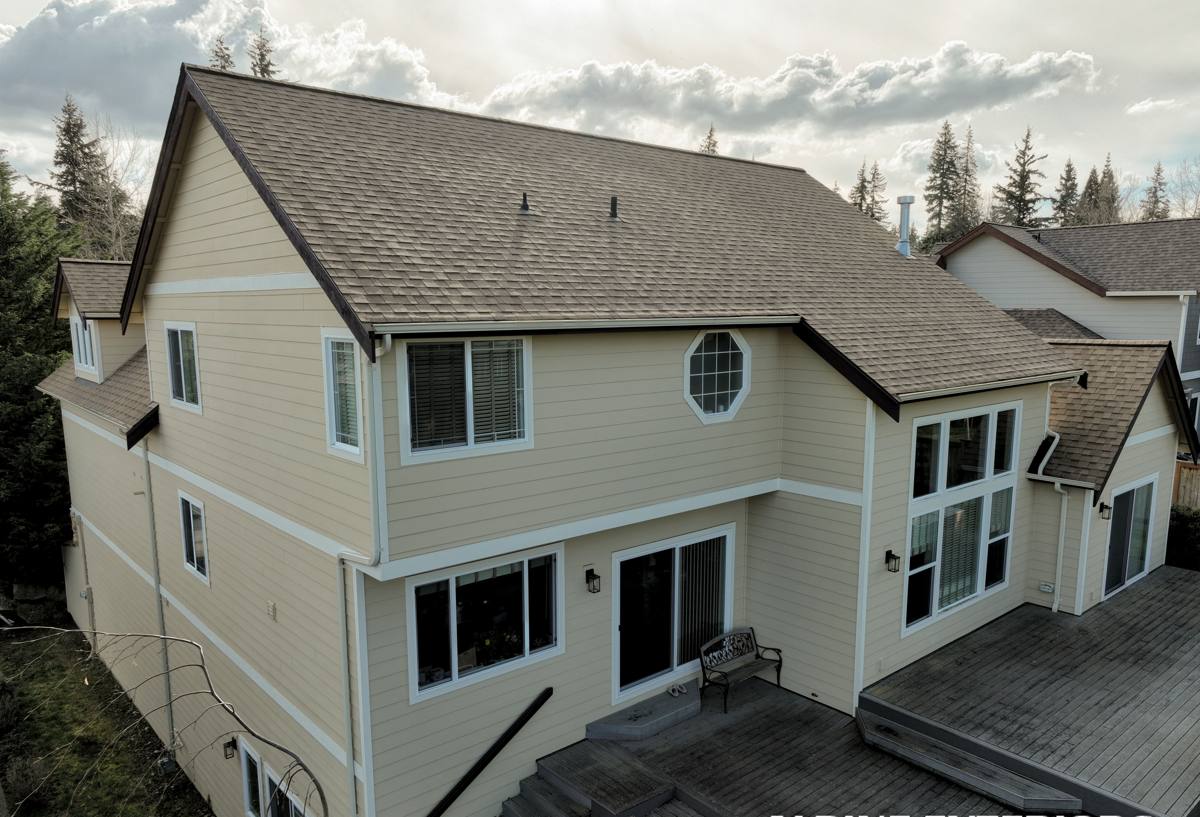
Signs Your Roof Has Moved Past Repair
Not every roof problem means a full replacement. But there's a point where patching becomes throwing money at a roof that's already lost the fight. Watch for:
- Granule loss heavy enough to leave bald, shiny patches on the shingle surface
- Moss established under shingle tabs rather than just sitting on top of them — it's already lifted the seal
- Soft or spongy spots when you walk the roof, which usually means the decking underneath is wet or rotting
- Daylight visible through the roof deck from inside the attic
- Shingles that are curling, cupping, or cracking across large sections rather than in one isolated spot
- Interior stains near exterior walls or around chimneys and vents that keep coming back after repairs
- A roof already on its second or third round of patch repairs in the same few spots
If you're seeing two or more of these, it's worth getting a straight answer on whether repair still makes sense or whether you're better off putting that money toward a replacement that solves the problem instead of managing it.
What a Correct Replacement Actually Involves
Tear-Off and Deck Inspection
We don't install new roofing over old. A full tear-off is the only way to actually see the decking underneath — and in a climate with this much sustained moisture, hidden rot under a layer of old shingles is common enough that skipping this step is how "new roofs" fail in five years instead of twenty. Any soft, delaminated, or rotted decking gets replaced before anything new goes down, not covered up.
Underlayment That Matches the Rain, Not Just the Code Minimum
Synthetic underlayment across the full roof, with self-adhering ice-and-water shield at eaves, valleys, and around every penetration — pipes, skylights, chimneys — is the baseline we work to here. Those are the spots where wind-driven rain is most likely to get pushed uphill under a shingle edge, and it's cheap insurance against a very expensive interior leak later.
Ventilation That Accounts for a Long Wet Season
Balanced intake and exhaust ventilation matters everywhere, but it matters more in a climate where the attic rarely gets a long dry stretch to fully release trapped moisture. Poor ventilation here doesn't just shorten shingle life from below — it's a direct path to condensation, mold, and premature deck rot, regardless of how good the shingles on top are.
Flashing and Fasteners That Won't Corrode Out From Under the Roof
Step flashing, counter-flashing, and kick-out flashing at wall and roof intersections are where most "mystery leaks" actually start. We detail these properly rather than relying on caulk to do a flashing's job, and we use fasteners rated to hold up to salt-air exposure rather than the cheapest box on the shelf — the difference shows up as rust streaks and loosened shingles years before it shows up as a leak you'd notice right away.
Material Options for This Climate
There's no single "best" roofing material — there's the right material for your roof's exposure, your budget, and how much long-term maintenance you're willing to keep up with. Here's how the main options compare for a coastal, moss-prone climate like Snohomish County's:
| Material | Typical Lifespan | Moss/Algae Resistance | Maintenance | Relative Cost |
|---|---|---|---|---|
| Architectural asphalt shingle | 25–30 years | Moderate — algae-resistant granule options available | Periodic moss removal, gutter checks | $ |
| Standing-seam metal | 40–50+ years | High — sheds debris, resists moss buildup | Low; occasional fastener/sealant check | $$$ |
| Synthetic shake/slate | 30–50 years | High, depending on product | Low to moderate | $$–$$$ |
Architectural asphalt shingle remains the most common choice for good reason — it balances upfront cost, appearance, and performance well when it's installed with the underlayment and flashing details above. We do offer algae-resistant shingle lines with copper or zinc granules for homes with heavy tree cover, since that's one of the few product-level features that directly addresses moss and algae staining rather than just delaying it. Metal and synthetic products cost more up front but ask less of you over the life of the roof, which matters if you'd rather not think about your roof again for decades.
What Drives the Cost of an Everett Roof Replacement
| Factor | Why It Matters |
|---|---|
| Roof size and pitch | Steeper roofs take longer to work safely and use more material per square |
| Number of existing layers | Tear-off of multiple old layers adds labor and disposal cost |
| Decking condition | Rot found during tear-off means plywood replacement before anything else can happen |
| Roof complexity | Valleys, dormers, and multiple roof planes multiply flashing and labor time |
| Material choice | Asphalt, metal, and synthetic products carry very different price points |
| Access and staging | Tight lots, tall roofs, or limited driveway access can affect equipment and labor costs |
We won't quote a number off a phone description — a roof this exposed to weather deserves an actual look before we tell you what it'll cost. What we can promise is a written estimate that breaks out these factors so you know what you're paying for, not a lump-sum number with no explanation behind it.
How Our Process Works
- Inspection and estimate — we walk the roof, check the attic, and give you a written scope and price before any work starts
- Material selection — we walk through the options above based on your budget, roof exposure, and how much upkeep you want going forward
- Scheduling and permitting — we handle the permit and plan around the weather rather than working through an open roof during a storm system
- Tear-off and deck inspection — full removal of old roofing, with any deteriorated decking replaced before we move forward
- Underlayment, flashing, and ventilation — installed to the standard described above, not the bare minimum to pass inspection
- Final walkthrough and cleanup — magnet sweep for stray fasteners, full site cleanup, and a walkthrough so you know what was done and why
Living With Moss Season After the New Roof Goes On
A new roof doesn't make moss stop trying — it just gives you a much better starting position. Zinc or copper strips installed near the ridge let rainwater carry trace metal down the roof slope each time it rains, which suppresses new moss growth without any effort on your part. Keeping overhanging branches trimmed back improves both sun exposure and airflow, which are the two things moss needs least. When moss does need to be removed, a soft-brush or low-pressure approach protects the granule layer; pressure washing shingles strips granules and shortens the roof's life, which is why we treat it as a step to avoid rather than a standard maintenance move.
Why It's Worth Hiring a Crew That Already Works in Everett
Roofing crews who work this specific coastal stretch of Snohomish County day in and day out develop a feel for it that's hard to replicate from a general playbook. That means recognizing which roof orientations catch the worst of the wind-driven rain, knowing how much moss buildup is typical versus a sign of a deeper drainage problem, and understanding the local permitting process well enough that it doesn't slow your project down. It also means we're not guessing at what "normal" wear looks like here — we see the same climate stress on every roof we work on in this area, which shapes how we detail flashing, choose fasteners, and talk you through material trade-offs.
Questions Worth Asking Before You Hire
- Are they licensed and insured, and will they show you proof without being asked twice?
- Do they do a full tear-off and deck inspection, or do they sometimes roof over existing layers?
- Is the estimate written and itemized, or a single verbal number?
- What's the warranty structure — manufacturer material warranty versus their own workmanship warranty — and what does each actually cover?
- Do they use fasteners and flashing rated for coastal, salt-air exposure, or standard-grade materials regardless of location?
- Can they explain their ventilation plan for your specific attic, not just a generic answer?
A contractor who answers these clearly and without hesitation is a good sign. One who gets vague or rushes past them is worth a second opinion.
If your roof is showing its age or you just want an honest read on how much time it has left, we're glad to come out, walk it with you, and give you a straightforward estimate — no pressure, no hard sell. Use the form below to get started.