 Snohomish
 Energy-Efficient Windows Built for Woodinville's Climate
Woodinville sits in a stretch of Western Washington where homes take a steady beating from moisture, not from any single dramatic storm. Driving rain comes sideways off the wind, salt-tinged air works its way inland from the Sound, and a long, wet moss season keeps roofs, siding, and window trim damp for months at a time. Windows are one of the first places that damage shows up — not always as a leak, but as a slow fog between panes, a sash that swells and sticks, or a heating bill that keeps climbing even though the furnace is fine.
When we talk about "energy-efficient windows" for a Woodinville home, we're really talking about two things at once: the window unit itself, and how well it's installed into the wall. A high-efficiency window with a sloppy installation will still leak air and water. A modest window installed correctly, with proper flashing and sealing, will often outperform it. We treat both halves of that equation as equally important, because in this climate, the installation is what determines whether the window's efficiency rating actually holds up over ten or twenty years.
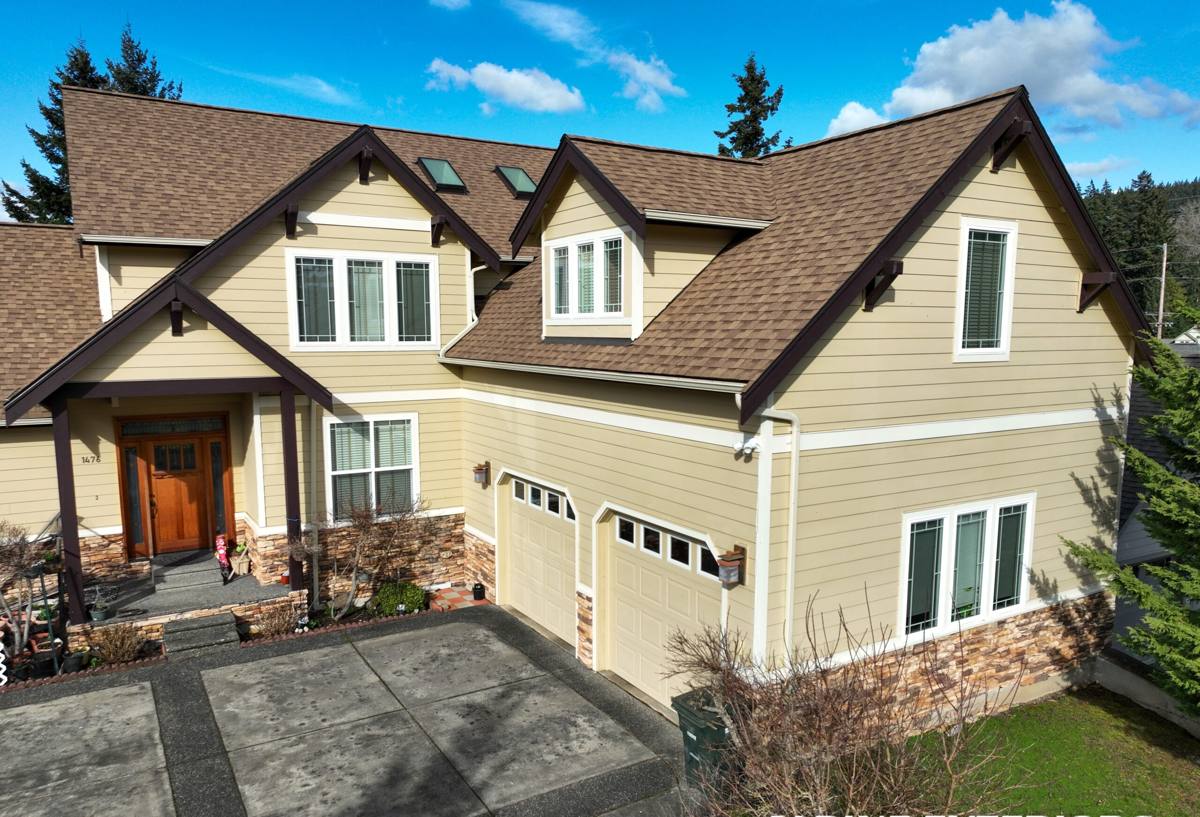
What Local Homes Actually Need From Their Windows
Most of the window problems we see in this area aren't about the glass — they're about what's happening around the frame. Wood-frame windows that were installed decades ago, before local builders fully accounted for wind-driven rain, are especially prone to slow water intrusion at the sill and corners. That moisture doesn't just fog the glass; it can work into the surrounding wall framing and sheathing, where it's much more expensive to fix.
The three things we prioritize
- Water management first. Flashing, sill pans, and weather-resistive barrier integration matter more here than in drier climates — a window that's watertight but poorly insulated is a smaller problem than one that's efficient but leaking.
- Air sealing at the rough opening. Gaps around the frame are a major source of heat loss and condensation risk, and they're invisible once trim is back on, so they have to be done right the first time.
- Glass and frame performance matched to exposure. A window on a wind-exposed wall doesn't need the same spec as one tucked under an eave — we size the package to the wall, not the other way around.
Signs a Woodinville Home's Windows Are Underperforming
Homeowners often call us about a drafty room or a high energy bill, and the windows turn out to be the source once we look closer. Some signs are obvious; others take a trained eye.
- Condensation or fogging between the panes of a double-pane window — a sign the seal has failed and the insulating gas has escaped
- Soft or discolored trim and sill boards, often the first visible clue of water getting behind the frame
- Sashes that stick, won't latch fully, or have visibly sagged out of square
- Noticeable draft near the frame edge on a windy day, even with the window fully closed
- Rooms that are harder to heat or cool than the rest of the house, especially ones with older or larger window openings
- Visible daylight or gaps around the exterior trim where caulking has cracked or pulled away
Any one of these is worth a look before it turns into a wall repair. Moisture problems in this climate rarely stay small if they're ignored through a wet season.
What a Correct Window Installation Involves
Replacing a window is straightforward in concept and easy to do poorly in practice. The steps that separate a durable installation from one that fails in five years are mostly hidden once the job is finished, which is exactly why they matter.
Our process
- Assessment. We check the existing opening for rot, water staining, or framing damage before quoting anything — this tells us whether it's a straight window swap or if sill and framing repair needs to happen first.
- Removal. The old window and any damaged trim or sheathing come out carefully so we can see the condition of the rough opening, not just guess at it.
- Sill pan and flashing. We install a sloped sill pan and integrate flashing with the existing weather-resistive barrier so any water that does reach the opening drains back out, not into the wall.
- Air sealing. The gap between the window frame and rough opening is sealed with an appropriate low-expansion foam or backer rod and sealant — never packed solid, which can bow the frame.
- Setting and shimming. The window is set plumb, level, and square, and shimmed at the manufacturer's specified points so the sash operates correctly for the long term.
- Exterior trim and sealant. Trim is reinstalled or replaced and sealed with a sealant rated for exterior exposure and movement, not a generic caulk that will crack within a year or two.
- Interior finish. Interior trim and any drywall or paint touch-up is completed to match the surrounding finish.
Choosing the Right Window for a Woodinville Wall
Not every window on a house needs the same spec. Orientation, wall exposure, and how sheltered the wall is by the roofline all affect what makes sense.
| Factor | Why It Matters Locally | What We Look At |
|---|---|---|
| Wall exposure to wind and rain | Unsheltered walls take more direct driving rain and need more robust flashing detail | Roof overhang depth, prevailing wind direction, wall orientation |
| Frame material | Some materials handle sustained moisture and temperature swings better than others with less upkeep | Maintenance expectations, budget, appearance goals |
| Glass package | Double- vs. triple-pane and low-E coatings affect both comfort and condensation resistance | Room use, existing insulation, budget |
| Existing opening condition | Rot or undersized flashing at the old opening changes the scope before a new window even goes in | Sill and framing inspection during assessment |
| Operability style | Casement windows seal tighter against wind-driven rain than some slider styles | Room location, ventilation needs, ease of use |
We'll walk through these trade-offs honestly rather than pushing the highest-margin option. A well-installed mid-range window will usually outperform a premium window installed without proper flashing — so we spend the conversation on both the product and the installation, not just the product.
Frame Materials: Honest Trade-Offs
Vinyl frames are common, affordable, and handle moisture well with minimal upkeep, though they have less structural rigidity for very large openings. Fiberglass frames hold up well to temperature swings and moisture with excellent long-term stability, at a higher price point. Wood frames offer a traditional look and good insulating value but require regular exterior maintenance to keep moisture from reaching the wood in a climate this wet — that upkeep burden is a real cost, not a hypothetical one, and we tell homeowners that plainly before they choose it. There's no universally "best" material; there's a best fit for the specific wall, budget, and how much maintenance a homeowner wants to take on.
Why the Installation Matters More Than the Sticker
Energy ratings like U-factor and Solar Heat Gain Coefficient describe the window as a manufactured unit tested in a lab. They don't describe what happens once it's set into a real wall in a real Whatcom County storm. A window with an excellent U-factor still loses that performance if air is leaking around the frame, and it still risks water damage if the flashing wasn't integrated correctly with the wall's drainage plane. This is the gap between a window's rated performance and its actual performance — and it's closed entirely by installation quality, not by the product spec sheet.
We install to the manufacturer's specified method for each product line, because deviating from it can void the warranty and, more importantly, can compromise how the window sheds water. In a region where homes see rain for a large part of the year, that's not a detail we're willing to shortcut.
Why Hire a Crew That Already Works This Area
A crew that regularly works Whatcom County wall assemblies has already seen how local construction from different decades handles moisture — where older wood-frame installations tend to fail, which flashing details hold up through a real wet season, and how to sequence window work around siding so the whole envelope stays protected during the job. That familiarity shows up in fewer surprises once the old window comes out and in a finished installation that's detailed for the weather it actually has to handle, not a generic specification.
It also matters for accountability. A local, established contractor is easy to reach if a question comes up after the job, and stands behind the workmanship on windows they installed — not just windows they sold.
Maintaining Efficient Windows Through a Wet Climate
A correctly installed window still benefits from basic upkeep, especially given the region's long damp season:
- Inspect exterior caulking and sealant annually for cracking or gaps, particularly after the first winter
- Keep weep holes and drainage tracks clear of debris and moss so water can exit as designed
- Watch for soft spots in exterior trim or sills, which can signal water finding a new path
- Operate sashes periodically through the year so hardware and seals don't seize or compress unevenly
- Address any condensation between panes promptly — it won't resolve on its own and signals a failed seal
If you're noticing drafts, fogged glass, or a window that's simply past its working life, we're happy to take a look and give you a straightforward assessment of what's actually going on — no pressure, no upsell. Reach out for a free estimate and we'll walk your home's windows with you in person.