 Snohomish
 Edmonds' Marine Climate: What Siding Is Really Up Against
Edmonds sits close enough to Puget Sound that homes here deal with a different set of siding stresses than a house fifty miles inland. Salt-laden air, wind-driven rain off the water, and a moss season that runs most of the year all work on exterior materials at the same time, and none of it really takes a break the way it might elsewhere in Snohomish County. Siding built for a drier climate, or installed without these specifics in mind, tends to show its age here faster than it should — and re-siding is expensive enough that it's worth getting the material and the install right the first time.
Salt-Laden Air Off Puget Sound
Homes closer to the water pick up airborne salt that settles on siding, trim, and fasteners. Over years, that salt content speeds up corrosion on anything metal — nail heads, flashing edges, hose bib penetrations — and it can accelerate the breakdown of coatings that aren't formulated to handle it. It's rarely dramatic; it's a slow, steady wear pattern that shows up as rust bleed, chalking, or a finish that fades unevenly compared to a similar house set back from the water.
Driving Rain and Wind-Driven Wetting
Rain in this part of Washington doesn't always fall straight down. Storms off the Sound push rain sideways into wall assemblies, which means siding here has to work as a drainage system, not just a weather-facing skin. Laps, joints, and penetrations that would be marginal in a calmer climate become real moisture entry points when wind-driven rain is a regular event rather than an occasional one.
A Moss Season That Doesn't Really End
Between the marine humidity and the tree cover common around Edmonds and the rest of Snohomish County, moss and algae growth on siding is close to a year-round condition rather than a seasonal one. That growth holds moisture against the surface longer than it would otherwise sit there, which matters a lot on materials that aren't dimensionally stable or that rely on a field-applied coating to keep water out.
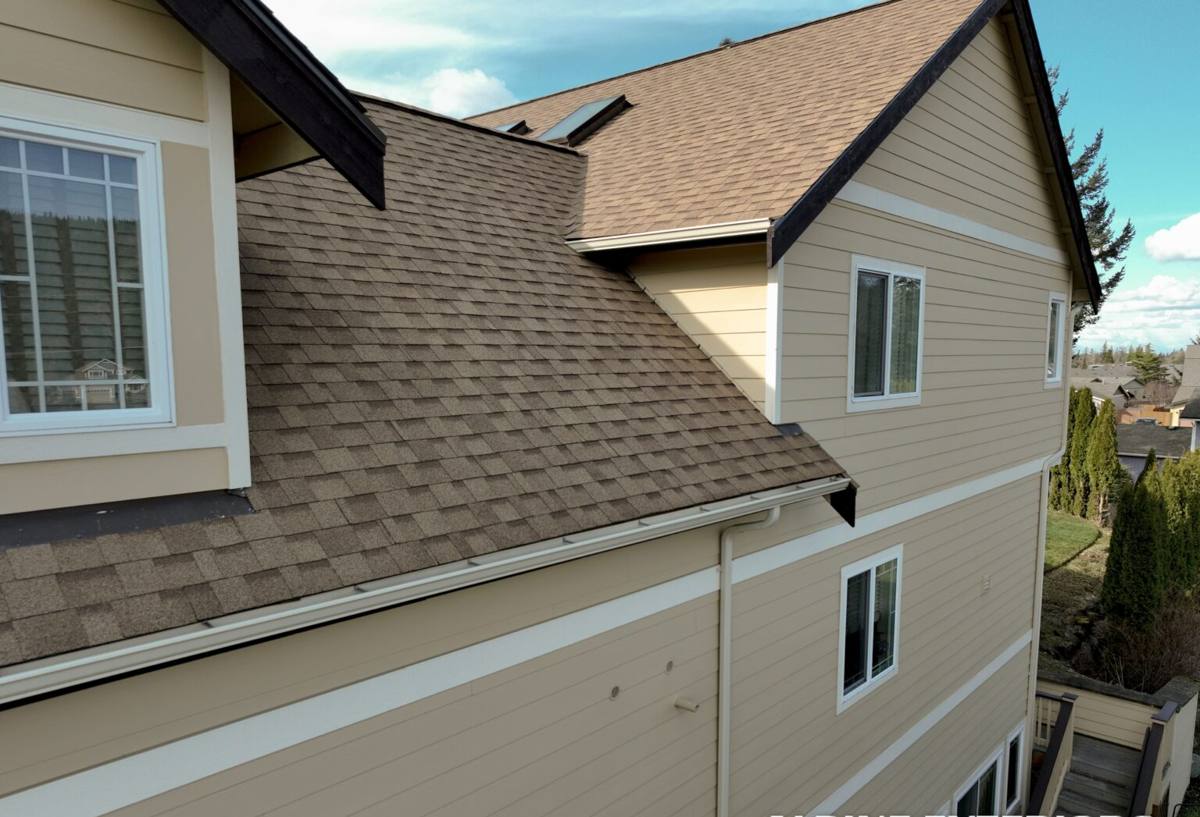
Why We Standardized on James Hardie for This Area
We install James Hardie fiber cement siding exclusively — not as a sales preference, but because it's the product that holds up to what this specific climate does to a house over 20, 30, and 40 years.
Non-Combustible, Dimensionally Stable Fiber Cement
Fiber cement doesn't expand and contract with moisture the way wood does, and it doesn't soften, warp, or invite insect damage the way some engineered wood products can. That stability matters directly in a climate where the material is wet more often than it's dry — siding that swells and shrinks with every rain event opens up joints and fastener holes over time, and that's exactly where water gets behind the wall.
ColorPlus Factory Finish vs. Field-Painted Siding
James Hardie's ColorPlus finish is baked on at the factory under controlled conditions, which gives it better adhesion and UV resistance than a coat of paint applied on site, especially in a climate where you're fighting humidity and moss growth through much of the paint season. It also means touch-up work and color-matching are handled with a dedicated Hardie product rather than a can of whatever exterior paint is on hand.
HZ5 Engineering for the Pacific Northwest
James Hardie engineers its HardieZone products by climate region, and the HZ5 line is built for areas with regular freeze-thaw cycling and sustained moisture exposure — which describes Edmonds and the rest of the Puget Sound corridor well. That's a meaningful difference from a one-size-fits-all siding product; the formulation and installation specs are matched to what the material will actually face here.
What a Correct Installation Looks Like Here
Hardie siding is only as good as the assembly behind it. In a wet, wind-driven climate, the details most homeowners never see are the ones that decide whether the siding performs for its full service life or starts causing problems within a decade.
Drainage Plane and Rainscreen Gap
Correct installation starts with a weather-resistive barrier installed and lapped properly, then a drainage gap — often a rainscreen product — behind the siding itself. That gap lets any moisture that gets past the siding drain and dry out instead of sitting against the sheathing. Skipping or shortcutting this step is one of the most common causes of hidden rot behind siding that looks fine from the curb.
Flashing, Clearances, and Fastening
Every window, door, deck ledger, and roof-to-wall intersection needs flashing detailed to shed water outward, not into the wall. Hardie also specifies minimum clearances from grade, roof lines, and decks, along with fastener type, spacing, and depth — details that change depending on how exposed a given wall is to wind and rain. A crew that treats every wall the same way regardless of orientation is skipping a step that matters more here than in a milder climate.
Joint and Caulk Details That Matter in Wet Climates
Butt joints, corners, and trim intersections need the right sealant and the right gap, not just a bead of caulk. In a marine climate, a joint sealed too tight with the wrong product can trap moisture instead of letting it escape, while a joint left open or under-detailed lets wind-driven rain straight through. Getting this balance right takes more attention than it does in a drier region.
Our Process, From Estimate to Finished Job
We keep the process straightforward and honest about what your home actually needs:
- An on-site walk-through where we look at your current siding, trim, flashing, and any moisture or moss issues already visible.
- A written estimate that spells out the Hardie product line, profile, and color, along with the scope of tear-off, prep, and trim work.
- Prep work — repairing or replacing any water-damaged sheathing before new siding goes up, not after.
- Installation to Hardie's published specifications and local code, including the drainage, flashing, and fastening details specific to your home's exposure.
- A final walk-through so you know what was done and what to expect from the finish over time.
We don't upsell products we don't install, and we don't cut corners on the parts of the job that don't show up until years later. If weather delays a step — which happens on this side of the state more than people expect — we'd rather push a start date than rush a drainage detail.
Why a Crew That Already Works Edmonds Matters
Siding installation isn't identical from one town to the next, even within the same county. A crew that regularly works in and around Edmonds already has a feel for the exposure difference between Sound-facing and inland-facing walls, the permitting expectations of the local jurisdiction, and the kind of moss and moisture damage that tends to show up first on homes in this specific area. That familiarity shortens the learning curve on your job — there's no guesswork about how much clearance a given wall needs or whether a particular detail is worth the extra time.
It also means scheduling around this area's weather windows isn't a new problem for us, and we're not driving in from out of the area for a callback. If a question comes up two or three years after installation, we're already working jobs nearby.
What It Costs: Factors That Move the Number
Every Hardie project is priced around the specifics of the house, not a flat rate per square foot. The table below covers the main factors that move a project up or down in cost.
| Cost Factor | Why It Matters |
|---|---|
| Tear-off vs. install over existing siding | Removing old siding, disposing of it, and repairing sheathing underneath adds labor that a straightforward re-side doesn't. |
| Home size and wall complexity | More corners, gables, and trim transitions mean more cutting, more flashing details, and more labor hours per square foot of coverage. |
| Siding profile and product line | Lap siding, shingle-style panels, and vertical panel products differ in material cost and install time. |
| Existing moisture damage | Rot found behind old siding has to be repaired before new siding goes on, which is common on homes that have gone a long time without maintenance in a wet climate. |
| Accessibility | Multi-story walls, tight side yards, and steep sites all add setup time and safety equipment to the job. |
We walk through these factors on-site so the number in your estimate reflects your actual house, not a generic average pulled from a national pricing calculator.
Product Line Options for This Climate
James Hardie makes several siding profiles, and the right one depends on the look you want and how a given wall is exposed to weather.
| Product Line | Best Suited For |
|---|---|
| HardiePlank lap siding | The most common choice for full re-sides; wide range of widths and textures, straightforward drainage detailing. |
| HardieShingle | A shingle-style look for accent walls, gables, or homes matching a traditional Pacific Northwest style, without the moisture sensitivity of real wood shingles. |
| HardiePanel vertical siding | Often used on gables, accent sections, or modern-style exteriors; needs correctly detailed joint battens and flashing given the exposure here. |
| HardieTrim | Matches trim material to the siding system so expansion, finish, and fastening stay consistent across the whole exterior. |
Keeping It Looking Right for the Next 30+ Years
Hardie siding installed correctly needs less upkeep than wood or vinyl, but "less" isn't "none" — especially with the moss and salt exposure common around Edmonds. A simple annual routine keeps it performing the way it's designed to:
- Rinse siding down once a year to clear off salt residue and early moss growth before it takes hold.
- Keep gutters clear so overflow doesn't run down the face of the siding and feed moss growth in specific streaks.
- Trim back landscaping and tree limbs that keep sections of siding shaded and damp longer than the rest of the house.
- Check caulking at trim joints and penetrations every couple of years, and have any cracked or missing sealant redone.
- Touch up scuffs or repairs with Hardie-matched ColorPlus product rather than a generic exterior paint.
None of this is heavy maintenance — it's the kind of upkeep that takes an afternoon and pays for itself by keeping moisture from ever getting a foothold on your walls instead of just the roofline.
If you're planning a siding project in Edmonds or elsewhere around Snohomish County, we're happy to walk your home, look at what your current siding is telling us, and put together a straightforward, no-pressure estimate for a James Hardie system built for this climate.