 Snohomish
 Why Mill Creek Decks Wear Out Faster Than the Manual Says
Every deck manufacturer publishes a lifespan number, and every one of those numbers assumes a climate that doesn't really exist in western Washington. In Mill Creek and the surrounding Snohomish area, decks deal with something closer to a year-round assault: long stretches of driving rain that drive moisture sideways under railings and into end grain, salt-tinged air pulled inland off Puget Sound that quietly corrodes fasteners and hardware, and a moss and algae season that can run eight or nine months if a deck sits shaded or under tree cover. None of that shows up in a warranty booklet. It shows up as soft spots near the ledger board, rust streaks below screw heads, and boards that stay slick with moss well after the rain has stopped.
A deck built to a national average spec — standard fasteners, minimal flashing, decking rated for "outdoor use" without regard to what "outdoor" means here — will look fine for a few years and then fail all at once, usually at the connections rather than the boards themselves. Replacing a deck the right way in this area means designing for that specific combination of wet and salt, not just swapping old boards for new ones on the same frame.
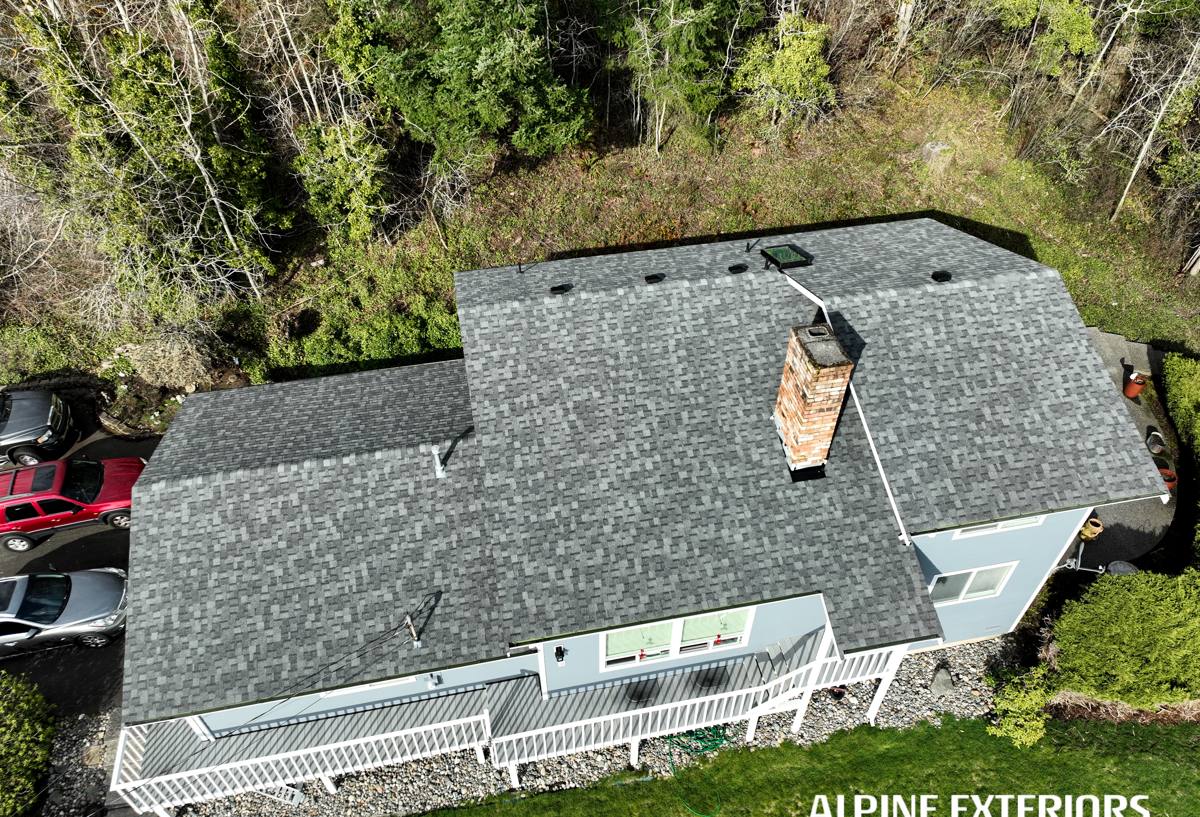
Signs a Mill Creek Deck Needs Full Replacement, Not Another Repair
Homeowners often call us thinking they need a few boards swapped, and sometimes that's true. But there's a point where patching a deck costs more over time than replacing it, and it's worth knowing where that line is before you spend money on repairs that won't hold.
- Soft, spongy decking anywhere near the house, especially around the ledger board connection
- Visible rust streaking or corroded fasteners on more than a few boards
- Railing posts that wiggle at the base — often a sign the framing beneath has softened
- Persistent moss or black staining that comes back within weeks of cleaning
- Gaps opening between boards, or boards cupping and no longer sitting flat
- A deck older than 15-20 years that has never had the substructure inspected
- Any sign of rot where the deck attaches to the house — this is a safety issue, not cosmetic
If most of what you're seeing is surface wear on otherwise sound framing, repair or refinishing can make sense. If the substructure is compromised, replacement is the honest answer, and we'll tell you which one you're actually looking at.
What a Correct Deck Replacement Actually Involves
Structure First: Ledger, Footings, and Framing
The part of a deck nobody sees is the part that determines how long it lasts. The ledger board — where the deck attaches to the house — needs proper flashing to keep water from tracking behind it into the house framing, which is one of the most common failure points we find on older decks in this area. Footings need to sit below frost depth and bear on undisturbed or properly compacted soil, and joists need hardware rated for exterior, corrosion-resistant use, not standard interior fasteners that will rust out in a few wet seasons.
Decking Material: What Holds Up Locally
Material choice matters more here than in drier climates because the decking is fighting moisture almost constantly for several months of the year. We'll walk through the realistic tradeoffs below, but the short version is that whatever you choose, it needs a finish or composition that tolerates standing moisture, resists moss and algae growth, and doesn't trap water against the framing underneath.
Railings, Stairs, and Code Compliance
Railing height, baluster spacing, and stair geometry are governed by building code, and older decks are frequently out of compliance simply because codes have changed since they were built. A full replacement is the right time to bring all of that current — it's far cheaper to do it during the rebuild than to retrofit later.
Comparing Decking Materials for Snohomish County Weather
| Material | How It Handles Our Climate | Maintenance | Typical Lifespan Here |
|---|---|---|---|
| Pressure-treated lumber | Affordable, but needs a quality sealant to resist moss and moisture absorption; more prone to cupping in wet-dry cycles | Annual cleaning and re-sealing recommended | 10-15 years with upkeep |
| Cedar | Naturally moisture- and insect-resistant, ages to a silver-gray if left unfinished; still needs cleaning to control moss | Periodic cleaning; refinishing every few years if a stained look is wanted | 15-20 years with care |
| Composite / capped composite | Resists moisture absorption and moss better than wood; performance varies a lot by product quality and installation | Periodic washing only; no sealing or staining | 20-25+ years, product-dependent |
We don't push one material on every homeowner. Composite costs more upfront but takes moss season and standing moisture better with less maintenance. Cedar looks and feels the way people picture a Pacific Northwest deck and holds up well if it's cleaned regularly. Pressure-treated is the budget option and can last a long time, but only if someone actually keeps up with sealing — skip that step here and it shows fast. Whichever direction you go, the installation quality underneath matters more than the brand name on the boards.
Our Process, Start to Finish
Site Visit and Assessment
We come out, look at the existing deck's condition — not just the surface, but the ledger connection, footings where accessible, and framing — and give you a straight read on whether replacement is actually needed and what it should include.
Permitting
Deck replacement typically requires a permit, and requirements can differ depending on whether you're inside Snohomish city limits or in unincorporated Snohomish County near Mill Creek. We handle the application and inspections so you're not the one chasing paperwork.
Demolition and Framing
Old decking, railings, and any compromised framing come out. We rebuild the structure to current code with corrosion-resistant hardware and proper ledger flashing — this is the step that determines whether the new deck lasts 10 years or 25.
Decking, Railings, and Finish Work
Decking goes down with attention to drainage and spacing so water sheds instead of pooling, and railings and stairs are installed to code. If the material needs sealing or staining, that happens as part of the build, not as an afterthought.
Final Walkthrough
We walk the finished deck with you, cover basic care for whatever material you chose, and make sure everything is solid before we call it done.
Why Hiring a Crew That Already Works Mill Creek Matters
Deck framing that works fine in a dry inland climate can be undersized or under-flashed for what this area actually does to a structure over a decade. A crew that regularly works in and around Mill Creek and Snohomish already knows which connections fail first in this climate, what soil conditions to expect for footings, and what the local permitting process actually requires — which means fewer surprises, fewer delays, and a deck that's built for the weather it will actually see rather than a generic spec sheet.
Keeping a New Deck Looking Right Through the Wet Season
A properly built deck still needs some upkeep in this climate — the goal is to make that upkeep light and predictable rather than a constant battle.
- Sweep debris off the deck regularly, especially fallen leaves and needles that trap moisture
- Clean moss and algae buildup at least once a year, more often in shaded areas
- Check that gaps between boards stay clear so water can drain through, not pool on top
- Inspect railings and stair connections annually for looseness or corrosion
- Reseal or restain wood decking on the schedule appropriate to that product — don't wait until it looks bad
- Keep gutters and downspouts near the deck clear so runoff isn't dumping extra water onto it
What Deck Replacement Typically Costs in This Area
Costs vary widely based on deck size, material choice, how much of the existing structure can be reused versus rebuilt, and whether stairs, multiple levels, or significant railing work are involved. As a broad range, straightforward pressure-treated replacements tend to fall at the lower end, cedar sits in the middle, and composite decking with full structural rebuilds runs higher — but the only way to get a number that means anything is to have someone look at your specific deck and site conditions in person.
If your deck in Mill Creek or the surrounding Snohomish area is showing its age, we're glad to take a look and give you an honest assessment of what it actually needs — repair, partial rebuild, or full replacement — with no pressure either way. Use the form below to request a free estimate.