 Snohomish
 Deck Replacement in Edmonds: Built for Puget Sound Conditions
Edmonds sits right on the water, and that changes what a deck has to survive. Salt-laden air off the Sound accelerates corrosion on fasteners and hardware, driving rain finds every gap in old flashing, and a long stretch of shaded, damp months every year keeps moss and algae established on horizontal surfaces most of the season. A deck built for a drier inland climate, or built years ago before better flashing and fastener standards were common, tends to show its age here faster than homeowners expect. Deck replacement in this area isn't just about swapping old boards for new ones — it's about correcting the details that let water and salt air do their damage in the first place.
We work on homes throughout Edmonds and the surrounding Snohomish County area, and the decks we tear off tell a consistent story: rusted-through hardware, soft framing at the ledger, and decking that looks fine from a distance but is spongy or delaminating underfoot. A proper replacement addresses the structure, not just the surface.
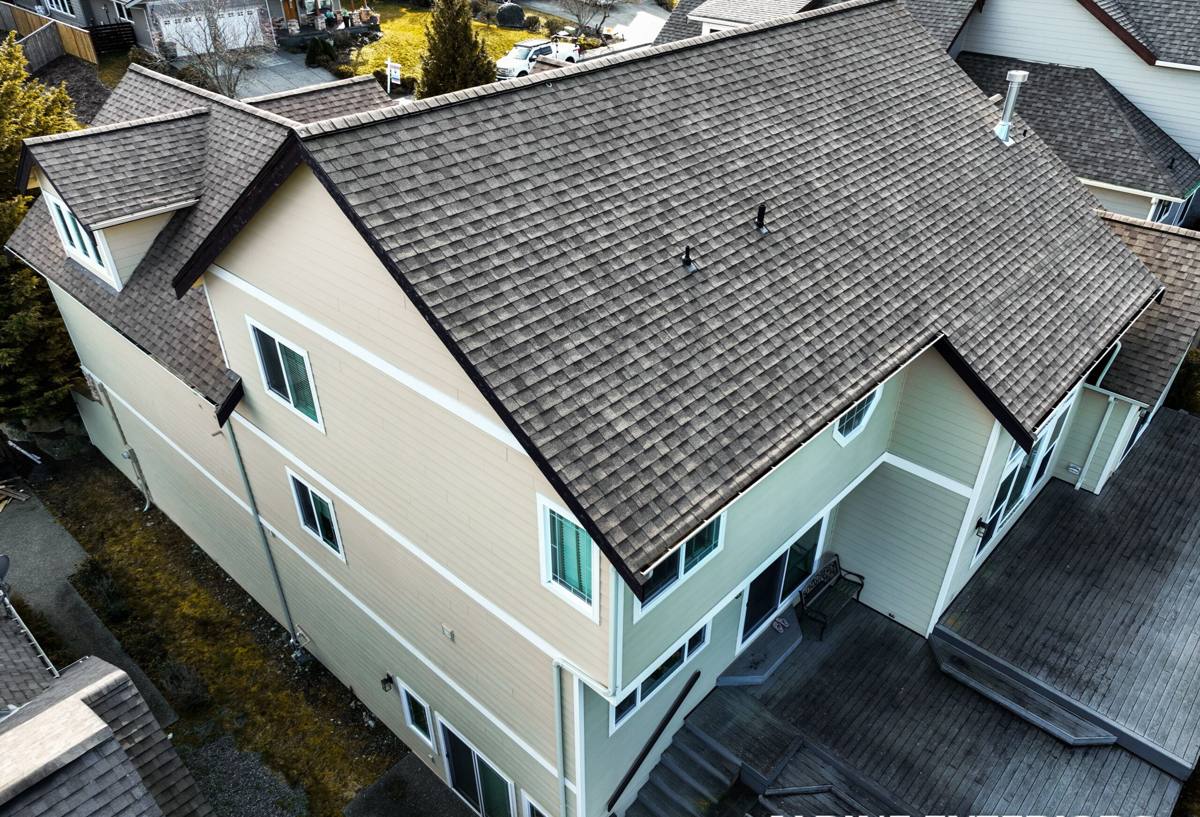
Why Decks in This Climate Fail Sooner Than You'd Think
Salt Air and Corrosion
Homes closer to the water deal with airborne salt that speeds up rust on any fastener, joist hanger, or bolt that isn't rated for the exposure. Once hardware starts to rust, it loses holding strength long before the wood around it looks obviously bad — which is why a deck can seem structurally fine right up until it isn't.
Driving Rain and Ledger Rot
The single most common failure point on an older deck is the ledger board — the piece that bolts the deck to the house. Wind-driven rain pushes water behind poorly flashed ledgers, and that moisture sits against the house framing with nowhere to dry out. By the time it shows as a soft spot or a dark stain on the siding above, the rot underneath is usually well established.
Moss, Algae, and Slip Risk
A long moss season means any deck surface that doesn't get much direct sun or airflow will grow a biofilm of algae and moss, especially on wood. Beyond the maintenance headache, that buildup makes stairs and walking surfaces genuinely slippery in wet weather, which is a real safety issue, not just a cosmetic one.
Signs Your Deck Needs Replacing, Not Just Patching
Not every problem deck needs a full tear-off — but a lot of the ones we get called out for do, once we're underneath and can see the framing. Here's what tends to separate a repair from a replacement:
- Soft, spongy, or bouncy spots anywhere in the decking or at the stairs
- Rust staining bleeding out around joist hangers, bolts, or nail heads
- Gaps opening up between boards, or boards cupping and splitting
- Any movement or wobble in the railing when you push on it
- Visible daylight, staining, or soft wood at the ledger-to-house connection
- Persistent moss or dark staining that comes back within weeks of cleaning
- Posts that show rot or checking at the base, where they sit in or near the ground
- A deck older than 15-20 years that has never had the ledger flashing inspected
If you're seeing two or more of these, it's worth having someone look at the framing before spending money on a surface-level fix that won't hold up.
Choosing Decking Material for a Marine Climate
Material choice matters more here than in drier parts of the state, because moisture and salt exposure are constant rather than occasional. There's no single right answer for every budget, but the trade-offs are worth understanding honestly before you decide.
| Material | Upfront Cost | Maintenance | Moisture & Moss Behavior | Typical Lifespan |
|---|---|---|---|---|
| Pressure-treated wood | Lowest | Needs regular cleaning, sealing, and moss treatment | Absorbs water; prone to moss without upkeep | 10-15 years |
| Cedar | Moderate | Periodic oiling/sealing to hold color and resist checking | Naturally rot-resistant but still needs care in shade | 15-20 years |
| Composite decking | Higher | Occasional washing; no sealing or staining | Doesn't absorb water like wood; still needs cleaning where moss can grow on the surface film | 25-30 years |
| PVC/capped polymer | Highest | Lowest ongoing maintenance | Fully water-resistant surface; best moss and mildew resistance | 25-30+ years |
We install all of these depending on budget and how the deck is used, but for a shaded, water-exposed lot we'll generally steer homeowners toward composite or capped polymer for anything at grade or partly shaded — not because wood is a bad product, but because the maintenance schedule needed to keep wood performing well in this climate is more demanding than most homeowners want to keep up with year after year.
The Structural Work Homeowners Don't See
The decking boards are the part everyone notices, but the parts that determine whether the deck lasts are underneath.
Ledger Flashing
Correct flashing at the ledger board — including proper metal flashing integrated behind the siding or house wrap, not just caulked over the top — is the single biggest factor in whether water gets into the house framing. This is also the detail most often done wrong or skipped on older decks.
Hardware and Fasteners
Given the salt air exposure common in Edmonds, we use stainless steel or heavy hot-dip galvanized fasteners and connectors rated for the exposure, not the standard-grade hardware that's fine further inland. It costs more up front and saves the deck from early hardware failure.
Footings and Posts
Post bases set directly on grade or in undersized footings are a common shortcut on older decks. A proper replacement re-evaluates footing depth and post connections against current code, especially on decks attached to a house where the ledger carries real load.
Our Deck Replacement Process
- On-site assessment — we inspect the existing deck from underneath where possible, check the ledger connection, footings, and hardware condition, and talk through what you actually use the space for.
- Design and material selection — sizing, decking material, railing style, and stair layout, with a clear written scope so there are no surprises mid-project.
- Permitting — we handle the permit application and inspections required for the jurisdiction your property falls under.
- Tear-off — full removal of the old decking, railing, and any framing that doesn't meet current standards.
- Framing and flashing — new or reinforced ledger connection with proper flashing, corrosion-rated hardware, and footings sized for the load.
- Decking and railing installation — installed to manufacturer spec, since improper fastening is what voids most material warranties.
- Final walkthrough and inspection sign-off — confirming the work passes local inspection and looks right before we call it done.
Permits and Local Code
Most deck replacements that involve structural work — a new or modified ledger connection, a deck more than 30 inches above grade, or new footings — require a permit, and inspections happen at set points during the build, not just at the end. Depending on exactly where your property sits, that permit may run through the City of Edmonds or through Snohomish County, and the requirements aren't identical between the two. Guardrail height, baluster spacing, stair rise and run, and ledger attachment methods are all governed by code, and skipping the permit process on a job that needs one can create real problems at resale, when a buyer's inspector or the title company asks for permit history that doesn't exist.
We handle this as part of the job rather than treating it as the homeowner's problem to sort out, because we'd rather deal with the paperwork up front than have it surface as an issue later.
Why a Crew That Already Works in Edmonds Makes a Difference
A lot of what determines whether a deck holds up here is knowing the local conditions well enough to build for them by default, not as an afterthought. That means defaulting to corrosion-rated hardware because of the salt air, timing tear-offs and pours around the wetter months instead of fighting them, and knowing which decking surfaces actually stay walkable when moss season sets in. It also means an existing, working relationship with the local permitting process, so inspections don't stall a project for weeks. None of that is exotic knowledge, but it's the difference between a deck that's built to the letter of a generic spec sheet and one that's built for the specific place it's sitting in.
If your deck is showing its age — or you're just not sure whether it needs a repair or a full replacement — we're happy to take a look and give you a straight answer. Request a free, no-pressure estimate using the form below and we'll walk the site with you.