 Snohomish
 Building Decks for Lynden's Climate, Not Against It
Lynden sits in a part of Snohomish County that gets more rain, more standing moisture, and more moss pressure than a lot of homeowners realize until they've owned a deck here for a few years. Add in the salt-tinged air that drifts inland off the Sound on windy days, and you've got a combination that's hard on fasteners, hard on wood, and unforgiving of shortcuts in the framing. A deck built the way it would be built in Arizona or even inland Eastern Washington simply doesn't hold up the same way out here. That's not a knock on any particular material — it's just physics. Wood that stays damp for weeks at a time behaves differently than wood that dries out every afternoon.
When we build a custom deck for a Lynden property, we're building for the actual conditions the structure will sit in for the next 20-30 years: driving rain that comes in sideways during winter storms, a moss season that can run from October through April, and salt-laden moisture that accelerates corrosion on anything metal that isn't properly rated. Getting this right isn't exotic — it's mostly about not skipping steps that are easy to skip.
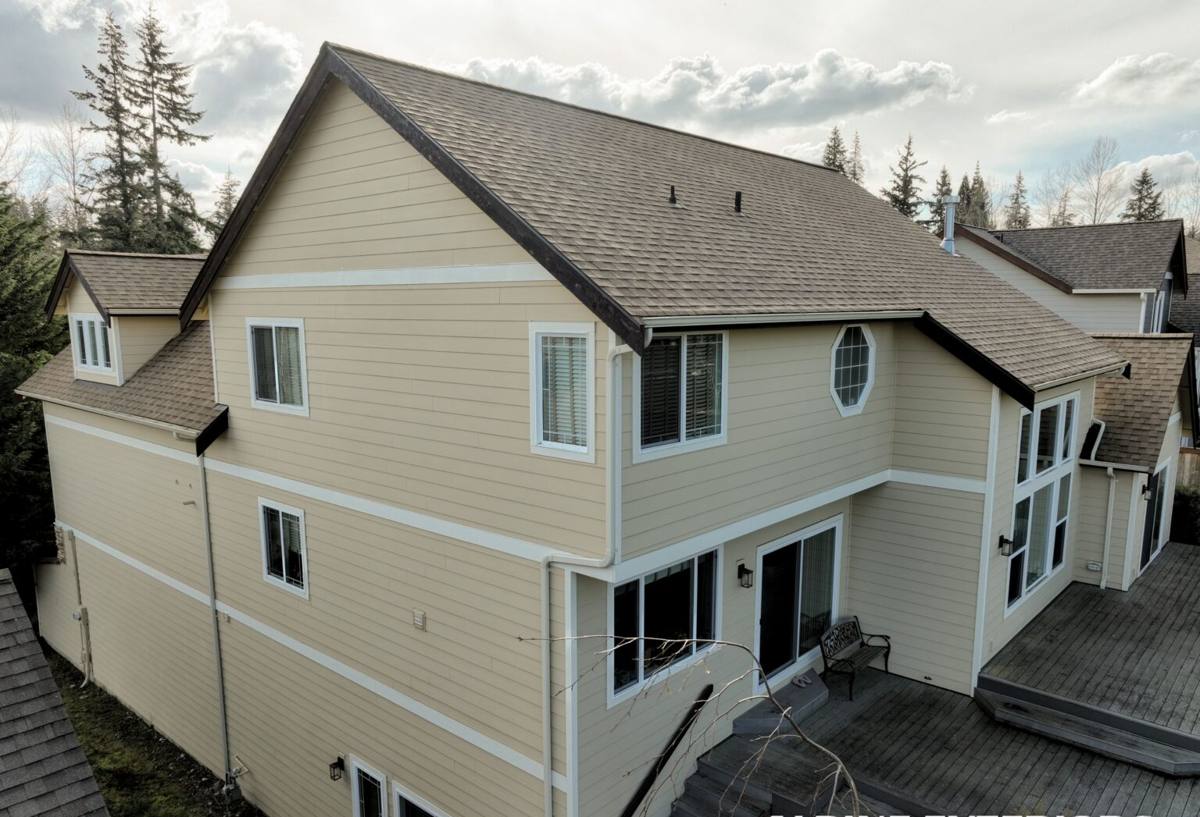
What Local Homes Actually Need From a Deck
Most deck failures we see in this area aren't dramatic collapses — they're slow rot at ledger boards, soft spots where water pooled against a joist, or fasteners that rusted and stained the decking around them. These are almost always installation problems, not material problems. A deck built correctly for this climate needs a few things built in from the start, not added later:
- Proper drainage slope away from the house on every horizontal surface, including under-deck areas
- Ledger board flashing that actually sheds water instead of trapping it against the siding
- Fasteners and hardware rated for wet, coastal-influenced exposure — not just standard exterior-grade
- Joist spacing and blocking that accounts for the added weight of wet, saturated decking over winter
- Airflow underneath the deck so framing members can dry out between rain events
- A decking material choice that matches how much moss and mildew maintenance the homeowner actually wants to do
Skip any one of these and the deck will probably still look fine for a season or two. The problems show up in year three, four, or five — which is exactly why cutting corners on a deck build is such an expensive mistake to make.
The Moss Problem Specifically
Moss on a deck isn't just cosmetic. It holds moisture against the surface far longer than bare wood or composite would dry on its own, and on stairs or ramps it turns into a genuine slip hazard. Some of that comes down to sun exposure and tree cover, which we can't change, but a lot of it comes down to surface texture, drainage, and how much the deck boards are allowed to breathe underneath. We factor moss exposure into material recommendations and board spacing, not just the finish coat.
Choosing the Right Decking Material for This Area
There's no single "best" decking material — there's a best material for a given budget, sun exposure, and how much upkeep a homeowner wants to commit to. Here's how the common options actually compare for a Lynden property:
| Material | Moisture Behavior | Moss/Mildew Resistance | Maintenance | Typical Lifespan |
|---|---|---|---|---|
| Pressure-treated lumber | Absorbs and releases moisture readily; prone to cupping if not sealed | Moderate — needs regular cleaning and sealing | Annual cleaning, re-sealing every 1-3 years | 15-20 years with upkeep |
| Cedar | Naturally moisture-resistant but still needs sealing here | Good natural resistance, but still grows moss without care | Sealing every 2-3 years, periodic cleaning | 15-25 years with upkeep |
| Composite (capped) | Doesn't absorb water into the core; surface stays more stable | Better resistance, though moss can still grow on the surface film | Occasional washing, no sealing needed | 25-30+ years |
| PVC decking | Essentially non-absorbent | Good resistance but still needs periodic washing | Low — mostly just cleaning | 25-30+ years |
We'll walk through these trade-offs honestly during an estimate. Composite and PVC cost more up front but save on maintenance labor over time, which matters a lot in a climate where a wood deck genuinely does need attention every year or two to stay ahead of moss and moisture. Wood decks aren't a bad choice — they're just a different commitment.
What a Correct Deck Build Actually Involves
Structural Framing
Everything starts with footings set below frost depth and sized for the actual load the deck will carry, including snow load and wet-wood weight in winter. We use joist hangers and structural screws rated for exterior, coastal-influenced exposure rather than standard hardware, since standard fasteners corrode faster here than in drier climates. Ledger board attachment — where the deck connects to the house — gets flashed and sealed carefully, because a leaking ledger connection is one of the most common sources of hidden rot damage to the house itself, not just the deck.
Drainage and Airflow
Every deck surface gets a slight slope so water runs off rather than pooling. Where a deck sits low to the ground, we make sure there's enough clearance and ventilation underneath for the framing to dry between rain events, since sealed-in, damp crawlspaces under a deck are where we most often find rot when we're called out to repair someone else's work.
Fasteners and Hardware
This is an easy detail to overlook and an expensive one to get wrong. Rust streaks bleeding out of deck boards a year or two after installation almost always trace back to fasteners that weren't rated for the exposure. We spec hardware for the actual conditions, not the minimum code requirement.
Railings and Stairs
Custom deck work in this area often includes railing and stair design that fits the home's style while still meeting current code for height and spacing. Stair treads in particular need surface treatment that stays grippy when wet — a plain smooth board on an outdoor stair is a liability once moss or algae gets a foothold.
Our Process for a Lynden Deck Project
- On-site assessment — we look at drainage patterns, sun/shade exposure, existing structure (if replacing a deck), and how the space will actually be used.
- Design and material selection — sizing, layout, railing style, and decking material chosen based on budget and maintenance preference, not a one-size template.
- Permitting — most custom decks in Snohomish County require a permit; we handle that process rather than leaving it to the homeowner.
- Framing and structural work — footings, ledger attachment, joists, and blocking, built to the standards described above.
- Decking, railing, and finish work — installation of the chosen surface material, railings, stairs, and any lighting or finish details.
- Final walkthrough — we go over the completed deck with the homeowner, including basic maintenance expectations for the material chosen.
Permitting Note
Deck permitting requirements vary by exact size, height, and attachment method, and Snohomish County's requirements can differ from what a homeowner might assume based on a neighbor's project or an online guide. We check the specifics for each property rather than assuming.
Repair, Replacement, or New Build?
Not every deck problem means starting over. If you've got an existing deck showing early signs of trouble — a soft board here, some surface staining there — it's worth having it looked at before deciding between repair and full replacement. General signs it's time to seriously consider replacement rather than patching:
- Soft or spongy spots in the decking surface, especially near the ledger board
- Visible rust staining running down from multiple fastener points
- Railing posts that wobble or feel loose at the base
- Persistent moss or algae buildup that returns within weeks of cleaning
- A ledger board connection that shows staining or gaps against the siding
If the framing underneath is sound, sometimes a resurfacing job with better decking material solves the problem without touching the structure. If the framing itself has been compromised by years of trapped moisture, a full rebuild is usually the more honest recommendation — patching a failing structure just delays a bigger repair later.
Why Local Experience With Lynden Properties Matters
A crew that already works in and around Lynden and the broader Snohomish area knows what this climate does to a deck over time, because we've seen it firsthand on other jobs nearby — not from a manual. That means we're not guessing at fastener specs, drainage slope, or how much airflow a low-clearance deck needs in this specific rainfall pattern. It also means we're familiar with local permitting expectations and typical lot conditions in the area, so there are fewer surprises mid-project. A deck is a long-term structure attached to your house; it deserves a build process that accounts for exactly where it's going to sit for the next few decades, not a generic approach borrowed from a drier climate.
Get a Straightforward Estimate
If you're considering a new custom deck or need an honest look at whether your current one needs repair or replacement, we're happy to come out, walk the site, and give you a clear picture of what a correctly built deck for your Lynden property would involve — no pressure, no upsell. Fill out the form below to request a free estimate.