 Snohomish
 Composite Decking for Lake Stevens Homes
Lake Stevens sits close enough to the water and to heavy timber cover that decks here take a different kind of beating than decks on the dry side of the state. Between the lake-effect humidity, the driving winter rains that roll through Snohomish County, and the shade many lakeside and wooded lots carry, a deck spends a good chunk of the year staying damp. That combination is exactly what wears out the wrong decking material fast, and it's exactly what modern composite decking, installed correctly, is built to handle.
This page is about one thing: composite decking for homes in and around Lake Stevens, what the local climate demands from it, what a correct installation actually involves, and how we approach the job from first estimate to final board.
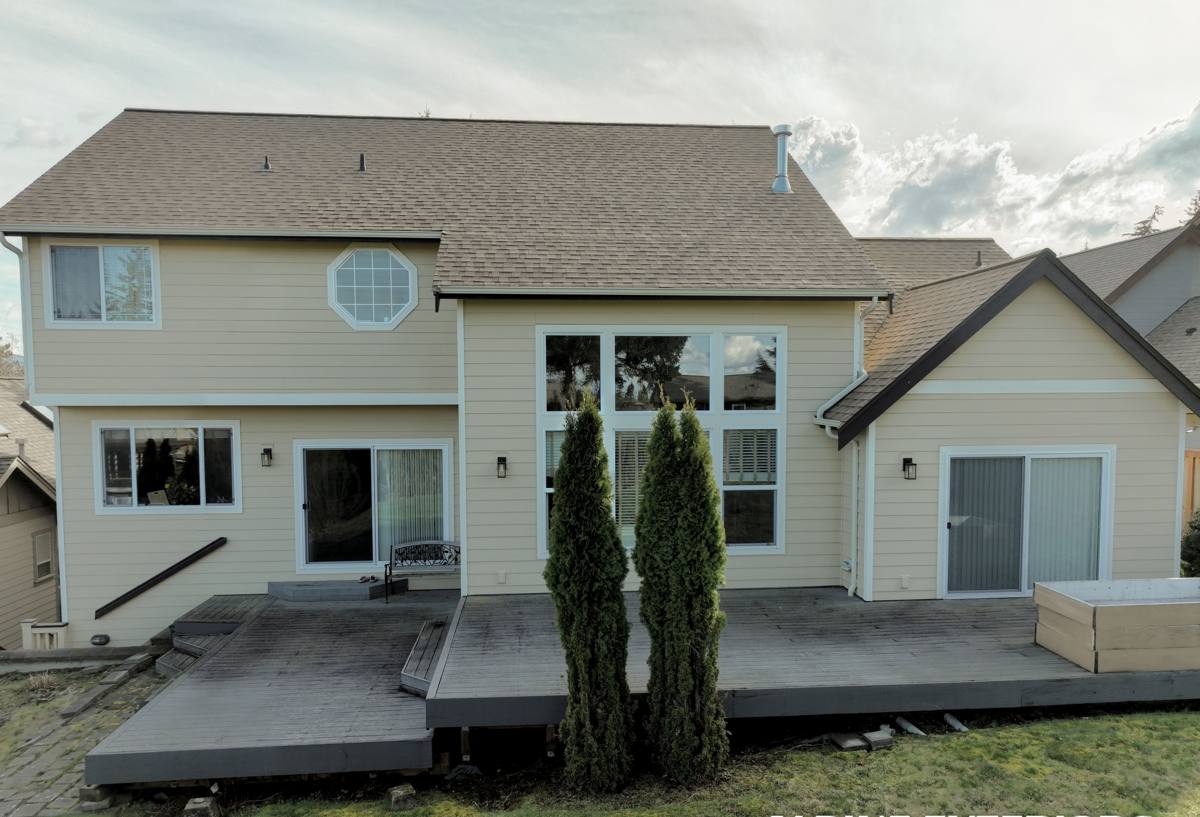
What Lake Stevens Weather Actually Does to a Deck
It's not one big event that ruins a deck out here — it's the slow accumulation of small ones, repeated over years:
- Extended damp periods: Long stretches of overcast, drizzly weather mean deck boards often don't fully dry out between rain events, especially in shaded or low-airflow spots.
- Moss and algae growth: The same moisture and shade that's great for landscaping is exactly what moss, algae, and mildew need to take hold on horizontal wood surfaces.
- Driving rain and wind-blown moisture: Rain here doesn't always fall straight down — it gets pushed sideways into fascia boards, stair stringers, and the undersides of railings.
- Freeze-thaw cycling: Snohomish County doesn't get brutal winters, but it does get enough freeze-thaw swings each year to open up cracks and joints in materials that trap moisture.
- Salt-tinged air on breezier days: Proximity to Puget Sound means some days carry a light salt component in the air, which accelerates corrosion on cheap fasteners and hardware over time.
None of that is dramatic on its own. But a deck that's damp more often than it's dry, season after season, is a deck where the material choice and the installation details matter far more than they would in a drier climate.
Why Composite Makes Sense for This Climate
Moisture and rot
Solid wood decking is a renewable, workable material, but it's also porous — it absorbs water, swells, dries, and shrinks in a repeating cycle. In a climate where boards rarely get a long dry stretch, that cycle happens more often and more unevenly than manufacturers' wood specs assume. Composite boards, by contrast, don't absorb water the way wood fibers do, so they aren't swelling and shrinking on that same cycle.
Moss, algae, and surface grip
Moss and algae will grow on almost any horizontal surface that stays damp and shaded long enough — composite isn't immune to that biology. What composite changes is maintenance: a quality capped composite board has a solid outer shell that doesn't pit, splinter, or absorb stains the way bare wood grain does, so routine cleaning actually restores the surface instead of just knocking dirt off a rough, porous face.
UV, freeze-thaw, and long-term appearance
Capped composite boards resist fading and surface checking better than uncapped or older-generation composite products, which matters here because a board that's constantly damp is also a board that's constantly cycling through minor expansion and contraction. A well-made cap layer keeps that cycling from turning into surface cracking over the years.
Being honest about the trade-offs
Composite isn't automatically the right call for every homeowner, and we won't pretend otherwise. It costs more up front than pressure-treated wood, it can run warmer underfoot on direct-sun exposures, and lower-tier composite products with thin or no capstock can actually perform worse than good wood in a wet climate — moisture can wick into a cut end or a scratched face and get trapped under a cap that isn't sealing it out. That's why board selection and detailing at cut ends and fastener points matters as much as the material itself, which is covered below.
What a Correct Composite Deck Build Involves
Substructure and framing
Composite decking is only as good as what's underneath it. We build or evaluate the substructure for adequate joist spacing (composite typically wants tighter spacing than wood, especially on diagonal or picture-frame patterns), proper ledger flashing where the deck ties into the house, and pressure-treated or coated framing material that can handle sustained moisture exposure.
Drainage and airflow underneath
A deck that traps moisture underneath is a deck that stays damp longer after every rain, which speeds up moss growth on the surface and accelerates wear on fasteners and framing below. We grade and gap the substructure so water sheds away from the house and air can actually move under the deck instead of sitting stagnant.
Fastening and hardware
Hidden fastener clip systems are the standard for a clean composite deck surface, but the clips and screws themselves need to be rated for the coastal-adjacent moisture this area sees — stainless or coated hardware, not bargain fasteners that start staining or corroding within a couple of seasons.
Cut ends and edge sealing
Every cut end on a composite board exposes the uncapped core, and an unsealed cut end is the single most common place composite decking actually fails in a wet climate. We seal or cap exposed ends per manufacturer spec, particularly at stair nosings, picture-frame miters, and board ends against fascia.
Railings, stairs, and transitions
Railing posts, stair stringers, and transition points take the most direct wind-driven rain of any part of the deck. These get the same attention to flashing and moisture management as the main deck field, not an afterthought.
Comparing Decking Options for a Lake Stevens Property
| Material | Moisture / Moss Behavior | Maintenance | Typical Lifespan Here |
|---|---|---|---|
| Pressure-treated wood | Absorbs water, prone to moss on shaded boards, checks and warps over time | Annual cleaning, periodic staining/sealing | 10–15 years before major repair |
| Cedar | Naturally rot-resistant but still porous; moss forms on shaded, damp sections | Regular sealing to maintain resistance | 15–20 years with upkeep |
| Entry-level composite (thin/no cap) | Can wick moisture at cut ends and scratches if not sealed properly | Low, but cut-end sealing is critical | 15–20 years |
| Capped composite (mid-to-premium) | Resists moisture absorption; moss still needs periodic cleaning off the surface | Occasional washing, no sealing/staining | 25–30+ years |
The table above is a general guide, not a guarantee — actual lifespan depends heavily on installation quality, sun/shade exposure, and how consistently a deck gets cleaned.
Our Process, Start to Finish
- On-site assessment: We look at the existing structure (if replacing an old deck), sun/shade exposure, drainage path, and how the deck ties into the house.
- Material selection: We walk through board tiers and finishes based on your budget and how the deck will be used, being upfront about which products hold up best in consistently damp, shaded conditions.
- Written estimate: Clear scope, materials, and pricing before any work starts — no surprise change orders for things we could have caught during assessment.
- Substructure work: Framing, flashing, and drainage corrections happen before a single composite board goes down.
- Installation: Hidden-fastener composite decking, sealed cut ends, and properly detailed stairs and railings.
- Final walkthrough: We go over basic care with you so the deck actually reaches its expected lifespan.
Maintenance Checklist for Composite Decks in This Climate
- Sweep off leaves, needles, and debris regularly — trapped organic matter holds moisture against the board surface.
- Wash the deck at least once or twice a year with a composite-safe cleaner to remove early moss and algae film before it takes hold.
- Keep gutters and downspouts near the deck clear so runoff isn't dumping extra water directly onto the deck surface.
- Check railing posts and stair connections annually for any movement or hardware corrosion.
- Trim back overhanging branches where practical to cut down on shade and debris buildup on the deck surface.
- Address any small mold or moss spots promptly rather than waiting for a full season buildup.
Why Hire a Crew That Already Works in Lake Stevens
A lot of what makes a composite deck last here isn't in the manufacturer's install manual — it's judgment calls about joist spacing for a shaded, damp lot, how much drainage slope a particular yard actually needs, and which fastener and sealing details matter most given how this area's weather behaves across a full year. A crew that's already worked decks in Lake Stevens and the surrounding Snohomish County area has already made those calls on other homes with similar sun exposure, similar soil drainage, and the same seasonal moss pressure. That local pattern recognition is what separates a deck that looks fine on installation day from one that still looks and performs well a decade later.
Getting Started
If you're planning a new composite deck or replacing an aging one in Lake Stevens, we're happy to walk the property, talk through material options honestly, and put together a clear estimate — no pressure, no obligation. Use the form below to request a free estimate and we'll get in touch to schedule a time that works for you.