 Snohomish
 Why Composite Decking Makes Sense for Bothell Homes
Bothell sits in one of the wettest corners of the Puget Sound region, and that shows up fast on an outdoor deck. Homes here deal with long stretches of driving rain in the fall and winter, humid air off the Sound and nearby lakes, and a moss season that can run from October clear through April. A wood deck built for a drier climate simply doesn't hold up the same way out here — it needs constant sanding, sealing, and spot repairs to keep moisture and organic growth from taking hold. Composite decking was built to solve exactly this problem: a material that doesn't absorb water the way wood does, doesn't need yearly staining, and stands up to the freeze-thaw cycles and moss pressure that are just part of living in this part of Washington.
We install composite decking across the Snohomish and greater Bothell area, and the boards, fasteners, and framing details we use are chosen specifically for this climate — not a generic install pulled from a catalog.
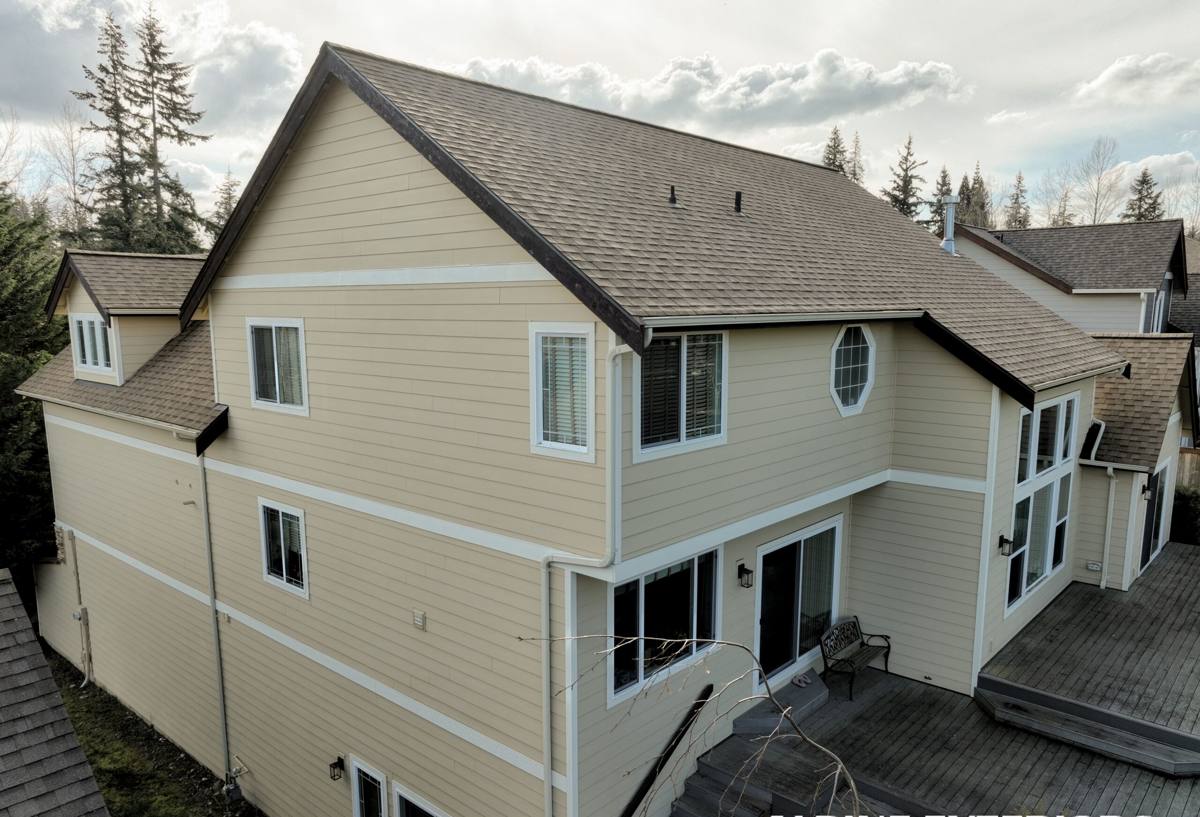
What Our Wet Climate Does to a Deck
Before talking about materials, it helps to understand what's actually working against a deck out here year-round.
Constant Moisture
Driving rain doesn't just fall straight down — wind pushes it sideways under railings, into board gaps, and against ledger boards where the deck meets the house. Any material that absorbs water instead of shedding it will hold moisture long after the rain stops, which is exactly the environment mold, mildew, and rot need to get started.
Moss and Algae Growth
Low winter sun angles, shade from mature trees common in this area, and months of dampness create ideal conditions for moss and algae to colonize any surface that stays wet and doesn't get much direct sun. Once moss takes hold in wood grain or board seams, it holds even more moisture against the surface, accelerating whatever damage is already happening underneath.
Freeze-Thaw Cycling
It doesn't get brutally cold here, but Bothell does see enough freeze-thaw swings each winter that any water trapped in a board, a fastener hole, or a crack will expand and contract repeatedly. Over several seasons that's enough to split wood fibers and loosen fasteners.
Salt-Tinged Air
Homes closer to the water in this region get a mild but steady dose of salt-laden air, which speeds up corrosion on metal fasteners, railing hardware, and fixtures that aren't rated for it. It's a slower process than true coastal exposure, but it adds up over the life of a deck.
Composite vs. Wood vs. Capped Composite
Homeowners often ask us to lay out the real trade-offs rather than just recommend the most expensive option. Here's how the common choices compare for a Bothell-area deck specifically.
| Material | Moisture Behavior | Maintenance | Typical Lifespan Here |
|---|---|---|---|
| Standard pressure-treated wood | Absorbs water, prone to splintering and rot at fastener points | Annual cleaning, re-staining/sealing every 1-2 years | 10-15 years with diligent upkeep |
| Cedar or premium wood | Better natural resistance, still absorbs moisture over time | Regular sealing, moss and mildew treatment | 15-20 years with diligent upkeep |
| Uncapped composite | Resists rot but can wick moisture at cut edges if not sealed properly | Occasional washing, no staining | 20-25 years |
| Capped composite | Fully sealed shell resists moisture, staining, and mold growth | Occasional washing only | 25-30+ years, most manufacturer warranties |
For our climate, we default to capped composite for most Bothell projects. The fully sealed outer layer is what actually resists the moss and mildew staining that plagues wood and uncapped composite decks in this area — not just the color or texture of the board.
What a Correct Composite Deck Installation Actually Involves
Composite boards are only as good as what's underneath them. A lot of the problems we get called out to fix on other people's decks aren't the decking material at all — they're framing and drainage mistakes made during installation.
Structural Framing
Composite boards are heavier than wood and can require tighter joist spacing depending on the product and whether the boards run at an angle. We check span ratings against the specific board being used rather than assuming standard wood-deck spacing will work.
Ledger Board and Flashing
Where the deck attaches to the house is the single most common source of long-term water damage, especially in a climate with this much driving rain. Proper flashing that directs water away from the house band board is not optional here — it's the difference between a deck that lasts and one that causes hidden rot behind the siding.
Drainage and Airflow Underneath
Composite doesn't rot, but the framing underneath it usually is still wood. Without airflow and a way for water to drain out from under the deck, that structural lumber stays wet all winter and rots regardless of what the decking surface is made of.
Fasteners and Hardware
We use corrosion-resistant, climate-rated fasteners and hidden fastening systems suited to the specific board profile. Cutting corners here with standard hardware store screws is one of the fastest ways to get rust streaking and loose boards within a few seasons.
How We Approach a Bothell Composite Decking Project
- On-site assessment: We look at existing framing (if any), drainage, sun exposure, and how the deck ties into the house before recommending a board or a plan.
- Material selection: We walk through board options, colors, and price points based on the specific site conditions — shade and moss exposure change what we recommend.
- Framing and structural work: Any repair or upgrade to the substructure happens before a single composite board goes down.
- Flashing and waterproofing: Ledger boards, posts, and any point where the deck meets the house get proper flashing and sealing.
- Installation: Boards are laid with manufacturer-specified gapping to allow for expansion and drainage, using hidden fasteners where the product allows.
- Final walkthrough: We go over the finished deck, railing hardware, and basic care with the homeowner before we consider the job done.
Choosing the Right Board for a Shaded, Wet Lot
Not every composite board performs the same in this climate. A few things worth weighing:
- Capped vs. uncapped: Fully capped boards resist moss staining far better on shaded, north-facing decks — a common layout on Bothell lots with mature tree cover.
- Color: Lighter colors show moss and pollen less than very dark boards, and dark composite can also run noticeably hotter underfoot in summer sun.
- Board texture: Deep wood-grain embossing can trap moisture and organic debris in the grooves; a smoother finish is easier to keep clean in a high-moss environment.
- Warranty terms: Check whether the manufacturer's stain and mold warranty actually applies in a Pacific Northwest climate — some warranties have exclusions for prolonged shade or standing moisture exposure.
Keeping a Composite Deck Clean Through Moss Season
Composite decking is genuinely low-maintenance compared to wood, but "low-maintenance" doesn't mean "no maintenance" in a climate like ours. A simple seasonal routine keeps a composite deck looking new for decades:
- Sweep leaves, needles, and debris off the deck regularly through fall — trapped organic material is what feeds moss growth.
- Rinse the deck with a garden hose every few weeks during the wettest months to keep spores from settling in.
- Use a soft-bristle broom and a mild soap-and-water solution for general cleaning — avoid pressure washers on the highest settings, which can damage the board's cap layer.
- Check railing posts and fastener points once a year for any early signs of loosening or corrosion.
- Keep gutters and downspouts near the deck clear so runoff isn't dumping extra water onto the surface or framing below.
What Affects the Cost of a Composite Deck
| Factor | Why It Matters |
|---|---|
| Board tier (uncapped vs. capped) | Capped boards cost more upfront but need less long-term maintenance and resist staining better |
| Deck size and shape | More linear footage, angled patterns, or picture-frame borders add labor and material |
| Substructure condition | Existing framing that needs repair or replacement adds cost before decking even starts |
| Railing and lighting | Composite or metal railing systems and integrated lighting are priced separately from decking boards |
| Site access | Steep lots, limited access, or second-story decks affect labor time |
Because of these variables, we don't quote composite decking projects over the phone with a flat per-square-foot number — we walk the site first so the estimate reflects what your deck actually needs, not a generic average.
Why It Matters to Hire a Crew That Already Works in This Area
A lot of the mistakes we see on failed decks come from crews applying installation methods that work fine in drier climates but weren't adjusted for this much sustained moisture. Framing spacing, flashing details, and even fastener choice all need to account for the reality of a Snohomish County winter, not a generic national installation guide. A crew that regularly works Bothell and the surrounding area already knows which details matter most here — where moss tends to build up first, how much drainage a deck actually needs under our rain totals, and which board finishes hold up best in shaded yards. That local familiarity shows up in how long the deck actually lasts, not just how it looks on installation day.
If you're weighing composite decking for your Bothell home, we're happy to walk the site, talk through board options for your specific yard, and put together a straightforward, no-pressure estimate. There's a form below to get started.