 Snohomish
 Why Clearview Homes Need Windows Built for the Local Climate
Homes in the Clearview area of Snohomish, Washington sit in a stretch of Snohomish County that gets the full range of what Pacific Northwest weather can throw at a house. Salt-tinged marine air drifts inland off Puget Sound, driving rain comes in sideways for weeks at a stretch in the fall and winter, and the damp, shaded stretches of the calendar hand every exterior surface a long moss season it has to survive. Windows are one of the first parts of a house to show the effects of that combination, because they're where wood, glass, sealant, and metal all meet in one small assembly that has to keep water out year-round.
A window that was fine when it was installed twenty years ago often isn't fine anymore — not because the glass failed, but because the seals, flashing, and frame material weren't specified for this level of sustained moisture exposure. Custom windows done right for a Clearview home account for that from the start, rather than treating it as an afterthought.
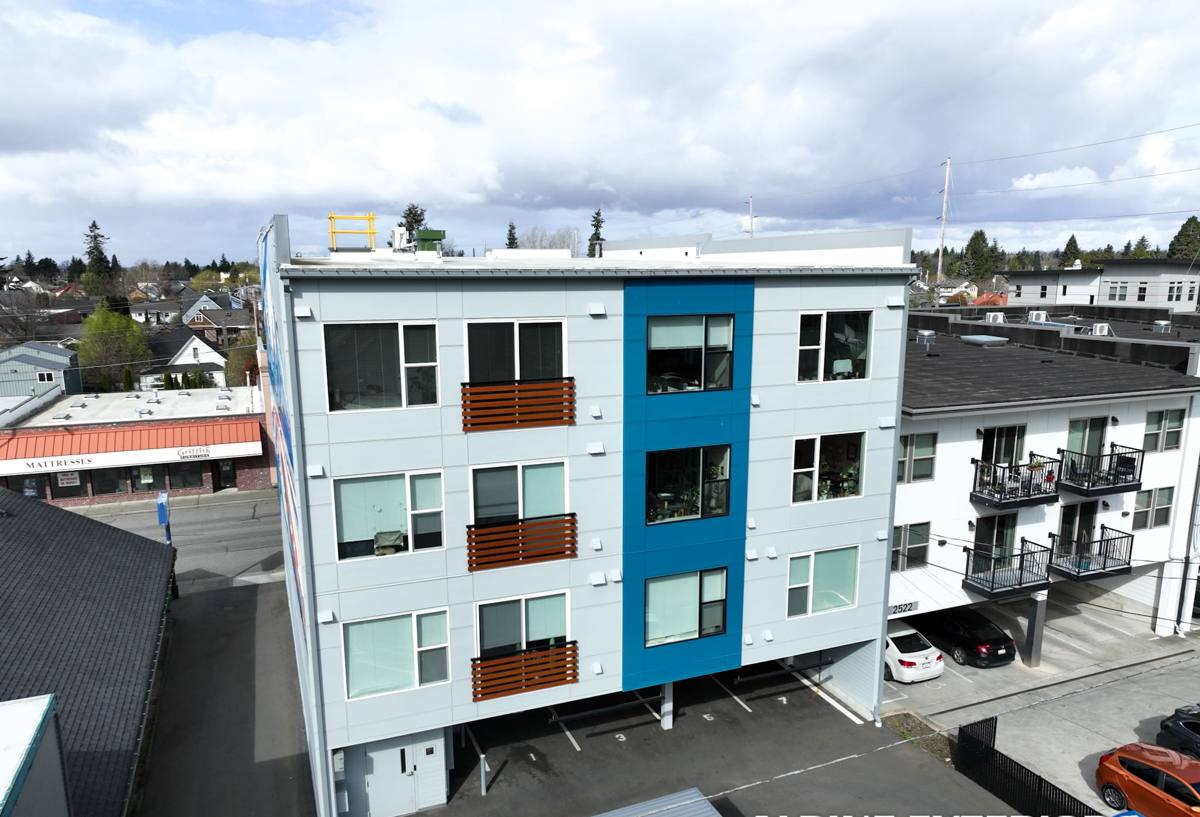
What Constant Moisture and Salt Air Actually Do Over Time
Wood and Composite Frames
Untreated or under-maintained wood frames absorb moisture at the joints and around the glazing. Once water gets past the paint or finish, it doesn't dry out quickly in our climate — there simply aren't enough dry, low-humidity days in a row. That leads to soft spots, swelling, and eventually rot at the sill, which is the hardest part of a window to repair without a full replacement.
Metal Components
Salt-laden air accelerates corrosion on hardware, hinges, and some aluminum cladding. It's slow and easy to ignore until a window won't latch properly or a crank mechanism seizes up.
Seals and Glazing
Insulated glass units rely on a sealed edge to keep the gas fill and the airspace intact. Constant wetting and drying cycles, plus temperature swings between a cold morning and an afternoon of weak sun, stress that seal faster than it would in a drier climate. Once it fails, you get fogging between the panes — that unit needs replacing, not just cleaning.
Moss and Organic Growth
Moss doesn't just grow on roofs. It takes hold in window sills, tracks, and any horizontal ledge where debris and moisture collect. Left alone, it holds water against the frame and finish, which speeds up everything above.
What a Correct Custom Window Installation Involves
"Custom" doesn't just mean a non-standard size. It means the window is specified and installed to match the actual conditions of that wall — orientation, exposure, existing wall assembly, and how water is meant to move around the opening. A correct job includes:
- Accurate field measurement of the rough opening, not just the old window's dimensions, since older openings are rarely square after years of settling
- Removal of the old unit without damaging the surrounding wall sheathing or siding more than necessary
- Inspection of the sill and framing for hidden rot or water damage before anything new goes in — this is the step that gets skipped when a job is rushed, and it's the one that causes callbacks
- Correct flashing sequence (sill pan, side flashing, head flashing) so water sheds outward and down, never trapped behind the new window
- Compatible sealants and backer rod sized for the gap, not just caulk smeared over a seam
- Proper shimming and fastening so the frame stays square and the sash operates smoothly for the life of the window
- Interior and exterior trim finished to match the home, with attention to how it will hold up to repeated wetting
Skipping the flashing step or reusing old sealant instead of properly detailing the opening is the single most common cause of window leaks we get called out to diagnose — far more often than the window unit itself being defective.
Full-Frame Replacement vs. Insert Windows
Homeowners in Clearview often ask whether they need a full-frame replacement or whether an insert (pocket) window will do. Both have a place, but the right call depends on the condition of the existing frame.
| Factor | Insert (Pocket) Replacement | Full-Frame Replacement |
|---|---|---|
| Existing frame condition | Requires a sound, dry, square frame | Necessary if there's rot, water damage, or an out-of-square opening |
| Disruption to siding/trim | Minimal — original trim usually stays | More involved — exterior trim and sometimes siding are removed |
| Glass area | Slightly reduced due to the new frame nesting inside the old | Can maximize glass area for the opening |
| Access to hidden damage | Limited — problems behind the old frame stay hidden | Full visibility to catch and fix rot or moisture issues |
| Best fit | Frames that have stayed dry and structurally sound | Homes with a history of leaks, visible rot, or older single-pane units |
Given how much moisture Clearview homes deal with, we don't recommend an insert replacement without first confirming the existing frame is actually dry and sound. Covering up a compromised sill with a new window on top of it just delays a bigger repair.
Choosing Frame Material and Glass
There's no single "best" window material for every home — it depends on the home's age, style, and how much upkeep the owner wants to take on.
- Vinyl — low maintenance, good value, holds up well to moisture and salt air without repainting; a solid choice for most Clearview homes
- Fiberglass — more dimensionally stable across temperature swings, higher upfront cost, excellent long-term durability in wet climates
- Wood or wood-clad — matches historic or high-end architectural styles, but requires real maintenance discipline in this climate to keep moisture from working into the wood over time
- Aluminum — durable but a poor insulator on its own; we generally steer homeowners away from it for primary living spaces here unless it's thermally broken, given how much it can sweat and lose heat in our damp, cool months
On glass, double-pane with a low-E coating and argon fill is the practical baseline for this area — it manages both heat loss and the glare off a bright winter sky. Whatever material you choose, the warranty terms matter as much as the brand name: ask specifically what's covered on seal failure and hardware, and for how long, since that's what actually gets used in a climate like ours.
Our Process for a Clearview Custom Window Project
- On-site assessment — we look at every window being replaced, note frame condition, and flag anything that suggests hidden moisture damage before quoting
- Accurate measurement and product selection — sizes, materials, and glass options matched to the specific opening and exposure
- Scheduling around weather — openings are only exposed for as long as necessary, and we plan around the wetter stretches of the calendar when we can
- Removal and inspection — old units come out, and we check the sill and framing before anything new goes in
- Installation with proper flashing and sealing — no shortcuts on the sill pan, flashing sequence, or sealant details
- Finish work and cleanup — trim finished to match, worksite cleaned, and a final walkthrough so you can see the operation and fit of every window before we call it done
What Affects Cost
Every project is different, but the factors that move the price are consistent:
| Cost Factor | Why It Matters |
|---|---|
| Full-frame vs. insert | Full-frame involves more labor and often trim/siding work |
| Frame material | Vinyl is generally the most affordable; fiberglass and wood-clad cost more |
| Hidden damage found during removal | Rot repair at the sill or framing adds labor once uncovered |
| Number and size of openings | Larger or custom-shaped windows cost more per unit |
| Glass upgrades | Tempered glass, sound-dampening laminates, or higher-performance low-E add cost |
We'd rather walk your specific windows and give you real numbers than quote a broad range that doesn't mean much for your house.
Signs Your Current Windows Are Past Their Useful Life
- Fogging or condensation trapped between the panes
- Visible soft or discolored spots at the sill or lower frame corners
- Drafts you can feel near the frame even when the window is fully latched
- Difficulty opening, closing, or locking that's gotten worse over the past year or two
- Moss or dark staining building up in the tracks or on the sill
- Paint or finish that's peeling or bubbling on the interior or exterior frame
- Noticeably higher heating costs without another clear explanation
Why It Matters to Hire a Crew That Already Works in Clearview
Window installation looks similar on paper everywhere, but the details that actually keep water out change with the climate. A crew that works regularly in Snohomish and the surrounding county has already seen how local wall assemblies, siding types, and exposure patterns behave over years of driving rain and marine air — not just how they look on installation day. That experience shows up in the small decisions: how much lead time to give a flashing detail, which sealants actually stay flexible through our wet-to-dry cycles, and how to sequence a job so an opening isn't sitting exposed during a stretch of bad weather. It also means a company that's still around and reachable if a warranty question comes up years down the road, rather than an outfit that was only in the area for one season of storm-chasing work.
If your windows are showing their age or you're planning a renovation, we're glad to come take a look and walk you through what your home actually needs — no pressure, no upsell script. Reach out below for a free estimate.