 Snohomish
 Why Bothell Decks Wear Out Faster Than Homeowners Expect
A deck in the Bothell area doesn't fail because of one bad storm. It fails from repetition — months of driving rain soaking the same boards, followed by long stretches of damp, shaded weather where moss and algae get a foothold and never really let go. Add in the marine-influenced air that rolls through this part of Snohomish County, and you've got a recipe for slow, steady deterioration that's easy to miss until it isn't: a soft spot underfoot, a railing post that flexes more than it used to, ledger flashing that quietly let water behind the siding for a season or two before anyone noticed.
Most decks we're asked to look at in Bothell aren't dramatically broken. They're just tired — original-grade lumber that was never sealed on a strict enough schedule, fasteners that started to corrode years ago, framing that was built to a code standard that's since changed. Replacement done right isn't just swapping old boards for new ones. It's rebuilding the parts you can't see so the parts you can see actually last.
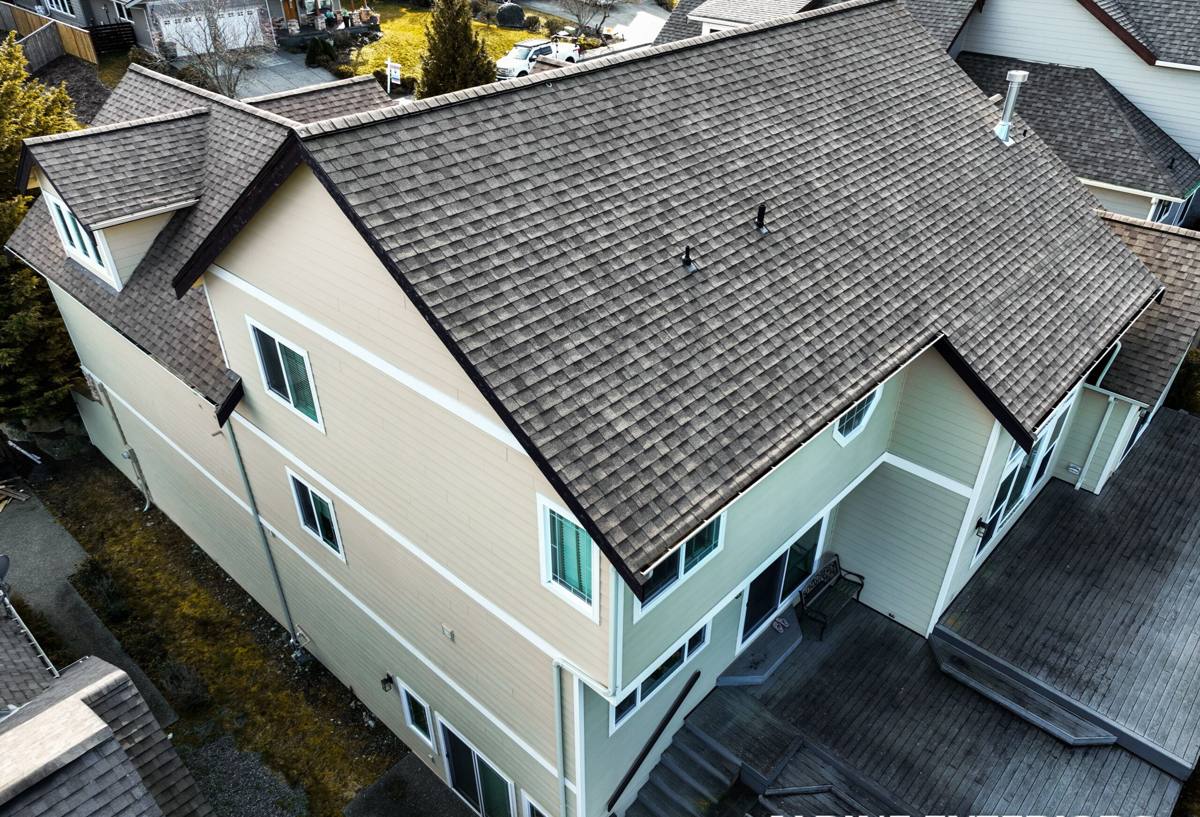
Repair or Full Replacement? What to Actually Look For
Not every tired deck needs to come out. Sometimes a deck board or two rotted from standing water, a handful of fasteners, or a section of loose railing is a legitimate repair. Full replacement becomes the honest recommendation when the problems are structural, repeated, or scattered across the whole deck rather than isolated to one spot.
- Boards that feel spongy or flex noticeably when you walk across them, especially near the house
- Rot or soft wood where the deck attaches to the house (the ledger board) — a common failure point in wet climates
- Support posts or beams that have been sistered, shimmed, or patched more than once
- Fasteners or connectors showing heavy rust or corrosion, particularly older galvanized hardware
- Railings or guardrails that don't meet current height and spacing requirements
- Visible daylight or gaps where the deck meets the house — a sign flashing has failed or was never installed correctly
- A deck already past the typical service life for its material (see the comparison below)
If you're seeing two or three of these at once, you're usually looking at a structure that's failing as a system, not a board here and there. That's when replacement is the more honest — and often more cost-effective — answer than chasing repairs year after year.
What a Correct Deck Replacement Actually Involves
The Ledger and House Connection
This is the single most important — and most commonly shortcut — part of any deck built against a house in a wet region. Water that gets behind an improperly flashed ledger board doesn't just rot the deck framing; it can work its way into the rim joist and wall framing of the house itself. A correct replacement means proper flashing, a code-compliant gap or waterproof membrane behind the ledger, and fasteners rated for exterior, ground-contact-adjacent use.
Footings and Posts
Footings need to sit below the frost line and be sized for the actual load of the deck, not just whatever was there before. Older Bothell-area decks were sometimes built on undersized or shallow footings that have since shifted or settled. Replacement is the right time to correct that rather than build a new deck on old, questionable concrete.
Framing, Joists, and Spacing
Joist spacing has to match the decking material's requirements — composite and PVC products typically need tighter joist spacing than solid wood to avoid flexing or long-term sagging. Getting this wrong is a common reason newer composite decks feel bouncier than they should.
Decking, Fasteners, and Railings
The visible surface matters, but so does what holds it down. Hidden fastener systems, stainless or coated screws rated for the decking material, and railing posts that are properly through-bolted rather than just lag-screwed into rim joists all factor into how the deck performs five and ten years out — not just how it looks the day it's finished.
Decking Material Options for This Climate
There's no single "best" decking material — there's the right material for your budget, your maintenance appetite, and how much shade and moisture your specific yard deals with. Here's an honest breakdown of the main options we install and repair in the Bothell area.
| Material | Moisture & Rot Resistance | Moss/Algae Resistance | Maintenance | Typical Lifespan |
|---|---|---|---|---|
| Pressure-treated wood | Good if sealed regularly | Low — needs cleaning and treatment | Annual cleaning/sealing recommended | 10–15 years |
| Cedar | Naturally decent, but surface-level | Moderate, still greens up in shade | Regular sealing to hold color and resist moisture | 15–20 years with upkeep |
| Capped composite | Very good — moisture doesn't penetrate the core | Good — smooth cap resists staining/growth | Occasional washing, no sealing needed | 25–30 years |
| PVC decking | Excellent — no wood fiber to absorb moisture | Very good | Low — occasional washing | 25–30+ years |
Wood costs less upfront and has a familiar, natural look, but it's the highest-maintenance option in a climate with this much sustained moisture — skip a year of sealing and you'll see it. Capped composite and PVC cost more to install but largely remove moisture and moss as ongoing problems, which matters more here than in a drier climate. We'll walk through the real trade-offs for your specific deck rather than push one product line.
Railings and Hardware: The Details That Actually Hold Up
Guardrails on a raised deck need to meet minimum height requirements and baluster spacing that prevents a 4-inch sphere from passing through — a common code failure point on older decks that predate current standards. Beyond code, hardware choice matters more here than in drier regions: standard zinc-coated fasteners corrode faster under constant damp exposure than stainless or polymer-coated alternatives rated for treated lumber and coastal-adjacent moisture. It's a modest cost difference upfront that avoids streaking, staining, and failed connections down the road.
Permits in the Bothell Area
Bothell sits across two counties, and which jurisdiction reviews your permit depends on whether your property falls inside Bothell city limits or in unincorporated Snohomish County. Most deck replacements involving structural changes, a raised deck, or work at the ledger connection require a permit — even when you're rebuilding roughly the same footprint that was there before. We handle pulling the right permit for your specific address and make sure the finished structure passes inspection, rather than leaving that step for you to sort out.
Our Process, Start to Finish
- On-site evaluation of the existing deck, framing, ledger connection, and footings
- Honest repair-vs-replace recommendation, with the reasoning explained plainly
- Material selection walkthrough based on your budget, maintenance preference, and site conditions (shade, drainage, sun exposure)
- Permit submission and scheduling with the correct jurisdiction
- Demolition and disposal of the old structure
- Framing, footing, and ledger work built to current code, not just "how it was before"
- Decking, railing, and fastener installation
- Final walkthrough and inspection sign-off
Why a Crew That Already Works in Bothell Makes a Difference
A deck replacement done by a crew unfamiliar with this specific climate tends to make the same predictable mistakes: undersized flashing details, fastener choices that look fine for the first year and corrode by year three, or joist spacing based on a manufacturer's minimum spec written for a drier region. A crew that regularly works Bothell and the surrounding Snohomish County communities has already seen how a shaded, north-facing deck moss-stains a season faster than one in full sun, and builds accordingly — from drainage slope to material choice to which fasteners are worth the extra cost.
Local permit familiarity matters too. Knowing whether an address falls under the city or the county, and what each jurisdiction typically wants to see on a deck permit submission, keeps a project from stalling in review.
Keeping a New Deck Looking and Performing Its Best
Whatever material you choose, a few habits extend its life in this climate: keep gutters and downspouts clear so runoff doesn't dump directly onto or under the deck, sweep leaves and debris off the surface before wet weather sets in (trapped organic matter is what feeds moss and staining), and check railing connections annually for movement. Wood decks need a sealing schedule to stay ahead of moisture; composite and PVC decks mostly just need periodic washing to stay clean.
If your deck is showing its age or you're planning ahead for next season, we're happy to take a look and give you a straightforward assessment — no pressure, no upsell. Fill out the form below for a free estimate.