 Snohomish
 Deck Building in Bothell: Built for the Weather You Actually Get
Bothell sits in that stretch of the Puget Sound lowlands where the weather does most of the damage to a deck over time, not any single storm. Long stretches of drizzle, short bursts of hard rain, mild winters that still dip below freezing often enough to matter, and shade from mature trees that keeps moisture sitting on wood and composite surfaces longer than homeowners expect. A deck built without that in mind can look fine for a year or two and then start showing problems: soft spots, moss creeping into seams, fasteners bleeding rust streaks, railings that wobble because the posts were never properly flashed or anchored.
We build decks for homes in this area on a regular basis, and the difference between a deck that lasts and one that doesn't almost always comes down to what's underneath and behind the finished surface — the ledger connection, the flashing, the fastener choice, the gap spacing, the footings. This page walks through what that actually looks like for a Bothell project.
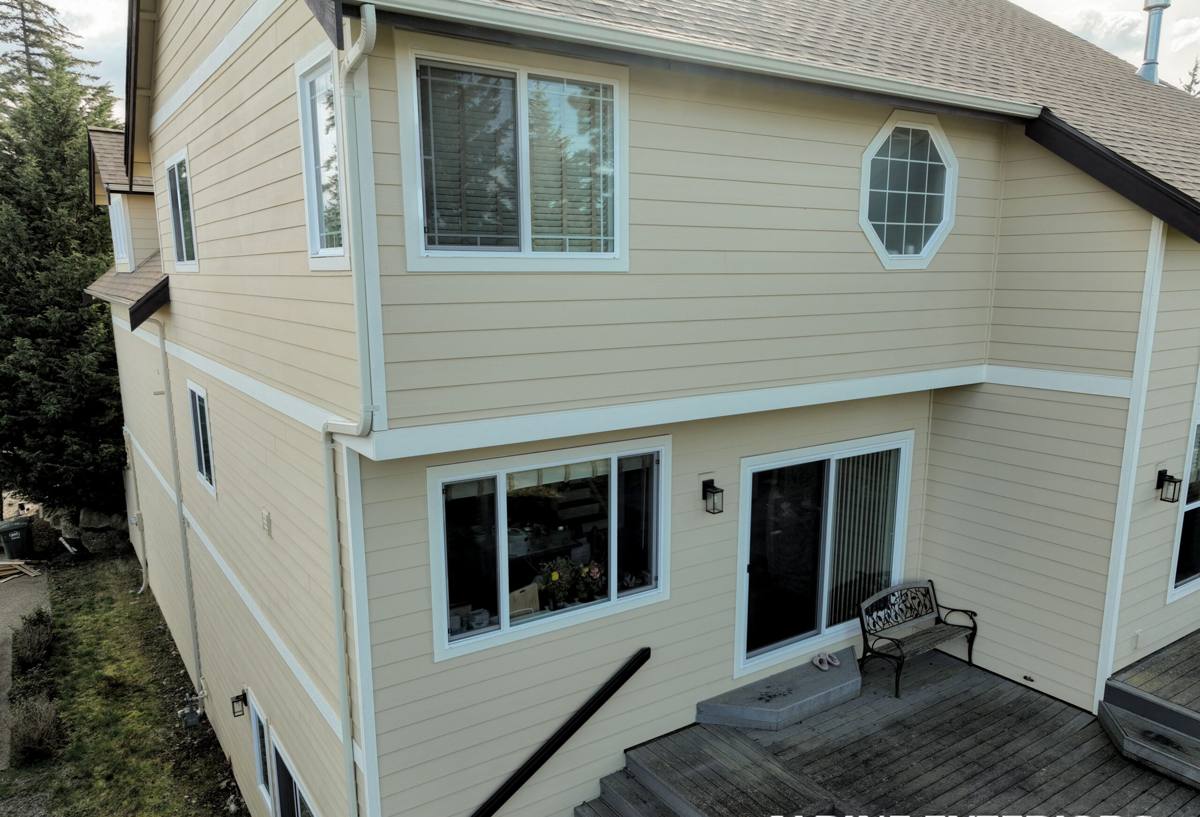
What Bothell's Climate Does to a Deck Over Time
Moisture that doesn't go away quickly
Western Washington doesn't get the kind of violent storms that snap boards, but it makes up for it in duration. Wood and even engineered decking stay damp for days at a stretch during the wet season, and if a deck doesn't have airflow underneath and around it, that moisture has nowhere to go. Trapped moisture is the root cause of most deck failures we see — not the rain itself, but rain that can't drain or dry.
Moss and organic growth
A long moss season is one of the defining features of building anything outdoors here. Moss and algae take hold fastest on decking that stays shaded and damp, and once established they hold moisture against the board surface, which accelerates rot in wood and can stain and degrade the surface layer of some composites. Board spacing, orientation, and surrounding landscaping all affect how much of a problem this becomes.
Freeze-thaw cycling
Bothell doesn't get deep, sustained freezes, but it gets enough freeze-thaw swings each winter to matter. Water that gets into a crack, a fastener hole, or a poorly sealed cut edge expands when it freezes and works that damage wider every cycle. Footings that aren't set below frost depth, or posts that sit in standing water at the base, are especially vulnerable.
Salt-influenced air near the water
For homes closer to the lake and waterway systems in this part of the county, there's a mild but real corrosive element in the air. It's not coastal salt spray, but it's enough to shorten the life of unprotected fasteners and hardware over the years, which is part of why fastener selection matters more here than in a dry inland climate.
What a Correctly Built Deck Involves
A deck is a structure first and a surface second. The parts nobody sees are what determine whether it's still solid in fifteen years.
- Ledger attachment and flashing — where the deck meets the house is the single most common failure point in this climate. It needs proper flashing, not just lag bolts and caulk, to keep water from migrating into the house's rim joist.
- Footings sized and set correctly — depth and diameter matched to the load and local frost expectations, not guessed at.
- Joist protection — joist tape or an equivalent moisture barrier on top of framing members so fastener penetrations don't become entry points for rot.
- Corrosion-resistant fasteners and hardware — hot-dip galvanized or stainless hardware rated for treated lumber and the local moisture load, not bargain-bin fasteners that streak and weaken.
- Proper board gapping — spacing that accounts for material expansion and allows water to shed instead of pooling in tight seams.
- Airflow underneath — adequate clearance and, where needed, ventilation so the underside of the deck can actually dry between rain events.
- Code-compliant railings and stairs — height, baluster spacing, and stair geometry built to current code, not just "close enough."
Decking Material Options for a Bothell Home
There's no single right material for every project — it depends on budget, how much upkeep the homeowner wants to take on, and how shaded the site is.
| Material | Upfront Cost | Maintenance | How It Handles This Climate |
|---|---|---|---|
| Pressure-treated wood | Lowest | Annual cleaning, periodic sealing/staining | Durable if maintained; needs consistent sealing to resist moisture and moss in shaded spots |
| Cedar | Moderate | Regular sealing to hold color and resist decay | Naturally moisture-resistant but still needs upkeep here to avoid graying and moss buildup |
| Composite decking | Higher | Occasional washing, no staining/sealing | Handles moisture well overall; can still get slippery with algae in heavy shade if not cleaned |
| PVC/capped polymer | Highest | Low — periodic washing | Best moisture resistance of the group; least prone to trapping water in the board itself |
We'll walk through these honestly during an estimate, including what each one actually costs in upkeep over a decade, not just at install.
Structural Details We Don't Skip
Ledger board and house connection
If your deck attaches to the house, that connection carries real structural load and it's also the single most common place we find water damage on decks we're asked to repair or rebuild. It gets proper through-bolting, structural screws, and integrated flashing — not just caulk over lag screws.
Post bases and footing drainage
Posts sitting directly on grade or in a footing that holds water will rot or corrode from the base up regardless of what species or hardware you used above ground. Post bases should keep wood off wet concrete and footings should be set to shed water away from the post.
Fastener corrosion class
Treated lumber today is more corrosive to fasteners than older treatment formulas were. Using the wrong fastener class with modern treated lumber leads to corrosion and staining within a few seasons — we match fastener hardware to the lumber treatment, not the other way around.
Our Process for a Bothell Deck Project
- On-site assessment — we look at drainage, shade exposure, existing structure (if it's a rebuild), and how the deck ties into the house.
- Design and material selection — sized to how you'll actually use the space, with honest trade-offs laid out for each material option.
- Permitting — most deck projects in this area require a permit; we handle that process rather than leaving it to the homeowner.
- Demolition and site prep (if applicable) — removing and properly disposing of an old deck, checking the ledger area and framing underneath for hidden rot before we build over it.
- Framing and structural work — footings, posts, beams, joists, ledger flashing.
- Decking, railing, and stairs — installed to the spacing and fastening standards above.
- Final walkthrough — we go over maintenance expectations for whatever material you chose so there are no surprises in year two.
Repair, Rebuild, or Replace?
Not every deck problem means starting over. If the framing and footings are sound and the issue is surface-level — worn decking, a failing railing, isolated soft boards — a targeted repair or a decking replacement over solid structure can make sense. But if the ledger connection is compromised, footings are undersized or heaving, or rot has spread into structural members, patching it is a short-term fix that costs more in the long run. Part of our assessment is telling you honestly which situation you're in before we recommend a scope of work.
Maintenance Checklist for This Climate
- Clear leaves and debris from between boards and along the perimeter before the wet season sets in
- Wash the surface at least once or twice a year to remove algae and moss buildup, especially in shaded areas
- Check and re-seal wood decking on the schedule your material calls for — don't wait until it's visibly gray and dry
- Inspect the ledger flashing and house connection annually for gaps or staining
- Look at fastener heads periodically for rust streaking, which signals a fastener or coating problem worth addressing early
- Keep gutters and downspouts near the deck clear so runoff isn't dumping extra water onto or under the structure
Why Hire a Crew That Already Works in Bothell
Building a deck that holds up in Snohomish County isn't the same job as building one in a dry climate — the framing details, fastener choices, and drainage planning all shift because of what the weather does here year-round. A crew that already works this area knows what moss season and driving rain actually do to a deck over a decade, has already dealt with the permitting process locally, and isn't learning those lessons on your project. That familiarity shows up in the details you can't see once the deck is finished but that determine whether it's still solid in fifteen years.
If you're planning a new deck or need an honest read on whether an existing one needs repair or replacement, we're glad to take a look. Use the form below to request a free, no-pressure estimate.