 Snohomish
 Why Board & Batten Suits Everett Homes
Board and batten has become one of the most requested looks for homes in and around Everett, and it's not just a style trend. The vertical lines read as clean and modern on newer builds, but they also pair naturally with the farmhouse and craftsman details common on older homes in this part of Snohomish. Beyond looks, the profile itself sheds water differently than horizontal lap siding — when it's built correctly, the battens act as a second layer of protection over the seams, which matters a great deal in a climate that rarely gives siding a break from moisture.
What we care about more than the aesthetic is whether the assembly behind it is right for this specific area. Everett sits close enough to the water that homes deal with a steady mix of salt-laden air, wind-driven rain, and long stretches of gray, damp weather that keep exterior surfaces wet for days at a time. Board and batten can be a great choice here — but only when it's built on a product and a process that account for those conditions.
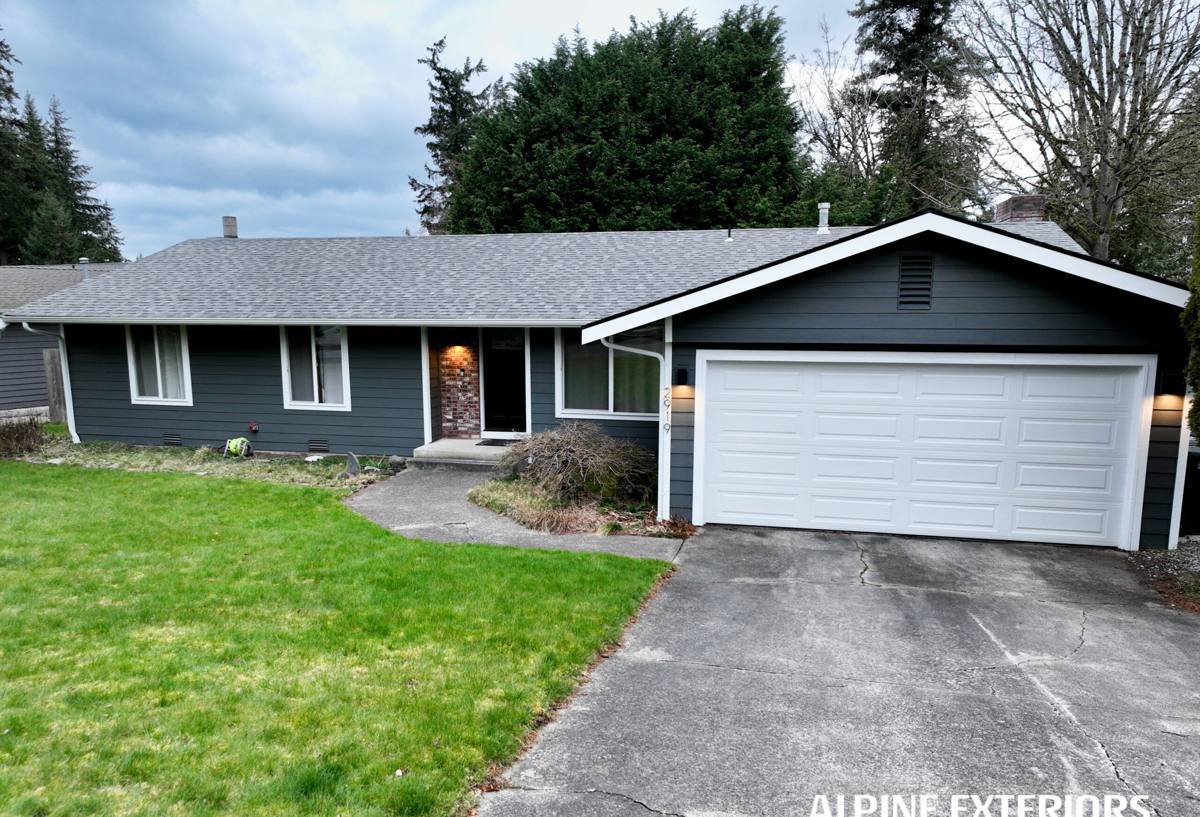
What Salt Air, Driving Rain, and Moss Season Actually Do to Siding
Homeowners often assume the biggest threat to their siding is a single storm. In practice, the damage here is cumulative and slow. Three things wear on Everett homes year-round:
- Salt air: Airborne salt accelerates corrosion on fasteners, trim, and any metal flashing that isn't rated for coastal exposure, and it can degrade lower-grade paint finishes faster than inland areas ever see.
- Driving rain: Wind-driven rain doesn't just wet the face of the siding — it pushes moisture sideways into seams, joints, and butt ends, which is exactly where board and batten is most vulnerable if it isn't detailed correctly.
- Moss season: Long, wet, low-sun stretches of the year let moss and algae get a foothold on any siding surface that stays damp and shaded, especially north-facing walls and areas under heavy tree cover.
None of these three problems is dramatic on its own. Together, over years, they're what separates a board and batten job that still looks sharp after a decade from one that's cupping, staining, or rotting at the seams.
Why We Install Board & Batten Only in James Hardie Fiber Cement
We don't offer board and batten in vinyl, LP SmartSide, primed spruce, cedar, or the other fiber cement alternatives on the market. That's a deliberate standard, not a lack of options. Every one of those materials has something going for it — cedar looks beautiful when new, vinyl is inexpensive, engineered wood panels install quickly — but each also has a real trade-off that shows up specifically in a climate like this one:
- Wood-based battens and boards (cedar, primed spruce, engineered wood) absorb and release moisture with the seasons. In a region with this much sustained dampness, that cycle is what eventually causes swelling, splitting, and paint failure at the joints — the exact spots board and batten depends on staying sealed.
- Vinyl board and batten is affordable and low-maintenance in dry climates, but it expands and contracts more than fiber cement, its seams and J-channels are common entry points for wind-driven rain, and it doesn't hold up structurally to real moss and mildew treatment the way a harder material does.
- Other fiber cement brands (LP SmartSide is actually engineered wood, not fiber cement — worth noting since it's often shelved next to Hardie) can perform reasonably, but we've standardized on James Hardie specifically for its factory-baked ColorPlus finish, its HZ5 formulation engineered for Pacific Northwest moisture exposure, and a transferable warranty structure we can stand behind without qualifying it.
James Hardie fiber cement is non-combustible, dimensionally stable in wet-dry cycles, and the ColorPlus finish is baked on at the factory rather than field-applied — which means the color coat itself resists the fading and peeling that salt air and UV cause on site-painted material. For a board and batten install, where seam integrity is everything, that stability is the whole reason the product holds up here.
What a Correct Board & Batten Job Involves
Board and batten fails almost exclusively at the details, not the field of the wall. A crew that's never built one in this climate will often get the visible parts right and miss the parts that actually determine whether it lasts.
The Rain Screen Gap
Behind the boards, we install a drainage gap (a rain screen) rather than fastening battens directly to the weather-resistant barrier. This gives any moisture that does get past the face of the siding a path to drain and dry out instead of sitting against the wall assembly — which matters enormously given how long surfaces stay damp here during moss season.
Fastening and Flashing
We use fasteners rated for the coastal exposure this area gets, not standard hardware that will show corrosion staining within a few years. Flashing at windows, doors, and any horizontal transition is detailed to shed water outward, not just caulked and hoped for.
Butt Joints and Vertical Seams
Every vertical seam and horizontal butt joint is a potential water entry point. These get factory-cut, primed edges, correct overlap or H-channel treatment, and sealant rated for the movement and moisture cycling this climate produces — not a bead of general-purpose caulk.
Batten Spacing
Battens are spaced and fastened to allow for the material's expansion and contraction without binding or cracking the sealant joints over time, which is a common failure point on rushed installs.
Board & Batten vs. Other Siding Approaches
| Approach | Moisture Performance Here | Maintenance | Longevity |
|---|---|---|---|
| James Hardie board & batten | Strong — factory finish, engineered for wet climates, rain screen install | Occasional wash; no repainting | Decades with correct install |
| Cedar board & batten | Moderate — needs consistent sealing to resist swelling and rot | Repainting/staining, sealing every few years | Shorter without diligent upkeep |
| Vinyl board & batten | Weaker seam performance in driving rain; can trap moisture behind panels | Low, but limited repair options if damaged | Variable, prone to warping/fading |
| Engineered wood (e.g., LP SmartSide) | Moderate — better than raw wood, still moisture-sensitive at cut edges | Edge sealing and paint maintenance | Depends heavily on installation quality |
Our Process for Everett Board & Batten Projects
We treat every board and batten estimate as a wall-assembly problem, not just a materials order:
- On-site assessment: We look at sun exposure, tree cover, drainage around the foundation, and any existing moisture or moss issues on the current siding before quoting anything.
- Product and profile selection: We help you choose board width, batten spacing, and James Hardie ColorPlus color based on the home's style and how the elevation actually faces weather.
- Tear-off and inspection: Old siding comes off and we inspect the sheathing and weather barrier underneath for any hidden rot or damage before installing anything new.
- Rain screen and weather barrier install: This is the step that's easy to skip and hard to notice once the siding is up — we don't skip it.
- Board, batten, and flashing installation: Installed to Hardie's fastening and clearance specifications, not generic carpentry practice.
- Final walkthrough: We review seams, caulking, and trim details with you directly before calling the job done.
What Drives Cost on a Board & Batten Job
| Factor | Why It Matters |
|---|---|
| Wall square footage and number of stories | More area and access complexity (scaffolding, ladders) affects labor time |
| Existing siding removal | Tear-off, disposal, and any sheathing repair add time before new siding goes up |
| Trim and detail complexity | Dormers, multiple roof lines, and window/door counts increase flashing and cutting work |
| Board width and batten spacing chosen | Narrower reveals and tighter batten spacing require more material and labor per square foot |
| Color selection | Standard ColorPlus colors versus custom finishes can shift material cost |
Keeping Board & Batten Looking Right Through Moss Season
- Rinse the siding annually, focusing on north-facing and shaded walls where moss gets a foothold first
- Keep gutters clear so overflow doesn't run down the face of the siding repeatedly
- Trim back vegetation and tree limbs that keep any wall section shaded and damp
- Check caulking at trim and seams every year or two and have it touched up before it fails, not after
- Address any soft spots or staining early — with fiber cement, early issues are almost always a flashing or sealant fix, not a siding replacement
Why Hiring a Crew That Already Works Everett Matters
Board and batten installation isn't complicated in theory, but the details that make it last in this climate are specific to the conditions here — the rain screen gap, the fastener spec, the flashing at every transition. A crew that mostly installs in drier inland regions may build a technically fine wall that still isn't built for what salt air and a long wet season will do to it over ten or fifteen years. Working regularly in and around Everett means we're not guessing at how this climate treats a wall assembly — we're building to what we've seen it do.
If you're considering board and batten siding for your Everett home, we're happy to walk the property with you, talk through what your specific elevation and exposure call for, and give you a straightforward, no-pressure estimate using the form below.