 Snohomish
 Why Bellingham Roofs Wear Out Differently
Bellingham sits close enough to the water that salt-laden air is a constant, low-grade stress on exterior materials — it accelerates corrosion on exposed fasteners, flashing, and metal roof panels faster than you'd see even twenty miles inland. Add in Whatcom County's long wet season, where driving rain comes in sideways off the Strait more often than most homeowners expect, and you've got a roof that's rarely given a real chance to dry out between storms. On top of that, our extended moss season — thanks to shade, humidity, and mild temperatures that never really kill it back — means organic growth is working on your shingles nearly year-round, not just in a couple of soggy months.
None of this means Bellingham roofs fail faster than average. It means they fail differently, and a roof replacement done without accounting for these specific conditions tends to show problems again within a few years — recurring moss, soft decking near the eaves, or leaks at penetrations that never should have let water through.
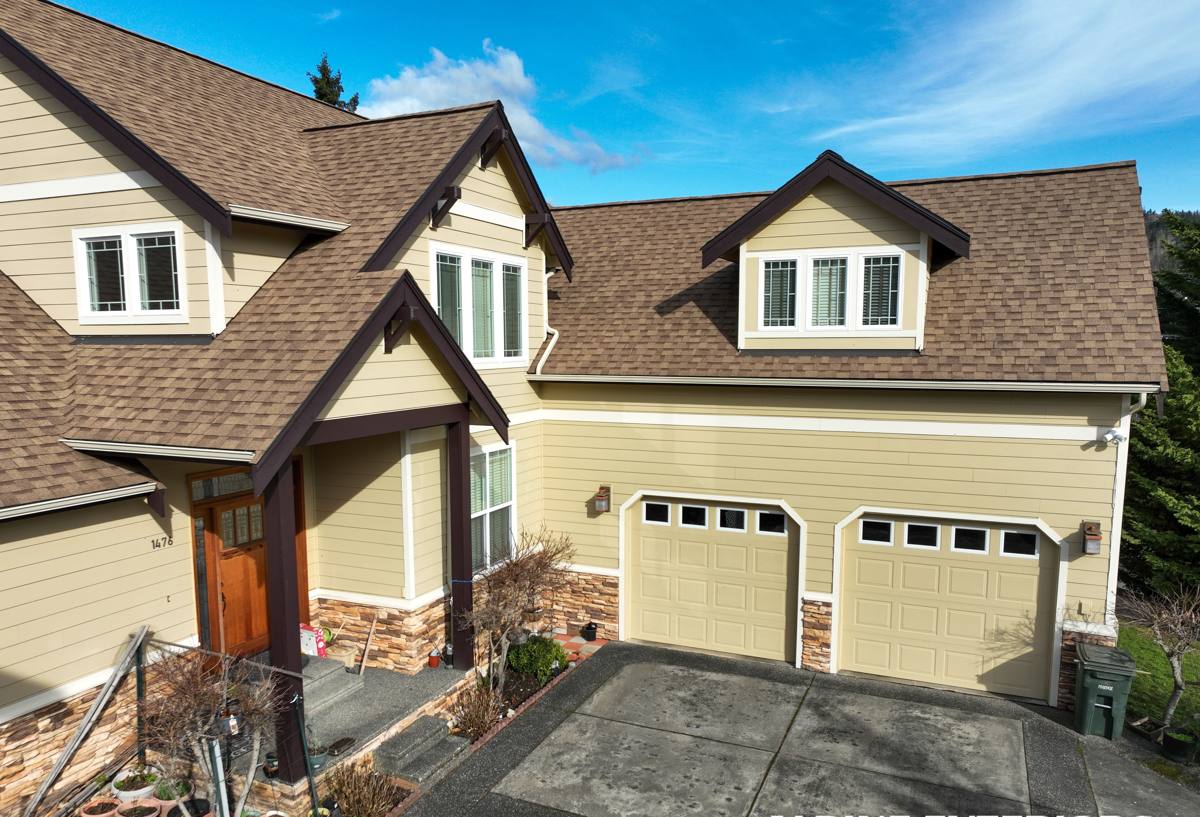
Signs a Bellingham Home Needs Replacement, Not Repair
Roof replacement is a bigger investment than a repair, so it's worth being honest about when a repair genuinely won't hold up. A few patched shingles can buy time on a roof with isolated damage and otherwise sound decking. But once moisture has gotten into the underlayment or decking over a wide area, patching just delays the inevitable and can mask the extent of the damage.
- Granule loss heavy enough that you can see bare asphalt in multiple spots, not just one worn valley
- Moss mats thick enough to hold water against the shingle surface, especially on north-facing slopes
- Soft or spongy decking felt underfoot during an inspection, a sign water has reached the sheathing
- Daylight visible through the roof deck from the attic, or water stains that reappear after every hard rain
- A roof pushing past 20–25 years for composition shingle, or showing widespread curling and cracking
- Flashing that's rusted, lifted, or was never properly step-flashed at walls and chimneys to begin with
If your roof shows two or more of these, a replacement is almost always the more cost-effective path over the next decade than continuing to chase leaks one at a time.
What a Correct Roof Replacement Actually Involves
Full Tear-Off, Not a Layover
We remove the existing roofing down to the deck rather than layering new shingles over old. A layover hides the condition of the decking, traps moisture between layers, and voids most manufacturer warranties. In a climate as wet as ours, you want the decking inspected and, where necessary, replaced — not covered up.
Decking Inspection and Repair
Once the old roofing is off, we check every section of plywood or plank decking for soft spots, delamination, or rot, particularly near valleys, eaves, and any old penetration points. Any compromised decking gets replaced before anything new goes down. This step is where a rushed or underbid job cuts corners, and it's the step that determines whether your new roof lasts.
Underlayment and Ice-and-Water Protection
A synthetic underlayment goes down as the primary moisture barrier, with self-adhering ice-and-water shield membrane at the eaves, valleys, and around all penetrations — the spots where driving rain and wind-blown water are most likely to find a way in. This detail matters more here than in drier climates, where a standard underlayment alone might be adequate.
Flashing Done Right
Step flashing at walls and chimneys, proper apron and counter-flashing, and new pipe boots are non-negotiable. Old, reused flashing is one of the most common causes of leaks we find on older Bellingham homes, and it's an easy thing to skip if a crew is trying to save time.
Ventilation
Balanced intake and exhaust ventilation keeps the attic dry and the roof deck at a consistent temperature, which reduces condensation buildup — a real issue in our humid, mild climate — and helps shingles last their full rated life instead of failing early from the underside.
Choosing a Roofing Material for This Climate
There's no single "best" roofing material — the right choice depends on your budget, how the roof is shaded, and how much upkeep you're willing to do. Here's how the common options actually perform in Bellingham's salt air, rain, and moss conditions.
| Material | Typical Lifespan | Moss Resistance | Maintenance | Notes for This Climate |
|---|---|---|---|---|
| Architectural asphalt shingle | 25–30 years | Moderate (better with algae-resistant granules) | Periodic moss/debris removal | Best balance of cost and performance for most homes |
| Standing seam metal | 40–50+ years | High — sheds moss and debris well | Low, but check fastener corrosion near the water | Strong option, though salt air demands quality coated fasteners |
| Cedar shake | 20–30 years with upkeep | Low without regular treatment | High — regular cleaning and treatment needed | Attractive but maintenance-heavy in a climate this wet |
| Synthetic composite shingle | 30–50 years | Moderate to high depending on product | Low to moderate | Good middle ground where budget allows |
For most Bellingham homes, we steer clients toward architectural asphalt with algae-resistant granules or standing seam metal, simply because they hold up with the least ongoing maintenance in a moss-prone, rain-heavy environment. Cedar shake still has a place for homeowners who value the look and are committed to maintaining it — we're upfront that it asks more of you over time, not that it's a bad product.
Our Roof Replacement Process
- On-site inspection: We assess the deck, ventilation, flashing points, and existing damage in person before quoting anything.
- Written estimate: A clear scope of work and price, with material options explained honestly, no pressure to upsell.
- Material selection: We help you weigh cost, lifespan, and maintenance based on your specific roof's exposure and shading.
- Permitting: We handle the local permit process so it's not something you have to chase down.
- Tear-off and deck repair: Old roofing removed, decking inspected and repaired as needed, all in one continuous work window.
- Installation: Underlayment, flashing, ventilation, and roofing material installed to manufacturer spec.
- Cleanup and magnetic sweep: Full site cleanup, including a nail sweep of the yard and driveway.
- Final walkthrough: We review the finished roof with you and go over care and warranty details before we consider the job done.
Moss and Algae Prevention That Actually Works
Given how long our moss season runs, prevention is worth building into the replacement itself rather than treating as an afterthought. Zinc or copper strips installed near the ridge release trace metal ions with every rain, which inhibits moss and algae growth on the slopes below without chemical treatments. We also make sure gutters and downspouts are sized and pitched correctly during the replacement — clogged or undersized gutters hold water against the lower courses of shingles, which is one of the most common places we see moss take hold first.
Beyond that, periodic soft-washing (not pressure washing, which damages granules) and keeping overhanging branches trimmed back to let sunlight and airflow reach the roof will do more for moss control long-term than any one-time treatment.
Why It Matters to Hire a Crew That Already Works in Bellingham
A roof replacement isn't a generic product — it's a system that has to be built for the specific way water, wind, and salt air behave on your property. A crew that regularly works in Bellingham and across Whatcom County already knows which details matter most here: where driving rain tends to find weak flashing, which slopes hold moss longest, and how much ventilation a home actually needs given our humidity. That local experience shows up in fewer callbacks and a roof that performs the way it's supposed to for its full lifespan, not just for the first dry season.
It also matters for response time. If a windstorm off the water damages a section of roofing, a local crew can get to you faster than a company dispatching from out of the area — and can usually speak to your roof's history if we were the ones who installed it.
What to Expect on Cost
Roof replacement pricing depends on roof size, pitch, material choice, and how much decking repair is needed once the old roofing comes off — we won't quote a firm number without seeing the roof in person. In general, asphalt shingle replacements run toward the lower end of the cost range, standing seam metal and synthetic composites sit in the middle to upper range, and cedar shake tends to cost more upfront and over time due to maintenance. We'll always walk you through what's driving the number on your specific home rather than handing you a flat price with no explanation.
If your roof is showing its age or you just want an honest read on where it stands, we're happy to take a look. Request a free, no-pressure estimate using the form below and we'll get back to you with a straightforward assessment.