 Snohomish
 Arlington's Climate Is Harder on Siding Than Most Homeowners Realize
Arlington sits close enough to Puget Sound and the Snohomish County lowlands to catch a steady mix of marine air, wind-driven rain, and shade from mature evergreens — three things that age exterior siding faster than most homeowners expect. A siding replacement here isn't just a cosmetic upgrade. It's a chance to correct whatever let moisture, salt, and moss gain a foothold on the old system in the first place, and to install something engineered to handle this specific climate rather than a generic product that happens to be sold locally.
We work Arlington regularly, alongside the rest of the Snohomish area, so this page focuses on what actually matters for homes in this specific stretch of Western Washington: what the climate does to siding over time, what a correctly executed replacement looks like, and how our process runs from first call to final walkthrough.
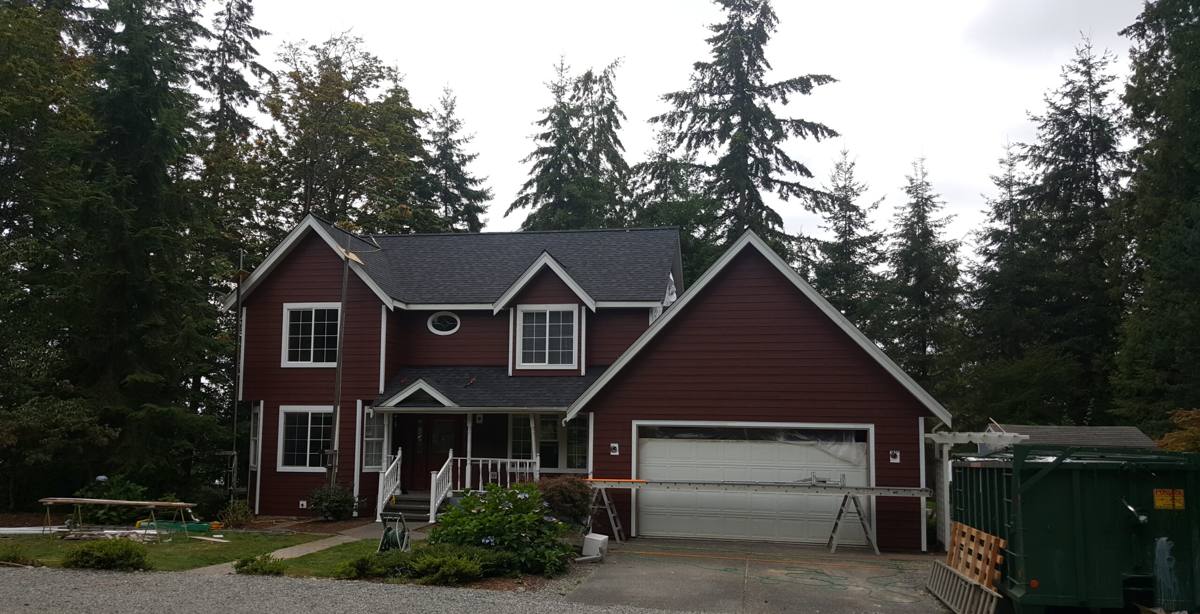
What Snohomish County's Climate Does to Siding Over Time
Salt Air and Marine Exposure
Homes closer to the Sound and its inlets pick up airborne salt that settles on exterior surfaces. Over years, that salt exposure accelerates the breakdown of paint films, corrodes exposed fasteners, and works into any seams or cracks in the siding surface. Wood-based products are especially vulnerable because salt-laden moisture keeps the material damp longer between rain events, which feeds rot from the inside out.
Driving Rain and Wind-Driven Moisture
Arlington gets its share of storms that push rain sideways instead of straight down. Wind-driven rain finds every gap in flashing, every under-caulked seam, and every place where siding wasn't held to the right clearances. Once water gets behind the cladding, it doesn't dry out quickly in our climate — it sits against the sheathing and framing, and that's where the real damage starts.
Moss, Mildew, and the Long Wet Season
Western Washington's wet season runs long, and shaded lots under fir and cedar canopy stay damp even longer. Moss and mildew take hold on siding surfaces that don't shed water well or that hold moisture in their texture, and once established, moss roots work into seams and coatings, holding water against the substrate almost permanently. Removing moss without damaging the underlying material is a real skill — and preventing it from returning starts with choosing a siding material and finish that don't give it anything to grip.
Signs Your Arlington Home Needs Replacement, Not Just Repair
Not every siding problem calls for a full tear-off. But there's a point where patching becomes false economy — where the money spent on repeated repairs would have been better spent on a correct, complete replacement. Here's what tells us a home has crossed that line:
- Soft or spongy spots when you press on the siding, especially near the bottom courses or below window sills
- Paint that keeps failing in the same spots within a year or two of repainting
- Visible warping, buckling, or separation at seams and corners
- Moss or dark staining that returns within months of cleaning
- Siding that was never properly flashed at windows, doors, or roof-to-wall transitions
- Cracking or delamination on cement-based products that were poorly installed or finished
- A musty smell in interior rooms along exterior walls, which can point to trapped moisture behind the siding
- Visible daylight or gaps at panel joints, trim, or penetrations
If you're seeing two or more of these, it's worth having someone look at the wall assembly itself, not just the surface — because in our climate, surface problems are often a symptom of what's happening underneath.
Why We Install Only James Hardie Fiber Cement
We don't install vinyl, LP SmartSide, cedar, or primed spruce siding, and we're upfront about why. Each of those products has genuine strengths, but none of them holds up as reliably as fiber cement against the specific combination of salt air, sustained moisture, and moss pressure that Snohomish County homes deal with year after year.
Wood-based and engineered-wood products depend heavily on an intact factory or field-applied coating to keep moisture out; once that coating is compromised at a cut edge, fastener hole, or joint, water gets into the substrate and the clock starts on rot. Vinyl sheds water well but can warp under sustained heat-cold cycling, doesn't hold paint if you ever want a color change, and its seams and channels can still trap moisture and organic growth in a shaded, wet climate. Cedar is a beautiful, genuinely traditional Pacific Northwest material, but it requires ongoing maintenance — sealing, staining, moss treatment — to perform in a climate this wet, and most homeowners underestimate that upkeep until the siding is already showing damage.
James Hardie fiber cement is engineered from cement, sand, and cellulose fibers, which makes it non-combustible and dimensionally stable — it doesn't expand and contract with moisture the way wood does, and it doesn't rely on staying perfectly sealed to resist rot, because it isn't wood in the first place. Hardie's ColorPlus finish is baked on at the factory under controlled conditions, which gives it better fade and moisture resistance than field-applied paint, and it comes backed by a long, transferable manufacturer warranty. Hardie also makes climate-engineered HZ product lines specifically formulated for different moisture and freeze exposure zones, which matters in a region like ours where wet winters are the norm rather than the exception.
| Factor | James Hardie Fiber Cement | Vinyl / Wood-Based Alternatives |
|---|---|---|
| Moisture behavior | Dimensionally stable; doesn't swell, rot, or warp | Wood swells and can rot; vinyl can warp with heat cycling |
| Moss/mildew resistance | Dense, factory-finished surface resists organic growth | Textured or porous surfaces can hold moisture and moss |
| Fire performance | Non-combustible material | Wood is combustible; vinyl can deform or melt under heat |
| Maintenance | Occasional washing; factory finish holds color for years | Wood needs periodic sealing/staining; vinyl fades and chalks |
| Warranty | Long, transferable manufacturer warranty | Varies widely; often shorter or non-transferable |
What a Correct Siding Replacement Job Actually Involves
Tear-Off and Sheathing Inspection
A real replacement starts with full removal of the old siding, not an overlay. That's the only way to see what's actually happening at the sheathing — soft spots, hidden rot, old inadequate flashing, or moisture damage that's been building for years behind the old cladding. Any compromised sheathing gets replaced before a single new panel goes up. Skipping this step is the single most common reason a siding job fails early in a climate like this one.
Weather-Resistive Barrier and Flashing Details
Underneath the new siding, a correctly installed weather-resistive barrier and properly lapped flashing at every window, door, and penetration is what actually keeps wind-driven rain out of the wall assembly. The siding itself is the second line of defense, not the only one. This is also where a lot of budget installations cut corners, because it's invisible once the new siding goes up — and it's exactly where problems show up again in a few years if it's done wrong.
Correct Fastening and Clearances for Hardie
Fiber cement has manufacturer-specified fastening patterns, clearances from grade, decks, and roofing, and gaps at butt joints — all of which exist for a reason, mostly moisture management. Installed to spec, Hardie performs exactly as engineered. Installed off-spec — wrong fasteners, no clearance at grade, tight-butted joints with no expansion gap — even the best material on the market can develop problems that have nothing to do with the product itself and everything to do with the installation.
Our Process for Arlington Projects
Estimate and Inspection
We start with an on-site look at the existing siding and, where visible, the condition of trim, flashing, and any problem areas you've noticed. We'll tell you plainly whether you're looking at a full replacement or something less, and walk through what's driving the recommendation.
Prep and Installation
Once a project is scheduled, we handle full tear-off, sheathing repair where needed, correct weather-resistive barrier and flashing installation, and then install Hardie panels or lap siding to manufacturer specification — proper fastening, clearances, and joint treatment throughout.
Final Walkthrough and Warranty Registration
We walk the finished job with you, address anything that needs a second look, and register the installation for manufacturer warranty coverage so that paperwork is handled, not left for you to track down later.
Cost Factors for Arlington Siding Replacement
Every home is different, and we'll always give you a specific number after an on-site look rather than a guess over the phone. But these are the main factors that move a project's cost up or down:
| Factor | Why It Affects Cost |
|---|---|
| Extent of sheathing damage | Hidden rot found during tear-off requires repair before new siding goes on |
| Home size and wall complexity | More corners, gables, and trim details mean more labor and material |
| Siding profile chosen | Lap, panel, and shingle-style Hardie products vary in material and install time |
| Access and site conditions | Tight lots, slopes, or landscaping close to the house can slow work |
| Trim and detail work | Window and corner trim, fascia, and soffit work add scope beyond field siding |
Why a Crew That Already Works in Arlington Matters
A crew that regularly works Arlington and the surrounding Snohomish County area already knows what this climate does to a wall assembly, because we've torn open enough of them to see it firsthand. That familiarity shows up in small decisions — where to pay extra attention to flashing, how much clearance to leave at grade given our rainfall, which orientations on a given lot take the most weather. It's the difference between a crew installing siding to a generic checklist and a crew installing siding for the conditions your specific house will actually face for the next several decades.
Maintaining Your New Siding in This Climate
James Hardie siding is low-maintenance, not no-maintenance. In Snohomish County's climate, a periodic rinse to clear pollen, road film, and any early moss growth goes a long way toward keeping the factory finish looking like new. Keep an eye on caulking at trim joints over the years, make sure gutters are directing water away from the wall rather than overflowing onto it, and trim back vegetation that keeps siding shaded and damp longer than it needs to be. None of this is heavy lifting — it's the kind of upkeep that protects a correctly installed system for the long haul rather than fighting problems that shouldn't be there in the first place.
If your Arlington home's siding is showing its age, or you just want an honest read on whether repair or replacement makes more sense, we're happy to take a look. Reach out for a free, no-pressure estimate using the form below.