 Snohomish
 Window Installation Built for Woodinville's Climate
Woodinville sits in a part of the Puget Sound region where homes take a steady beating from moisture, not sudden extreme weather. Driving rain off the Sound, long stretches of overcast humidity, and a moss season that can run from fall through spring all work on a house year-round. Windows are one of the first places that damage shows up, because every window is a planned hole in your weather barrier. If it isn't flashed, sealed, and installed correctly, water finds a way in — slowly, quietly, and usually behind the wall where you can't see it until the damage is already done.
We install windows for homes in and around Snohomish County and the greater Puget Sound area, including Woodinville, and we approach every job the same way: the window itself matters less than what happens around it. A mid-grade window installed correctly will outperform a premium window installed poorly, every time.
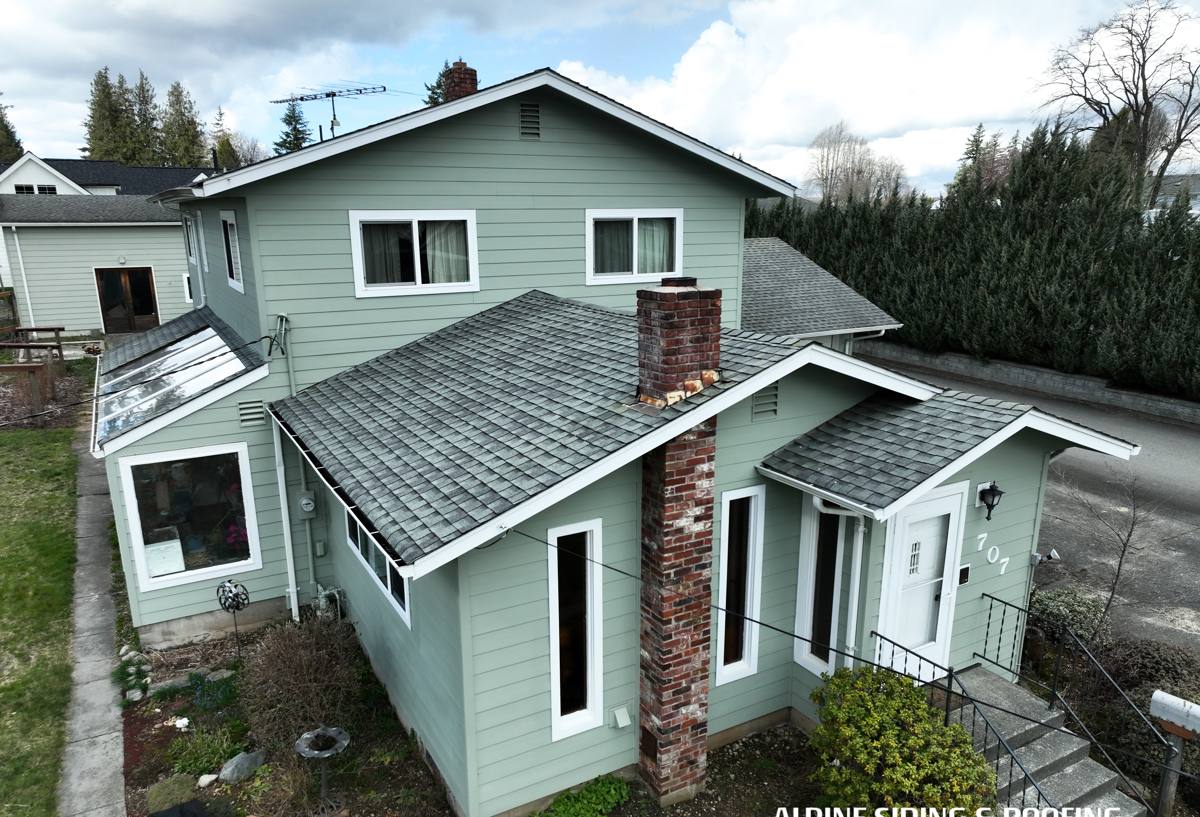
What Puget Sound Weather Does to Windows Over Time
Driving Rain and Wind-Driven Moisture
Rain here rarely falls straight down. Wind pushes it sideways against west- and south-facing walls, which means window flashing has to shed water outward and downward, not just sit there as a barrier. Older installations, or ones done without proper flashing sequencing, tend to let water track behind the trim and into the wall cavity. You often won't see a stain on the interior sill until the sheathing underneath has already been wet for months.
Moss, Algae, and Constant Damp
Our long moss season isn't just a roof problem. Moss and algae collect in window tracks, on sills, and in any horizontal trim detail that stays shaded and damp. Beyond looking bad, that buildup holds moisture against wood trim and caulking, which shortens the life of both. Windows on the north side of a house, or those tucked under eaves and trees, are usually the first to show it.
Salt Air and Hardware Corrosion
Homes throughout our Puget Sound service area deal with salt-influenced air carried in off the water, and it's harder on metal than most homeowners expect. Aluminum cladding, window hardware, and screen frames can pit and corrode years before the glass or frame itself fails. It's a slow process, so by the time hardware is visibly corroded, it's usually been happening for a while.
Temperature Swings and Condensation
Our climate isn't extreme, but the daily swing between a cold, damp morning and a warmer afternoon causes real condensation cycling on older or poorly sealed windows. Persistent condensation between panes is a sign the seal has failed — it's not fixable, and it means the insulated glass unit needs replacing.
Signs a Woodinville Home Needs Window Replacement
- Fogging or condensation trapped between the panes of a double-pane window
- Soft or discolored wood trim around the window frame, especially on the sill
- Windows that are hard to open, close, or lock, or that have visibly sagged in the frame
- Persistent moss, algae, or black staining at the sill or lower corners
- Noticeable drafts or a cold wall around the window even when it's fully closed
- Rising heating bills without any other obvious cause
- Visible gaps between the window frame and siding or trim
What a Correct Window Installation Actually Involves
Removing the Old Window the Right Way
A careful install starts with a careful removal. We check the condition of the framing and sheathing once the old window is out — this is often the first real look anyone gets at what's been happening behind the wall. If there's rot or water damage, it needs to be addressed before the new window goes in, not covered up.
Flashing and Water Management
This is the step that determines whether a window installation lasts fifteen years or fails in five. Flashing has to be layered correctly — sill pan first, then side flashing, then head flashing — so that any water that does get behind the siding is directed back out, not trapped against the framing. In our rainfall pattern, this isn't optional detail work; it's the actual job.
Sealing and Insulating
Gaps around the window frame need to be insulated and air-sealed without over-packing them, which can bow the frame and affect how the window operates. Exterior caulking should be a proper sealant rated for our climate, applied at the right joints — not everywhere, since a fully sealed perimeter with no weep path can trap moisture instead of shedding it.
Setting the Window Level, Plumb, and Square
A window that's slightly out of square will bind, won't lock properly, and will wear out its hardware faster. It sounds basic, but it's one of the most common corners cut on rushed installs.
Window Material and Frame Comparison
| Frame Material | Moisture Performance | Maintenance | Typical Lifespan |
|---|---|---|---|
| Vinyl | Good — won't rot, but seals age over time | Low | 20–30 years |
| Fiberglass | Very good — stable in wet/dry cycling | Low | 30–40 years |
| Wood-clad (wood interior, clad exterior) | Good if cladding and flashing are correct; vulnerable if compromised | Moderate | 25–35 years |
| Aluminum | Prone to condensation and corrosion near salt-influenced air | Moderate to high | 20–25 years |
We generally steer homeowners in our service area away from bare aluminum frames for that reason — not because aluminum is a bad product everywhere, but because our air quality and moisture cycle are hard on it specifically. Vinyl and fiberglass tend to be the more forgiving, lower-maintenance choices for this climate, with fiberglass being the stronger long-term investment where budget allows.
Our Installation Process
- On-site assessment of existing windows, framing, and any signs of past water intrusion
- Measurement and product selection based on the home's exposure and your budget
- Removal of old windows and inspection of the framing underneath
- Repair of any rot or damaged sheathing before the new window goes in
- Installation with proper sill pan flashing, side and head flashing, and air sealing
- Interior and exterior trim finishing
- Final walkthrough to confirm operation, locking, and sealing
What Window Installation Costs Depend On
| Factor | Why It Matters |
|---|---|
| Window count and size | Larger openings and more windows increase material and labor time |
| Frame material | Fiberglass and higher-end vinyl cost more than entry-level vinyl or aluminum |
| Condition of existing framing | Rot or water damage found during removal adds repair time before installation can proceed |
| New construction vs. retrofit | Retrofit (replacement into an existing opening) is usually less invasive than a full-frame new-construction install |
| Access and story height | Second-story or hard-to-access windows take more time and equipment |
We're not going to throw a number on this page that doesn't mean anything without seeing your windows in person. Broadly, window replacement projects can range from a few hundred dollars per window for a straightforward vinyl retrofit up to well over a thousand per window for larger openings or premium fiberglass units. The only way to get a number you can actually rely on is a walkthrough of your specific home.
Why a Local Crew Matters for Woodinville Homes
Woodinville sits near the Snohomish–King county line, in a stretch of the Puget Sound area where home styles, exposure, and building patterns vary from one neighborhood to the next. A crew that already works this region has seen how local homes hold up over time — which orientations take the worst of the driving rain, which older builds tend to have flashing problems, and which trim details collect moss and hold moisture. That's not something you get from a crew that installs windows the same way in a dry climate three states away.
We're a Snohomish-based crew, and we treat every window installation as a water-management job first and a glass-and-frame upgrade second. That mindset matters more here than in most parts of the country, because our climate doesn't forgive shortcuts — it just takes longer to show you where they were.
Questions to Ask Before Hiring Anyone for Window Work
- Do you use sill pan flashing on every installation, or only when asked?
- What happens if you find rot or water damage once the old window is removed?
- Are you licensed and insured for exterior work in Washington?
- What's the warranty on the window product versus the warranty on your installation labor?
- Can you walk me through your flashing sequence before work starts, not after?
- Do you have experience with homes in this specific area and its typical construction?
If a contractor can't answer the flashing and moisture-management questions clearly, that's worth paying attention to — it's usually the difference between a window installation that lasts and one that causes problems down the line.
Get a Straight Answer for Your Home
If you're dealing with drafty, foggy, or hard-to-operate windows at your Woodinville home, we're happy to take a look and give you an honest read on what's going on — no pressure, no upsell. Fill out the form below for a free estimate, and we'll walk you through what we see and what it would take to fix it right.