 Snohomish
 Why Edmonds Windows Wear Differently Than Windows Inland
Edmonds sits close enough to Puget Sound that homes here take a different kind of weathering than houses twenty miles inland. Salt-laden air corrodes hardware and pits aluminum and steel components faster than it does in drier, land-locked neighborhoods. Add in the driving, wind-pushed rain that comes off the water during fall and winter storms, and you get water intrusion patterns that don't show up in a textbook installation guide. Then there's moss season, which in this part of Snohomish County can run half the year — moss and algae hold moisture against siding, trim, and window sills, which keeps wood parts damp far longer than they'd stay damp somewhere with better drying conditions.
None of this means Edmonds homes need exotic products. It means the installation details that get skipped in easier climates — flashing sequence, sill pan drainage, sealant selection, hardware material — actually matter here. A window that performs fine in a dry climate with a sloppy install can still fail in a few years on a home exposed to Puget Sound weather. That's the gap we're hired to close.
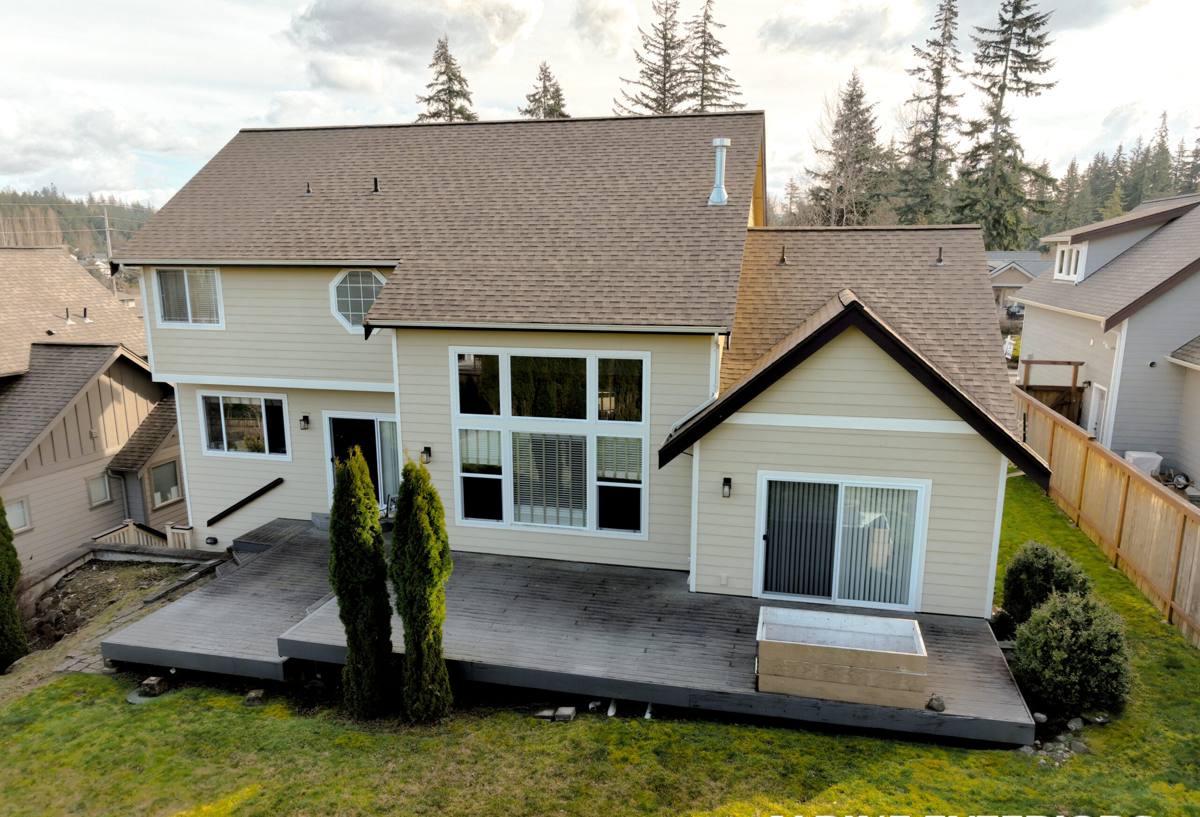
Signs Your Edmonds Home Is Due for Window Replacement
Most homeowners don't replace windows on a schedule — they replace them when something starts bothering them. In this climate, the early warning signs tend to show up as:
- Fogging or a permanent haze between panes, which means the seal on a double- or triple-pane unit has failed
- Soft or discolored wood at the sill or lower corners of the frame, often from moisture that's been sitting there under moss or debris
- Windows that are hard to open, close, or lock — frames can swell and warp with repeated wet-dry cycles
- Noticeable drafts or cold spots near the window even when it's fully closed
- Visible corrosion on hinges, cranks, or locking hardware, especially on homes with more direct exposure to marine air
- A jump in heating bills without any other obvious cause
Any one of these on its own might just need a repair. Several at once, especially on older single-pane or early dual-pane units, usually means replacement is the more honest recommendation.
What a Correct Window Replacement Job Actually Involves
It's Not Just Swapping the Glass
The window unit itself is maybe half the job. The other half is how it gets tied into the wall — the flashing, the sill pan, the sealant, and the gap treatment around the rough opening. In a climate that sees sustained wind-driven rain, a window that's caulked in without a proper drainage path will eventually let water behind the siding, and that damage stays hidden until it's expensive. We treat every opening as a water-management problem first and an aesthetic upgrade second.
Our Standard Steps
- Remove the old window and inspect the rough opening, sill, and framing for hidden rot or moisture damage before anything new goes in
- Repair or replace any compromised framing or sheathing — we don't install a new window over a rotten opening
- Install a sloped sill pan so any water that does get past the window drains outward, not into the wall cavity
- Flash the opening in the correct shingle-style sequence so water is directed down and out at every layer
- Set the window plumb, level, and square, then fasten per the manufacturer's structural requirements
- Insulate the gap between the frame and rough opening without over-packing it, which can bow the frame
- Seal and caulk the exterior with a product rated for this climate, leaving the correct weep paths open
- Test operation, locks, and weatherstripping before calling the job done
Skipping steps two through four is the single most common shortcut we see in call-backs from other installs — and it's the one that causes the most damage down the road.
Choosing the Right Window Material for This Climate
There's no single "best" window material — the right choice depends on your home's exposure, your maintenance appetite, and your budget. Here's how the common options actually perform under Edmonds-area conditions:
| Material | Moisture & Salt Air Behavior | Maintenance | Typical Fit |
|---|---|---|---|
| Vinyl | Won't rot or corrode; performs well in wet, salt-exposed conditions | Low — occasional cleaning | Most Edmonds homes, especially value-focused replacements |
| Fiberglass | Very stable in temperature swings and moisture; resists warping | Low | Homes wanting a higher-end feel and long service life |
| Aluminum | Prone to corrosion in salt air unless well-coated; conducts cold | Moderate to high near the water | Rare for residential replacement here; better suited to sheltered exposures |
| Wood / wood-clad | Attractive but needs a sound exterior clad or diligent upkeep to resist our wet season | High on bare wood; moderate on clad units | Historic or architecture-driven projects where the look matters more than upkeep |
Our default recommendation for most Edmonds homes is vinyl or fiberglass, simply because they hold up with the least fuss in a climate that gives wood and bare aluminum a hard time. We'll still install what you want for the look of your home — we just want you making that call with the maintenance trade-offs in front of you, not after the fact.
Glass Packages Worth Understanding
Beyond the frame, the glass package affects comfort and condensation resistance more than most homeowners expect:
- Double-pane with low-E coating is the practical baseline for this region — it cuts heat loss and reduces interior condensation on cold, damp days
- Triple-pane adds further insulation value, worth considering on north- or water-facing walls that take the brunt of winter wind
- Argon or krypton gas fill between panes improves insulation slightly but only matters if the seal holds — which is why installation quality matters as much as the spec sheet
Our Process, Start to Finish
We keep the process straightforward because homeowners have enough going on without a confusing timeline:
- Walkthrough and assessment — we look at each window's condition, the home's exposure to weather, and what's driving the replacement (comfort, appearance, damage, or energy use)
- Honest recommendation — we tell you which windows genuinely need replacing versus which could be repaired, and why
- Written estimate — clear pricing with no vague allowances
- Installation — following the flashing and drainage sequence above, on the timeline we agreed to
- Final walkthrough — operation, sealing, and cleanup checked with you before we consider the job finished
What Window Replacement Typically Costs
Pricing depends on window size, material, glass package, and how much (if any) hidden repair the opening needs once we open it up. As a rough guide for planning purposes:
| Factor | Why It Moves the Price |
|---|---|
| Frame material | Vinyl is generally the most affordable; fiberglass and wood-clad cost more upfront but may cost less in upkeep over time |
| Window size and count | Larger openings and whole-house replacements have per-unit efficiencies but a higher total |
| Glass package | Triple-pane and specialty coatings add cost but also add comfort and efficiency |
| Hidden damage | Rot or moisture damage found once the old window is out adds repair time before the new unit goes in |
| Access and site conditions | Second-story or hard-to-reach windows take more labor time |
We won't quote a number without seeing the actual windows and openings — anyone who does is guessing, and guesses turn into change orders later.
Why a Crew That Already Works Edmonds Makes a Difference
A contractor who works this area regularly has already seen how Edmonds homes respond to this climate over time — which framing details tend to trap moisture, which orientations take the worst of the winter storms, and how moss and algae buildup near window sills tends to progress if it's ignored. That's not a marketing point, it's a practical one: it means fewer surprises during the tear-out, and recommendations that are grounded in what actually happens to windows around here, not just what a spec sheet says should happen in ideal conditions.
It also means accountability. A crew that plans to keep working in this community has every reason to install correctly the first time and stand behind the work, because reputation here isn't abstract — it's the neighbors talking to each other.
Simple Upkeep That Extends Window Life
Whatever material you choose, a little seasonal attention goes a long way in this climate:
- Clear moss and debris away from sills and tracks before it holds moisture against the frame
- Rinse salt residue off exterior frames and hardware a few times a year if your home has direct water exposure
- Check and re-lubricate locks and cranks annually so hardware doesn't seize or corrode unnoticed
- Inspect exterior caulking each fall and touch up any cracked or gapped sections before winter rain arrives
- Keep gutters and downspouts clear so roof runoff isn't sheeting down across upper windows
If your windows are drafty, foggy, hard to operate, or just original to a home that's due for an upgrade, we're happy to take a look and give you a straight, no-pressure estimate — no obligation, just an honest read on what your windows actually need. Use the form below to get started.