 Snohomish
 Why Silver Firs Roofs Age the Way They Do
Silver Firs sits under a lot of tree cover, and that shade is a mixed blessing for a roof. It keeps homes cooler in summer, but it also means shingles stay damp longer after every rain, moss gets a head start in shaded valleys and north-facing slopes, and gutters fill with needles and leaf litter faster than they would on an open lot. Add in the region's driving rain, where wind pushes water sideways under poorly lapped shingles or tired flashing, and you get a roof that can look fine from the driveway while quietly failing where you can't see it.
We've replaced enough roofs in this part of Snohomish to know the failure pattern is rarely dramatic. It's slow: moss holding moisture against the shingle surface, granule loss in the shaded sections, soft decking around a chimney or skylight nobody's checked in years. By the time a homeowner sees a stain on the ceiling, the roof has usually been letting water in for a while.
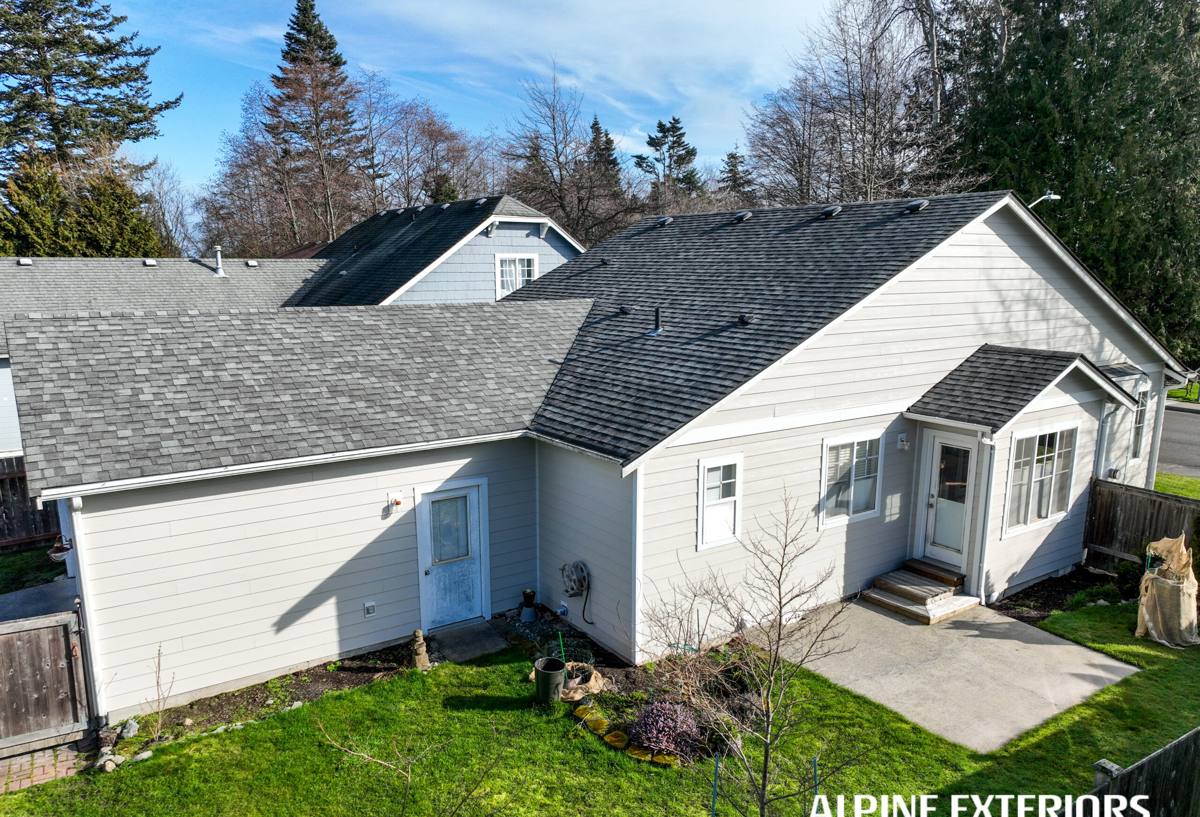
Signs a Silver Firs Roof Needs Replacement, Not Another Patch
Not every roof problem calls for a full tear-off. But there's a point where patching individual leaks costs more over time than doing the job right once. Here's how we tell the difference on an inspection:
- Moss isn't just on the surface — it's lifted shingle edges or worked into the granule layer
- Granule loss is heavy enough that you can see bare, shiny asphalt in multiple spots
- Shingles are curling, cupping, or cracking, especially on south- and west-facing slopes
- Flashing around chimneys, skylights, or roof-to-wall junctions is rusted, lifted, or was never step-flashed correctly
- You've had more than one leak repair in the last few years, in different spots
- Decking feels spongy underfoot during inspection, or there's visible sagging between rafters
If it's one or two of these, a repair might genuinely be the right call. If it's several at once, or the roof is past 20 years old, replacement is usually the more honest recommendation — and we'll tell you that even if a repair would be the easier sale.
What a Correct Roof Replacement Actually Involves
Tear-Off and Deck Inspection
We don't install new shingles over old ones. A full tear-off lets us see the actual decking underneath — every board, not just the ones we can guess at. Given how much moisture Silver Firs roofs deal with over their life, it's common to find a few sheets of plywood that have gone soft around old flashing points or valleys. Those get replaced before anything new goes down. Skipping this step is how a new roof ends up with an old, hidden problem sealed underneath it.
Underlayment That Matches the Climate
Synthetic underlayment goes down as the primary water barrier beneath the shingles, and in valleys, eaves, and around penetrations we use ice-and-water shield or peel-and-stick membrane for extra protection against wind-driven rain. This is not optional in our book for this area — it's the layer that keeps a roof watertight when wind pushes rain sideways under the shingle tabs, which happens regularly here.
Flashing Done Right
Most roof leaks we find don't come from the shingle field — they come from flashing. Step flashing at walls, counter-flashing at chimneys, and proper flashing at skylights all get replaced, not reused, during a full replacement. Reusing old flashing to save time is one of the most common shortcuts in this trade, and it's one of the most common reasons a "new" roof leaks within a few years.
Ventilation
A roof that can't breathe traps heat and moisture in the attic, which shortens shingle life from underneath and can feed moss growth from the inside out. We check intake (soffit vents) and exhaust (ridge or roof vents) together — one without the other doesn't create real airflow. This matters more under heavy tree cover, where the roof surface stays cooler and damper longer than it would in full sun.
Material Options for Silver Firs Homes
Most homes in this neighborhood are well suited to architectural asphalt shingles, but the right choice depends on your roof's exposure, tree cover, and how long you plan to stay in the home. Here's an honest comparison of the main options we install:
| Material | Typical Lifespan | Moss/Moisture Behavior | Best Fit |
|---|---|---|---|
| Architectural (laminate) asphalt shingle | 25–30 years | Good with proper ventilation; needs periodic moss treatment under heavy tree cover | Most Silver Firs homes; best balance of cost, appearance, and durability |
| 3-tab asphalt shingle | 15–20 years | Wears faster in shaded, damp conditions | Budget-driven projects; not our first recommendation for heavily shaded lots |
| Standing seam metal | 40–50+ years | Sheds moss and moisture well due to smooth, sloped surface | Homeowners planning to stay long-term and wanting minimal moss maintenance |
| Cedar shake | 20–30 years with upkeep | Requires diligent maintenance in damp, shaded conditions; higher moisture sensitivity | Homes prioritizing a specific traditional look, with a maintenance plan in place |
We're straightforward about trade-offs here: cedar shake can look great, but on a shaded lot with a long moss season, it asks for more upkeep than most homeowners want to keep up with. That's not a knock on the material — it's just a maintenance reality worth knowing before you commit.
What Drives the Cost of a Roof Replacement
Every roof is different, so we won't quote a number without seeing yours, but these are the factors that actually move the price up or down:
| Factor | Why It Matters |
|---|---|
| Roof size and number of facets | More squares and more valleys/hips mean more material and labor |
| Roof pitch and access | Steep or hard-to-access roofs take longer and require more safety setup |
| Deck condition | Rotted plywood found during tear-off adds material and labor to replace it |
| Number of penetrations | Chimneys, skylights, and vent stacks each need individual flashing work |
| Material choice | Asphalt, metal, and cedar carry different material and labor costs |
| Layers to remove | Tearing off multiple existing layers takes more labor and disposal |
Our Process for Silver Firs Homeowners
- On-site inspection — we walk the roof (weather permitting) and check the attic from inside, looking at ventilation, decking, and moisture signs
- Written estimate — a clear scope of work and price, with material options explained in plain terms
- Scheduling around weather — we plan installs for dry stretches whenever possible, given how much rain this area gets
- Tear-off and deck repair — old roofing removed, decking inspected board by board, any soft or rotted sections replaced
- Underlayment, flashing, and ventilation installed — the parts of the job that determine whether the roof actually performs long-term
- New roofing installed to manufacturer specifications, including proper nailing patterns and exposure
- Cleanup and magnetic sweep for debris and stray fasteners in the yard and driveway
- Final walkthrough so you can see the finished work and ask questions before we consider the job done
Moss and Moisture: Ongoing Reality, Not a One-Time Fix
Even a correctly installed new roof will deal with moss pressure in a neighborhood like this one. A new roof buys you a clean start and proper ventilation, but it doesn't make tree cover or rainfall go away. We tell every homeowner the same thing: keep gutters clear so water isn't sitting against the roof edge, and expect to have moss treated or gently removed every couple of years depending on how shaded your particular roof is. That's a maintenance rhythm, not a sign something was done wrong.
Why It Matters That We Already Work in Silver Firs
A crew that's worked this specific neighborhood knows what to expect before the first ladder goes up — the tree cover patterns, how driving rain behaves against certain roof orientations, which parts of a lot stay damp longest. That's not a substitute for a careful inspection of your specific roof, but it means we're not guessing at conditions we've never dealt with. It also means we're not far away if a question comes up after the job is done.
Here's a short checklist worth using with any contractor you're considering for a roof replacement in this area:
- Do they inspect the attic and decking, not just the shingle surface, before quoting?
- Is a full tear-off included, or are they proposing to layer over existing shingles?
- Does the estimate specify underlayment type, not just "new shingles"?
- Will they replace flashing, or reuse what's already there?
- Do they address ventilation, or only the roofing material itself?
- Are they licensed, insured, and willing to put the scope of work in writing?
If a contractor can't answer these clearly, that's worth noticing before you sign anything.
Ready for a Straight Answer on Your Roof
If you're seeing moss buildup, granule loss, or you just don't know how much life is left in your roof, we're glad to take a look and give you an honest read on where things stand. There's no pressure and no obligation — just a clear picture of your roof's condition and what your options actually cost. Fill out the form below to schedule a free estimate.