 Snohomish
 Why Marysville Siding Takes More Abuse Than the Rest of the House
Siding on a Marysville home has a harder job than most homeowners realize. It's the layer standing between your framing and a climate that combines salt-laden air drifting off Puget Sound, long stretches of driving rain, and a moss and algae season that can run most of the year in shaded, north-facing spots. Add in wind-blown grit, sprinkler overspray, and the everyday bumps of yard work and delivery carts, and it's easy to see why siding that looked fine five years ago can be hiding real problems today.
Most siding repair calls we get in Snohomish County aren't cosmetic. A stained panel or a soft spot near a window trim is usually a symptom of something happening behind the surface — trapped moisture, a failed seal, or a coating that's finally given up after years of exposure. Repairing it correctly means understanding what's actually causing the damage, not just covering it up.
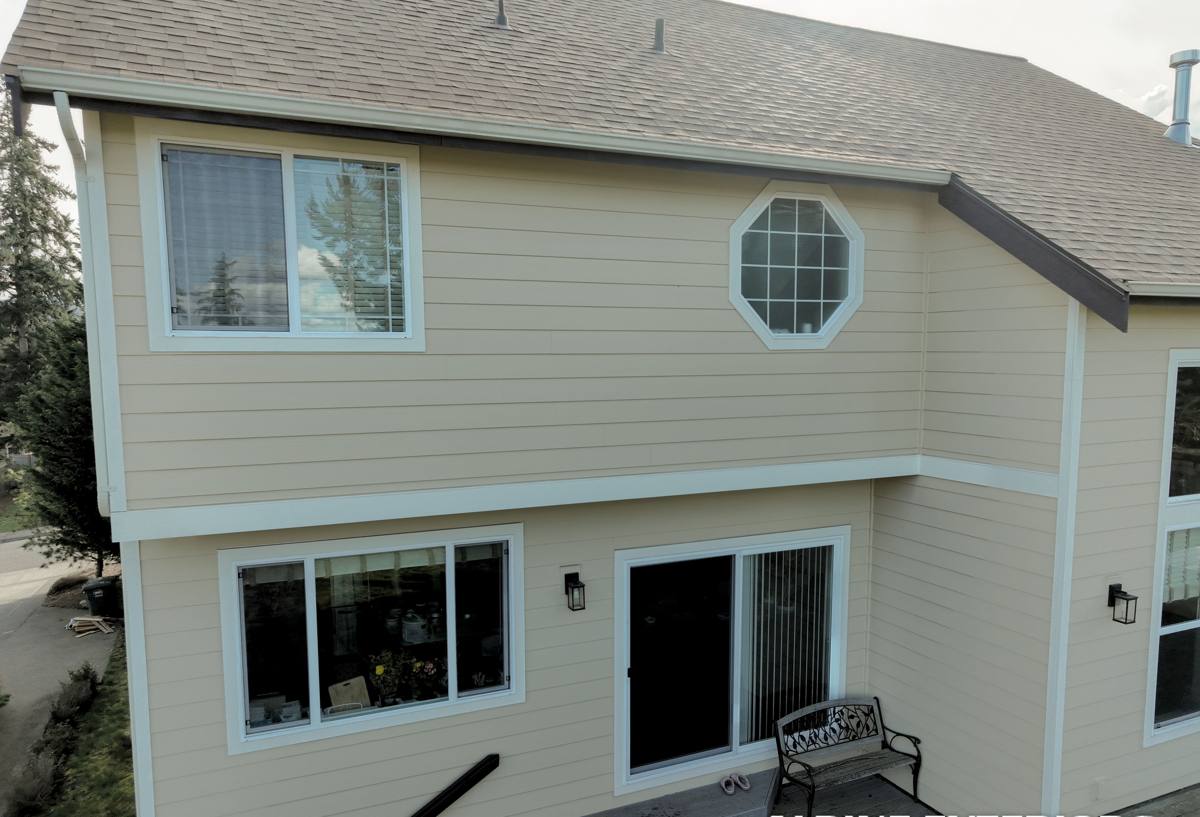
What Marysville's Climate Actually Does to Siding
Salt Air
Homes closer to Puget Sound pick up airborne salt that settles on exterior surfaces and accelerates corrosion of fasteners, flashing, and any metal trim components. Over time, that corrosion can loosen fastening points and open gaps that let water behind the siding.
Driving Rain
Western Washington doesn't just get a lot of rain — it gets a lot of wind-driven rain, which pushes water sideways into laps, seams, and trim joints that would stay dry in a calmer climate. Siding systems and installation details that aren't built for that kind of exposure tend to fail at the joints first.
Extended Moss and Algae Season
Shaded walls, north exposures, and the persistent dampness typical of this region give moss and algae months to establish themselves on siding surfaces. Beyond the cosmetic staining, sustained moisture retention from moss growth keeps the siding surface wet longer, which is exactly the condition that leads to rot, coating failure, and paint peeling in wood-based products.
Signs Your Marysville Home's Siding Needs Repair
- Soft, spongy, or crumbling panels when pressed — a strong sign of moisture intrusion behind the surface
- Dark streaking or persistent moss/algae growth that returns quickly after cleaning
- Cracked, bubbling, or peeling paint concentrated on one wall or exposure
- Gaps, cracks, or missing caulk at trim boards, window and door casings, and butt joints
- Visible warping, buckling, or panels pulling away from the wall
- Rust streaks below nail heads or metal flashing
- Interior signs — musty smell, discolored drywall, or peeling interior paint near exterior walls — that point to moisture getting through from outside
What a Correct Repair Actually Involves
Diagnosing the Cause, Not Just the Symptom
Replacing a stained or damaged section of siding without figuring out why it failed just buys time before the same spot fails again. A proper repair starts by pulling back the damaged material to check the water-resistive barrier, flashing, and framing underneath. If those are compromised, patching the visible siding without addressing them is a temporary fix at best.
Matching Materials and Profiles
Siding repair only looks right — and performs right — when the replacement piece matches the existing reveal, profile, and finish. Mismatched panel widths or a visibly different texture are a common giveaway of a rushed repair, and they can also create small gaps where the new and old material meet.
Flashing and Moisture Barrier Details
Most siding failures we open up trace back to a flashing or barrier detail that was missing or installed wrong the first time — around a window, at a roofline transition, or where two wall planes meet. A repair that doesn't correct that detail is a repair that will fail again in the same place.
Fastening and Sealant Standards
Corrosion-resistant fasteners and the correct sealant, applied at the right joints (and not applied where it shouldn't be, which can trap moisture), matter as much as the siding material itself in a climate this wet.
Repair vs. Replacement: How We Decide
| Factor | Repair Usually Makes Sense | Replacement Usually Makes Sense |
|---|---|---|
| Extent of damage | Isolated to one or two areas | Spread across multiple walls or the whole house |
| Underlying material condition | Framing and barrier are sound where checked | Rot or moisture damage found in multiple spots during inspection |
| Age of existing siding | Siding is otherwise in good shape and well within its service life | Siding is near or past its expected lifespan |
| Product type | Existing material can still be reasonably matched | Existing material is discontinued, mismatched, or a product we don't stand behind long-term |
| Root cause | Cause is a fixable, localized detail | Cause is systemic — original installation or product issues throughout |
We'll always tell you honestly which category your home falls into. If a targeted repair will hold up, that's what we recommend — there's no reason to sell a full re-side when a section repair solves the actual problem.
Our Process for Marysville Siding Repair Calls
- On-site inspection. We look at the damaged area and check adjacent sections, corners, and penetrations for related issues, since siding problems in this climate rarely stay isolated for long.
- Diagnosis. We identify the actual cause — flashing failure, sealant breakdown, moisture intrusion, impact damage, or material fatigue — before proposing a fix.
- Written scope and estimate. You get a clear explanation of what needs to happen and why, not just a price.
- Repair. We remove and replace only what needs it, correct the underlying detail that caused the failure, and match material, reveal, and finish as closely as the situation allows.
- Final check. We walk the repair with you and confirm the fix addresses the cause, not just the visible symptom.
Why We Repair and Replace With James Hardie Fiber Cement Only
We install and repair with James Hardie fiber cement exclusively — we don't work in vinyl, LP SmartSide, primed spruce, cedar, or other fiber cement brands. That's a deliberate standard, not a limitation, and it matters most in a climate like Snohomish County's.
Fiber cement is non-combustible and dimensionally stable in a way wood-based and engineered wood siding products aren't, which means it resists the swelling, warping, and edge deterioration that driving rain and prolonged dampness cause over time. Hardie's factory-applied ColorPlus finish is baked on under controlled conditions rather than field-painted, which gives it far better resistance to the fading, peeling, and moss-related staining that plagues field-painted siding in wet, shaded climates. Hardie also engineers specific product lines for cold, wet climates like ours (the HZ5 line), which is a meaningful difference from a generic fiber cement or wood product not engineered for regional exposure.
When we repair a home's siding, we want confidence that the patch will perform as long as the surrounding material — and that the whole system is backed by a strong, transferable manufacturer warranty. That's a big part of why we standardized on one product line instead of matching whatever happens to be on the wall.
Why Hiring a Crew That Already Works in Marysville Matters
Siding repair done by a crew unfamiliar with this region's exposure patterns tends to miss the details that matter here — where wind-driven rain actually hits a wall, which exposures grow moss fastest, and how salt air affects fastener and flashing choices near the water. A crew that regularly works Marysville and the surrounding Snohomish County area has already seen how these specific conditions play out on real homes, and builds the repair to hold up against them rather than against a generic weather assumption.
Local familiarity also means faster, more accurate diagnosis. Recognizing a flashing detail that's a known weak point in this region, or knowing which wall orientations are chronic moss magnets, comes from doing this work here repeatedly — not from a one-size-fits-all repair approach.
After the Repair: Keeping Your Siding Ahead of the Climate
- Rinse siding annually (a garden hose is usually enough) to keep salt residue and organic buildup from accumulating
- Trim back vegetation and tree branches that keep a wall shaded and damp longer than necessary
- Check and re-caulk trim joints and penetrations every couple of years, since sealant is the first line of defense against driving rain
- Watch downspouts and gutters for overflow or misdirected water hitting the siding directly
- Address small issues — a cracked caulk line, a loose piece of trim — before the next rainy season, not after
Staying ahead of small maintenance items is the cheapest way to avoid a bigger repair call later, especially in a climate that doesn't give siding much of a break.
Get an Honest Look at What Your Siding Needs
If you're seeing staining, soft spots, or failing caulk on your Marysville home, it's worth getting an honest, no-pressure assessment before the next wet season sets in. We'll tell you plainly whether you're looking at a straightforward repair or something more, and why — no upsell, no guesswork. Request a free estimate using the form below and we'll take it from there.