 Snohomish
 What Bothell's Climate Does to Siding
Bothell sits in the wet belt of the Puget Sound lowlands, and that shapes every exterior decision on a home here. Homes in this part of Snohomish County spend most of the year under some combination of drizzle, fog, and heavy overcast, with damp marine air moving in off the Sound and sitting against exterior walls for days at a time. Add the tree cover that so many Bothell lots have, and you get long stretches where siding simply doesn't dry out between rain events.
That combination is hard on the wrong materials in specific, predictable ways. Wood-based products swell, cup, and rot at end grain and butt joints. Vinyl gets brittle in cold snaps and can warp where it faces afternoon sun on south- and west-facing walls. And almost everything in this climate grows moss, algae, and mildew if it can't shed water fast and dry out between storms. None of that is a defect in any one house — it's just what this climate does to siding that isn't built to handle it.
Why This Matters More Than People Think
Siding failure here rarely looks dramatic. It's not one storm that causes damage — it's years of moisture sitting against the wall assembly, freeze-thaw cycling in the winter, and moss holding water against the surface long after a storm has passed. By the time paint is peeling or boards are visibly soft, the moisture has usually been working on the wall for a while. The fix that actually holds up in Bothell's climate has to address moisture management from the start, not just look good on install day.
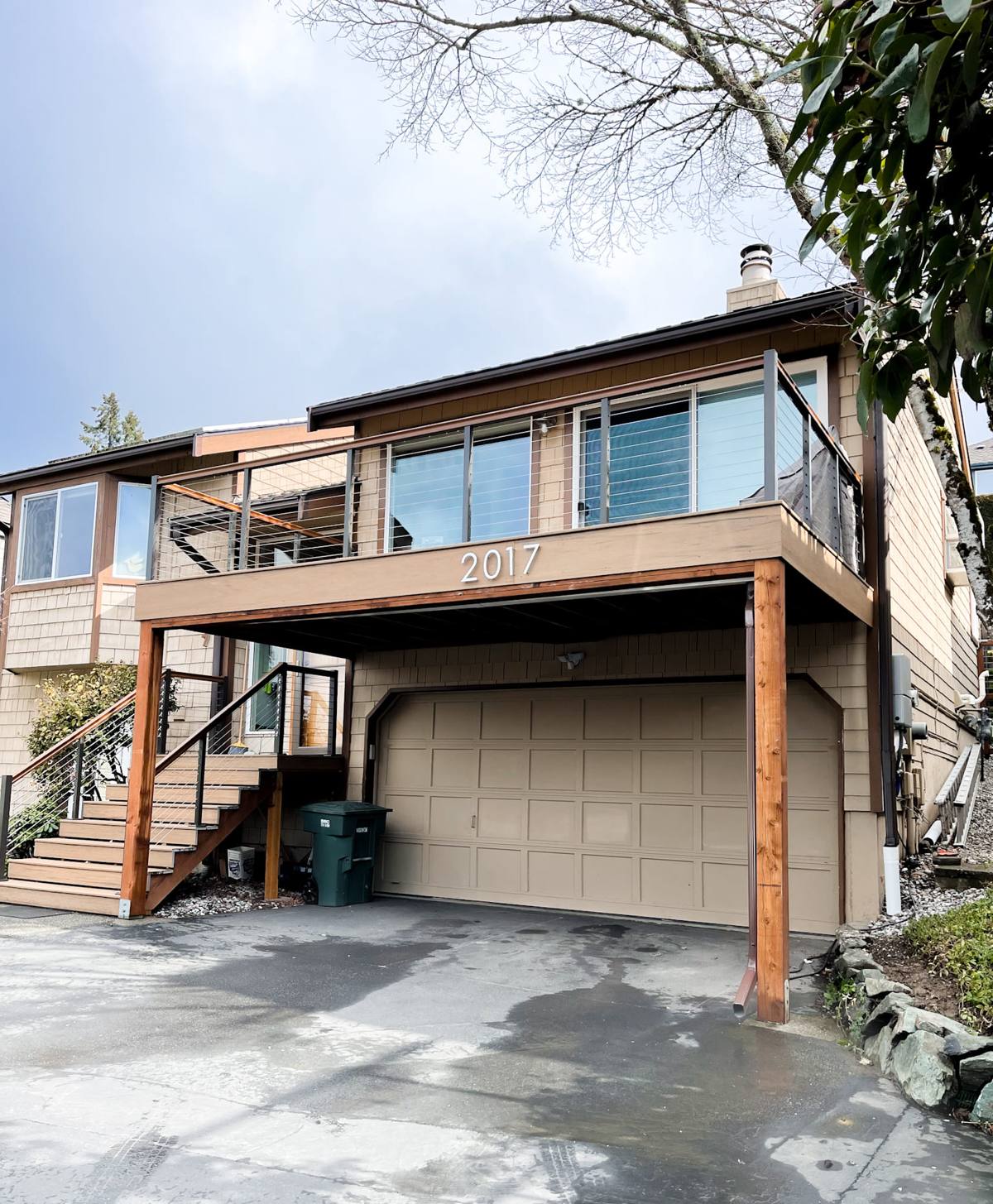
Why James Hardie Fits This Climate
We install James Hardie fiber cement exclusively, and in a climate like this, the reasoning isn't marketing — it's material behavior. Hardie's HZ5 product line is engineered specifically for climates with freeze-thaw cycles and prolonged moisture exposure, which describes the Puget Sound region well. Fiber cement doesn't rot, doesn't feed insects, and doesn't swell and shrink with moisture the way wood-based or wood-fiber products do.
The factory-applied ColorPlus finish matters just as much as the substrate. It's baked on under controlled conditions, which gives it far better adhesion and UV resistance than field-applied paint can achieve on wood or engineered wood siding. In a climate that alternates between soaking rain and intense summer sun, a finish that doesn't crack, peel, or chalk prematurely is doing real work — it's one less place for water to find a way behind the siding.
Moss and Algae: What Siding Choice Can and Can't Do
No siding material is immune to moss and algae growth in a climate this damp — that's a function of shade, moisture, and air circulation around the house as much as the material itself. What Hardie does offer is a dense, non-porous surface that doesn't absorb and hold moisture the way wood fiber can, so growth tends to sit on the surface rather than working into the material. That makes routine cleaning more effective and less likely to cause long-term damage to the siding underneath.
What a Correct Hardie Installation Actually Involves
James Hardie siding is only as good as the installation behind it. The product is engineered to perform for decades, but that performance depends on details that aren't visible once the job is finished. A correct install in a climate like Bothell's includes:
- Proper weather-resistive barrier and flashing at every window, door, and penetration, lapped correctly so water sheds outward and down, never inward
- Manufacturer-specified clearances from grade, roof lines, decks, and other siding terminations so water doesn't wick up into the bottom edge of the boards
- Correct fastener type, spacing, and placement — Hardie specifies exact nailing patterns, and getting them wrong can void the warranty and cause boards to crack or work loose over time
- Properly sized gaps at butt joints and trim, caulked with a high-quality, paintable sealant rated for exterior use — not the panels butted tight with no room to move
- Rainscreen or drainage plane detailing where the assembly calls for it, so any moisture that does get behind the siding has a path to drain and dry
- Field-cut edges primed or sealed before installation, since factory-primed edges are the most vulnerable point on any board
Mistakes We See on Homes Where This Was Skipped
The most common issues we find on Bothell homes with underperforming siding trace back to a handful of shortcuts: boards nailed too tight against each other with no expansion room, missing or improperly lapped flashing above windows, siding installed too close to grade or a roofline, and cut edges left unsealed. Every one of those is an installation error, not a product failure — and every one of them is preventable with a crew that follows the manufacturer's fastening and flashing requirements instead of treating fiber cement like any other lap siding.
Our Process for Bothell Homeowners
We keep the process straightforward because most homeowners are doing this once and want to understand what's happening at each stage.
- On-site assessment. We look at the existing siding, sheathing, and moisture conditions around your specific lot — sun exposure, tree cover, drainage, and any trouble spots.
- Product and profile selection. We walk through the Hardie lines that fit your home's style and budget, along with ColorPlus color options.
- Written scope and estimate. You get a clear breakdown of what's included — tear-off, any sheathing repair, house wrap, flashing details, and the siding install itself — before any work starts.
- Tear-off and inspection. Once old siding comes off, we inspect the sheathing underneath for hidden moisture damage, which is common on homes that have had water intrusion issues for years without visible signs.
- Weather barrier and flashing. This is the stage that determines how the siding performs for the next 30-plus years, and it happens before a single piece of Hardie board goes up.
- Installation to spec. Fastening, clearances, and joint detailing follow James Hardie's published installation guidelines for our climate zone.
- Final walk-through. We go over the finished work with you before calling the job done.
Choosing the Right Hardie Product for a Bothell Home
Not every Hardie product fits every home. Style, exposure, and budget all factor in. Here's how the main lines compare for homes in this area:
| Product | Best For | Look | Notes for This Climate |
|---|---|---|---|
| HardiePlank Lap Siding | Most single-family homes | Traditional horizontal lap, smooth or cedar-textured | Most common choice; wide range of exposure widths and ColorPlus colors |
| HardiePanel Vertical Siding | Modern builds, accent walls, gables | Clean vertical lines, often paired with board-and-batten | Sheds water quickly on steep vertical runs; popular on contemporary remodels |
| HardieShingle Siding | Craftsman and cottage-style homes | Staggered or straight-edge shingle profile | Detailed look without the moisture concerns of real wood shingles |
| Board & Batten (HardiePanel-based) | Farmhouse and modern-farmhouse styles | Vertical panels with raised battens | Strong regional trend; needs correct batten spacing for drainage |
Cost Factors for a Bothell Hardie Project
Every home is different, so we don't quote sight-unseen prices, but these are the variables that actually move the number:
| Factor | Why It Matters |
|---|---|
| Tear-off scope | Removing multiple layers of old siding or dealing with hidden sheathing damage adds labor |
| Sheathing or framing repair | Moisture-damaged sheathing found during tear-off has to be addressed before new siding goes on |
| Home size and wall complexity | Cut-up facades with lots of corners, gables, and dormers take more time than simple rectangular walls |
| Product line and profile | Shingle and board-and-batten profiles generally take more labor than standard lap siding |
| Trim and accessory work | Fascia, corner boards, and window trim replacement add to the scope but improve the finished result |
| Site access | Tight lots, fencing, or limited staging area can add time to material handling and setup |
We give every Bothell homeowner a written, itemized estimate so you can see exactly what's driving the cost — not a single lump number with no explanation behind it.
Living With Hardie Siding: What Upkeep Actually Looks Like
One of the real advantages of fiber cement in this climate is how little it demands from you afterward, but "low-maintenance" isn't "no-maintenance." A simple annual routine keeps the siding performing the way it's designed to:
- Rinse the siding down once or twice a year with a garden hose to clear pollen, dust, and early moss or algae growth before it takes hold
- Trim back vegetation and tree limbs that keep sections of the wall shaded and damp longer than the rest of the house
- Check and re-caulk joints around windows, doors, and trim if you notice cracking or gaps developing
- Walk the exterior once a year, especially after windstorms, looking for loose boards, damaged trim, or gutter issues directing water onto the siding
- Keep gutters clear so overflow doesn't run down the face of the siding and concentrate moisture in one area
- Avoid pressure washing directly at the siding at close range or high pressure, which can force water behind boards and damage the finish
Why It Matters That We Already Work in This Area
A crew that installs siding across a wide range of climates has to relearn the details every time they cross into a new one. A crew that works Bothell and the surrounding Snohomish County area regularly already knows how the moisture behaves here, which exposures grow moss fastest, and which details on a Puget Sound home actually need extra attention versus which ones are fine as standard. That familiarity shows up in the flashing details, the clearances, and the follow-through — the parts of the job that don't get inspected once the siding is up but determine whether it lasts.
It also means we're not guessing at local permitting norms or how homes in this area are typically built, which keeps the project moving without surprises partway through.
Get a Straight Answer for Your Home
If your Bothell home's siding is showing moss, peeling paint, soft spots, or you're just planning ahead for a replacement, we're glad to take a look and give you an honest assessment — including whether repair, partial replacement, or a full re-side makes the most sense for your situation. Request a free, no-pressure estimate using the form below and we'll walk the property with you.