 Snohomish
 Asphalt Shingle Roofing Built for the Machias Area, Not a Generic Roof Off a Truck
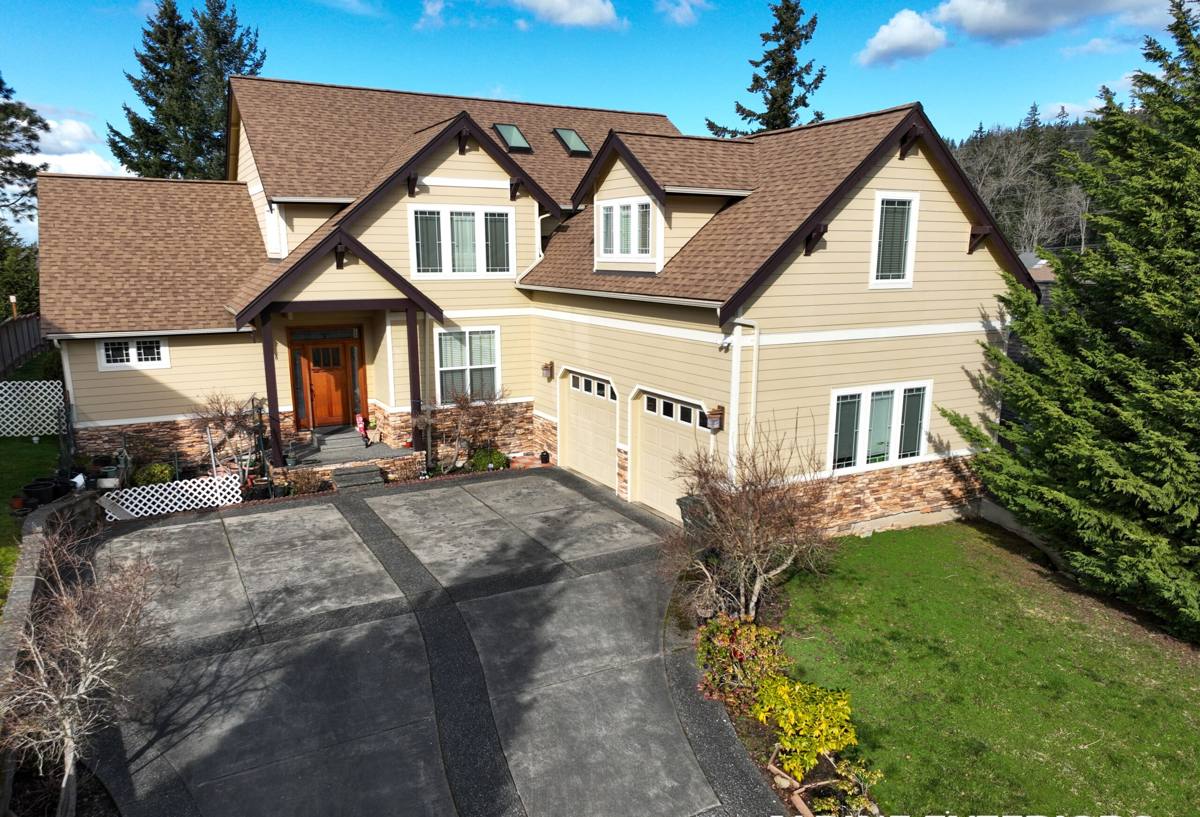
Machias sits in the river-and-lake country northeast of Snohomish, a mix of wooded acreage, older farmhouses, and newer homes tucked back among fir and cedar. It's not a downtown neighborhood with tight lots and uniform rooflines — it's a spread-out community where tree cover, drainage, and sun exposure change noticeably from one property to the next, sometimes within the same driveway. An asphalt shingle roof out here has to deal with more than the shingle itself. It has to deal with what the site does to that shingle over twenty or thirty years. We install asphalt shingle roofs specifically for homes in and around Machias, and the approach we use reflects what actually happens to a roof in this part of Snohomish County, not a one-size-fits-all install.
What This Climate Does to a Roof Around Machias
Valley Humidity and Driving Rain
The Snohomish River valley holds moisture close to the ground longer than more open, elevated terrain does. Combined with marine-influenced air pushing inland off Puget Sound, homes around Machias see long stretches of damp weather where roof surfaces rarely get a full day to dry out completely. Wind-driven rain during fall and winter storms doesn't just fall straight down — it gets pushed sideways under poorly lapped shingles, around chimney and vent flashing, and into any gap that wasn't sealed correctly the first time. A roof here needs water management details built for rain that isn't behaving politely.
A Moss Season That Doesn't Really End
Shade, humidity, and mild temperatures are exactly what moss needs to establish itself, and Machias has all three for most of the year. Wooded lots with north-facing roof planes are the most affected, but even open, sunnier roofs in the area pick up moss eventually if it isn't addressed. Moss holds moisture directly against the shingle mat, and over time that trapped moisture works its way under the granule surface and shortens the life of the shingle underneath. It's less a seasonal nuisance here than an ongoing condition to design and maintain around.
Tree Cover and Debris
Many Machias properties sit close to mature trees, which means needles, leaves, and small branches collect in valleys and against roof-to-wall transitions year-round. That debris holds water in place the same way moss does, and it's often the first thing that clogs a valley or a gutter and sends water somewhere it shouldn't go. A roof design that ignores nearby tree cover is designing for a different property than the one it's actually going on.
What a Correct Asphalt Shingle Installation Actually Involves
Asphalt shingle roofing looks simple from the ground, and the shingle itself is a mature, well-understood product. Where roofs fail early is almost always in the details underneath and around the shingles — the parts nobody sees once the job is finished.
Underlayment and Ice-and-Water Protection
A synthetic underlayment goes down across the full deck as the primary water barrier beneath the shingles, and self-adhering ice-and-water membrane goes in at the eaves, valleys, and any low-slope transition where water is most likely to back up or pool. On a shaded, damp property like a typical Machias lot, we don't treat that extra membrane as optional in the areas where it matters — valleys and eaves are exactly where moss, debris, and standing water tend to concentrate.
Flashing at Every Transition
Chimneys, skylights, plumbing vents, and roof-to-wall junctions are where the overwhelming majority of roof leaks actually start, not in the open field of shingles. Correct flashing means new metal at every one of those transitions during a reroof, properly lapped with the underlayment and shingle courses so water is always directed downhill and off the roof, never given a path to work its way backward underneath.
Ventilation That Lets the Deck Dry
Balanced intake and exhaust ventilation keeps the attic and roof deck at a stable temperature and lets moisture that does get in escape rather than sit trapped against the underside of the sheathing. On a property with heavy shade and persistent dampness, a poorly ventilated attic can trap enough moisture over a wet season to cause sheathing problems long before the shingles themselves would have failed on their own.
Correct Fastening and Nailing Pattern
Shingles are only rated for wind and warranty performance when they're fastened exactly the way the manufacturer specifies — correct nail count, placement, and depth. Overdriven or underdriven nails are one of the most common causes of early shingle failure and warranty denial, and it's a detail that's invisible once the job looks finished, which is exactly why it has to be done right the first time.
Choosing the Right Shingle for This Climate
Not every asphalt shingle product is built for the same conditions, and the differences matter more on a shaded, damp Machias lot than they would on a dry, open one.
| Shingle Type | Moisture & Moss Resistance | Typical Wind Rating | Best Fit |
|---|---|---|---|
| 3-tab shingles | Basic; no built-in algae resistance unless specified | Lower | Budget reroofs on lower-exposure sections |
| Architectural (dimensional) shingles | Better mat and granule durability; algae-resistant options available | Higher | Most Machias homes, especially shaded or tree-lined lots |
| Algae-resistant (copper/zinc granule) shingles | Specifically formulated to slow moss and algae growth | Varies by product line | North-facing roof planes and heavily wooded properties |
| Impact-resistant shingles | Reinforced mat resists granule loss from debris impact | Higher | Properties with overhanging branches or frequent debris fall |
For most homes around Machias, we recommend an architectural shingle with algae-resistant granules on shaded or north-facing sections, since that combination directly addresses the two things that shorten roof life here fastest: moisture retention and moss growth. It costs more upfront than a basic 3-tab product, but it's a difference that shows up in how the roof looks and performs a decade in, not in the first year.
Our Process for a Machias Roof Replacement
We start with an on-site inspection of the existing roof, the attic where accessible, and the surrounding tree cover and drainage patterns specific to that lot. From there we put together a clear, written scope covering the shingle product, underlayment, ventilation plan, and flashing details before any work begins — no verbal estimates that change once the tear-off starts.
- Full tear-off to the deck, with the deck inspected and any damaged sheathing replaced before anything new goes down
- New synthetic underlayment across the full roof, with ice-and-water membrane at eaves, valleys, and other vulnerable transitions
- New flashing at every chimney, vent, skylight, and roof-to-wall transition
- Shingle installation to manufacturer nailing and exposure specifications
- Ventilation check and correction where intake or exhaust airflow is inadequate
- Final walk-through covering warranty paperwork and basic maintenance expectations for the property
Signs a Machias Roof Needs Attention
- Moss visible on shaded or north-facing slopes, especially if it's returned quickly after a previous cleaning
- Granules collecting in gutters or at the base of downspouts
- Curling, cracking, or lifted shingle edges, particularly on older or sun-exposed sections
- Debris buildup in valleys or against roof-to-wall transitions from nearby trees
- Water staining on interior ceilings or in the attic after a heavy or prolonged rain
- Visible daylight or gaps around flashing at chimneys, vents, or skylights
Maintenance That Actually Extends Roof Life Here
A well-installed asphalt shingle roof around Machias still benefits from routine attention, given how much moisture and debris the area produces. Keeping gutters and valleys clear of needles and leaves prevents the standing water that speeds up granule loss and deck rot. Moss should be treated gently — soft washing or approved treatments rather than aggressive scraping or pressure washing, which strips granules and shortens shingle life faster than the moss itself would. An occasional look at flashing and vent boots for cracking or separation, especially after a hard freeze, catches small problems while they're still small and inexpensive to fix.
Why a Crew That Already Works Machias Matters
Machias isn't a single roof type repeated on every lot — it's a mix of older farmhouses, newer builds, and everything in between, spread across properties with very different tree cover, slope, and sun exposure. A crew that already works this area knows which roof planes in this kind of terrain need extra moss and moisture treatment, how local debris and shade patterns affect valley and flashing detailing, and what actually holds up through a full wet season here rather than what looks fine on the day it's installed. That familiarity is what separates a roof that needs attention again in a few years from one that goes the distance.
A Simple Checklist Before Hiring for Roof Work Near Machias
- Confirm current Washington contractor licensing and active liability insurance
- Ask what underlayment and ice-and-water protection they use, and where on the roof
- Ask how they handle moss-prone, shaded roof sections specifically
- Get manufacturer and workmanship warranty terms in writing before signing anything
- Request a clear, written scope of work, not just a verbal price
If you're weighing a roof repair or full replacement for a home in or around Machias, we're glad to walk the roof with you and give an honest read on what it actually needs. Reach out below for a free, no-pressure estimate.