 Snohomish
 Everett's Roof Repair Challenges: Salt Air, Rain, and a Long Moss Season
A roof in Everett doesn't fail the way a roof in a dry climate fails. Out here, the damage is slow and cumulative: months of driving rain finding their way into small gaps, salt-laden air off Puget Sound working on exposed metal fasteners and flashing, and a moss season that can run from early fall through late spring. None of these things cause dramatic, obvious failures on their own. They compound. A pinhole in a flashing seam that would sit dry for years in a desert climate becomes an active leak here within a season or two, because the roof rarely gets a real chance to dry out between storms.
That's the backdrop for every repair call we take in Everett and the surrounding Snohomish County area. We're not just patching a hole — we're evaluating how a repair will hold up against a climate that gives roofs very little rest.
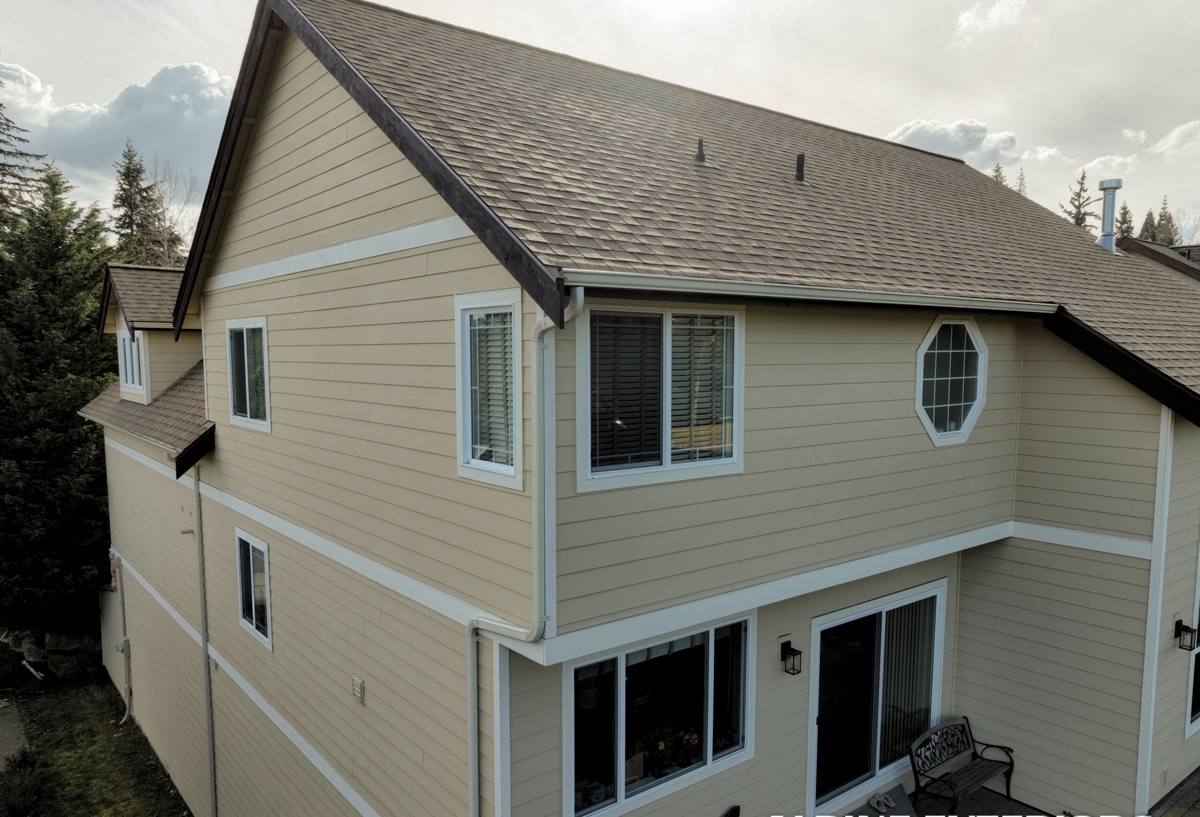
The Repair Issues We See Most in Everett Homes
Moss and Organic Growth Damage
Moss doesn't just sit on top of shingles looking bad. Its root structure lifts shingle edges and holds moisture directly against the roofing material and the fasteners underneath. On shaded, north-facing slopes — common on lots with mature evergreen tree cover, which describes a lot of Snohomish County — moss can establish itself within a couple of years of a roof going untreated. Left alone long enough, it accelerates granule loss on asphalt shingles and can work moisture under the shingle tabs themselves.
Flashing, Valley, and Penetration Leaks
Most of the active leaks we diagnose in Everett don't come from the field of the roof — they come from the details: chimney flashing, valleys, plumbing vent boots, skylight curbs, and where a roof meets a wall. These are the spots where two materials meet, and in a high-rain climate, any gap or degraded sealant becomes a leak path. Rubber vent boots in particular are a common failure point once they start to crack from age and weather exposure.
Wind and Storm-Driven Damage
Winter storms off the Sound bring sustained wind that can lift or crack shingles, especially on roofs that are already past their prime or were installed with poor nailing patterns. Storm damage repair is usually straightforward if it's caught early, but a missing or cracked shingle left through another wet season often turns into a decking repair instead of a shingle repair.
Gutter and Drainage Backups
Clogged gutters don't just overflow onto siding — they back water up under the roof edge, which is a direct path to fascia and roof-edge rot. In a region where fall leaf drop overlaps with the start of the heavy rain season, this is one of the more preventable causes of repair calls we see.
What a Correct Roof Repair Actually Involves
A repair that's done right starts with figuring out why the roof failed, not just where. Surface patching without diagnosis is how the same leak call comes back a year later. Our approach on every repair includes:
- Inspecting from the attic side when accessible, not just the exterior — water staining, dark streaking, or soft decking tells us more than the shingle surface does
- Checking the condition of the underlayment and decking around the damaged area, not just the shingles themselves
- Matching replacement shingles and flashing metal as closely as possible to the existing roof, both for appearance and so the repair performs the same as the surrounding material
- Rebuilding flashing details properly — step flashing, counter-flashing, and valley metal — rather than relying on sealant or roofing cement to bridge a gap
- Confirming proper nailing pattern and shingle overlap so the repaired section sheds water the way the rest of the roof does
Sealant has its place, but it's a short-term fix when it's used to cover a flashing or fastening problem instead of correcting it. In a climate that gets this much sustained rain, sealant-only repairs tend to fail faster than they would somewhere drier.
Our Roof Repair Process
- Inspection and diagnosis. We look at the roof and, where possible, the attic, to identify the actual source of the problem — not just the visible symptom.
- A clear, written scope. You get a straightforward explanation of what's wrong, what we'll do about it, and why — before any work starts.
- Safe access and setup. Everett's terrain and older neighborhoods sometimes mean tight access; we plan for that ahead of time instead of improvising on the day of the job.
- The repair itself. Matching materials, correct flashing details, and proper fastening — done to hold up through the next several wet seasons, not just until the next inspection.
- Cleanup and debris check. Old shingles, nails, and flashing scraps are cleared from the roof and the ground around the house.
- Walk-through. We show you what was done and what to watch for going forward.
Repair or Replace? How We Help You Decide
Not every roof problem needs a full replacement, and not every roof is worth repairing again. The honest answer depends on a handful of factors we walk through with you rather than defaulting to whichever option is bigger.
| Factor | Repair Usually Makes Sense | Replacement Usually Makes Sense |
|---|---|---|
| Roof age | Under roughly 15 years, or well-maintained mid-life roof | Near or past the material's expected service life |
| Extent of damage | Isolated to one section, flashing, or a handful of shingles | Widespread across multiple slopes or recurring in the same areas |
| Decking condition | Solid, dry decking under the damaged area | Soft, delaminated, or water-damaged decking found during inspection |
| Moss/algae history | First occurrence or manageable with cleaning and prevention | Long-term untreated growth that's degraded granules broadly |
| Budget and timeline | Targeted fix now, plan for future replacement | Repair costs are approaching a meaningful share of replacement cost |
We'll tell you plainly if a repair is a reasonable short-to-medium-term option, or if you'd be spending real money on a roof that needs to come off within the next couple of years anyway.
Materials We Use for Everett Roof Repairs
Composition (asphalt) shingles are the material we repair most often in this area, and for good reason — they're a proven, well-understood product in a wet climate when installed and flashed correctly. For repairs, matching the existing shingle profile and color as closely as possible matters both for how the roof looks and how the repaired section performs alongside the rest of the field.
In valleys and around penetrations, we use ice-and-water membrane and proper metal flashing rather than relying on shingles alone to shed water at these vulnerable points — those details matter more here than they would in a lower-rainfall region.
On moss-prone roofs, zinc or copper strips near the ridge are a legitimate prevention tool — rain washing over the metal helps inhibit regrowth — but we're upfront that they're a maintenance aid, not a permanent solution. They work best paired with periodic cleaning, not as a substitute for it.
Why a Crew That Already Works Everett and Snohomish County Matters
Roof repair is time-sensitive in this climate. A small leak identified in October and left until a contractor can "get to it" in January has usually gotten worse by the time anyone shows up. Working regularly in the Everett and broader Snohomish County area means we're not learning the region's weather patterns, common roof types, or typical construction on someone else's dime — we already know what tends to go wrong on roofs around here and why, which shortens the diagnosis and speeds up getting a tarp or a proper repair in place before the next storm rolls through.
It also means we're not disappearing after the invoice. If a repair doesn't hold the way it should, or a related issue shows up nearby on the roof, we're a local call away — not a company that was passing through the area for one job.
Signs Your Roof Needs Repair Now
- Water stains or discoloration on interior ceilings or in the attic
- Visible moss, especially thick growth or moss along shingle edges
- Shingles that are curling, cracked, or missing granules in patches
- Daylight visible through the roof deck from inside the attic
- Sagging areas anywhere on the roof plane
- Rust streaking or gaps around flashing at chimneys, vents, or skylights
- Granules collecting in gutters or at downspout outlets
- A noticeable increase in energy bills, which can point to attic moisture or insulation problems tied to a roof leak
Any one of these on its own doesn't necessarily mean an emergency, but ignoring several of them through a wet season is how a repair job turns into a replacement job.
After the Repair: Keeping Moss and Leaks From Coming Back
A good repair buys you time, but a few habits stretch that time considerably in this climate:
- Clean gutters at least twice a year, timed around fall leaf drop and before the heaviest winter rains
- Have moss growth removed and treated before it spreads, rather than after it's covering a full slope
- Trim back tree limbs that keep sections of the roof shaded and damp longer than the rest
- Do a visual check after any major windstorm for lifted or missing shingles
- Schedule a roof check every year or two, even without an obvious problem — small issues are far cheaper to fix than the water damage they cause if missed
If you're dealing with a leak, moss buildup, or storm damage on your Everett home, we're happy to take a look and give you a straightforward assessment — no pressure, no upsell, just an honest read on what your roof actually needs. Use the form below to request a free estimate.