 Snohomish
 Decking in Edmonds Has to Answer to the Weather First
Edmonds sits close enough to the water that salt-laden air is a real factor in how exterior materials age, and the rest of the calendar doesn't do a deck any favors either. Long stretches of driving rain off the Sound, short winter daylight, and a moss and algae season that can run from late fall through spring mean an outdoor deck here is wet, shaded, or both for a good chunk of the year. Any decking material you put down has to handle constant moisture cycling, not just an occasional rainstorm.
Composite decking was designed for exactly this kind of exposure, but "composite" covers a wide range of products and installation quality varies just as much as the material itself. A correctly installed composite deck in this climate should shed water, resist the moss and mildew that colonize damp wood, and hold its color and structure through repeated freeze-thaw and wet-dry cycles. A poorly installed one — regardless of brand — will trap moisture where it shouldn't and fail early anyway.
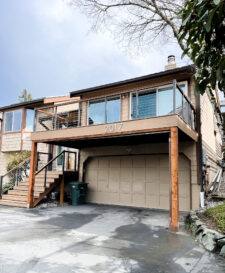
What Local Homes Are Actually Up Against
Salt Air and Metal Fasteners
Proximity to Puget Sound means airborne salt settles on every exterior surface, including deck hardware. Standard fasteners and connectors corrode faster near the water than they do further inland, and corroding hardware is one of the more common hidden causes of a deck that starts to feel loose or squeaky within a few years. This is a hardware-selection issue as much as a decking-material issue.
Driving Rain and Water Intrusion
Wind-driven rain doesn't fall straight down — it gets pushed sideways under railings, along ledger boards, and into any gap where boards meet the house. Composite boards themselves don't absorb water the way wood does, but the structure underneath (joists, ledger, flashing) still can if it's not detailed correctly.
Moss, Algae, and Extended Shade
Many Edmonds lots have mature trees and homes close enough together that decks sit in partial shade for much of the day. Combined with the region's damp season, that shade lets moss and algae establish on any surface that stays wet — composite included. The difference is that a quality composite cap resists staining and can be cleaned without damaging the board, where bare wood absorbs the stain and roughens over time, giving moss more to grip.
Why Composite Makes Sense for This Specific Climate
We don't recommend composite decking because it's trendy — we recommend it here because it removes several of the maintenance headaches that this particular climate creates for wood decking.
- No annual sanding, staining, or sealing to keep water out of the board — the cap layer handles that job permanently.
- Consistent moisture resistance across the whole board, so it doesn't cup, crack, or splinter the way lumber does after repeated wet-dry cycles.
- A cap surface that can be scrubbed to remove moss and algae without stripping a finish, which matters given how long the growing season runs here.
- No exposed end grain soaking up water at cut edges, provided those cuts are capped or finished correctly during install.
That said, composite isn't maintenance-free — it's lower-maintenance. Boards still need periodic cleaning, hardware still needs to be corrosion-resistant, and the structure underneath still needs to drain. Anyone telling you a composite deck needs zero attention for 25 years isn't being straight with you.
Composite vs. Other Decking Options
| Material | Moisture Resistance | Maintenance | Typical Lifespan Here | Fit for Edmonds Climate |
|---|---|---|---|---|
| Composite decking | High — capped boards resist absorption | Periodic cleaning, no staining/sealing | 25–30 years with correct install | Strong — built for wet, shaded conditions |
| Pressure-treated lumber | Moderate — treatment resists rot but absorbs water | Annual staining/sealing recommended | 10–15 years before major repair | Requires ongoing upkeep to keep pace with rain |
| Cedar | Moderate — naturally rot-resistant but still absorbs moisture | Regular sealing to hold color and resist moss | 15–20 years with diligent care | Attractive but high-maintenance in this climate |
| PVC decking | Very high — fully synthetic, no wood content | Low, similar to composite | 25–30 years | Good option, different look and feel than composite |
What a Correct Installation Actually Involves
Structure Before Surface
The boards get the attention, but the framing underneath determines whether the deck lasts. That means joists spaced and sized correctly for the composite product being used — composite has different span requirements than lumber, and manufacturer spec sheets exist for a reason. It also means proper joist tape or flashing on top of the framing to keep moisture from wicking into the wood structure, which is especially important in a climate where the framing rarely gets a chance to fully dry out between rain events.
Drainage and Airflow Underneath
A deck that sits low to the ground or against a house wall needs a clear path for water to drain and air to move underneath. Skip this and you're building a permanently damp cavity — exactly the environment moss, mold, and rot organisms need. This is one of the most common shortcuts we see on decks that were installed fast rather than installed right.
Ledger Board and House Connection
Where the deck attaches to the house is the single highest-risk point for water intrusion. It needs proper flashing that directs water away from the house sheathing, not just a ledger bolted flush against the siding. Get this wrong and you're not just risking the deck — you're risking hidden rot in the house structure behind it.
Hardware and Fasteners
Given the salt air near the water, we use corrosion-resistant fasteners and hidden fastening systems rated for coastal or high-moisture exposure, not generic hardware pulled off a shelf because it's cheaper. This is a small cost difference at install time and a large difference in how the deck performs a decade out.
Our Process for an Edmonds Composite Deck
- On-site assessment — we look at drainage, sun/shade exposure, existing structure (if replacing an old deck), and how the house connection needs to be handled.
- Structural check — framing gets evaluated or designed against the specific composite product's span and fastening requirements, not a generic lumber standard.
- Material selection — we walk through board profiles, colors, and cap types with realistic expectations about how each performs in shade, sun, and wet conditions locally.
- Flashing and framing work — ledger flashing, joist protection, and drainage detailing happen before a single deck board goes down.
- Installation — boards, hidden fasteners, and edge/end treatments installed to the manufacturer's spec, which is also what keeps the product warranty valid.
- Final walkthrough — we cover basic care: what to clean, how often, and what to watch for given your specific sun and shade exposure.
Living With a Composite Deck in a Damp Climate
Composite cuts the workload dramatically compared to wood, but a little seasonal attention keeps it looking and performing the way it should — especially heading into or coming out of the wetter months.
- Sweep debris (leaves, needles, seed pods) off the deck regularly — trapped organic matter holds moisture against the board and feeds moss growth.
- Rinse or lightly scrub the surface a couple of times a year, more often in heavily shaded areas, to keep algae and moss from getting established.
- Check that gaps between boards and along the perimeter stay clear so water keeps draining through rather than pooling.
- Inspect railing posts and stair connections annually for any looseness — often the first sign of hardware corrosion, not board failure.
- Confirm gutters or downspouts near the deck aren't dumping extra water onto or under it, which is common on homes with additions or covered decks.
Why Hiring a Crew That Already Works in Edmonds Matters
Composite decking installation isn't identical everywhere. A crew that mostly builds in a dry inland climate may not think twice about drainage detailing or corrosion-resistant hardware because their local conditions don't punish those shortcuts as fast. Working regularly in and around Snohomish County means we're already sizing framing, flashing, and fastener choices for salt air and a long wet season by default — it's not a special add-on, it's just how the job gets built here.
It also means we're not guessing at how a given board or railing system holds up locally — we've seen how different products perform through actual Puget Sound winters, not just a spec sheet.
Get a Straight Answer on Your Deck
If you're deciding between repairing an aging wood deck or replacing it with composite, or you're planning a new deck from scratch, we'll walk the site, look at your specific sun, shade, and drainage situation, and give you a straightforward estimate — no pressure, no upsell script. Use the form below to request a free estimate for your Edmonds property.