 Snohomish
 Windows Built for the Clearview Climate, Not a Catalog Photo
Homes in the Clearview area, just outside Snohomish, sit in a spot where Puget Sound's marine air, long wet winters, and heavy tree cover all work on a window at the same time. Salt-tinged moisture in the air, driving rain that comes in sideways during a fall storm, and a moss season that can run half the year don't just make windows dirty — they find every weak seam in a frame, every gap in flashing, and every spot where a seal has started to fail. An energy-efficient window here has to do two jobs at once: keep conditioned air inside, and keep that damp Snohomish County air out of the wall assembly behind it.
Replacing windows without accounting for this is how homeowners end up with a new-looking window that still fogs between the panes in year three, or a sill that's soft to the touch by year five. The window itself is only part of the equation — how it's flashed, sealed, and tied into the surrounding siding is what actually determines whether it performs.
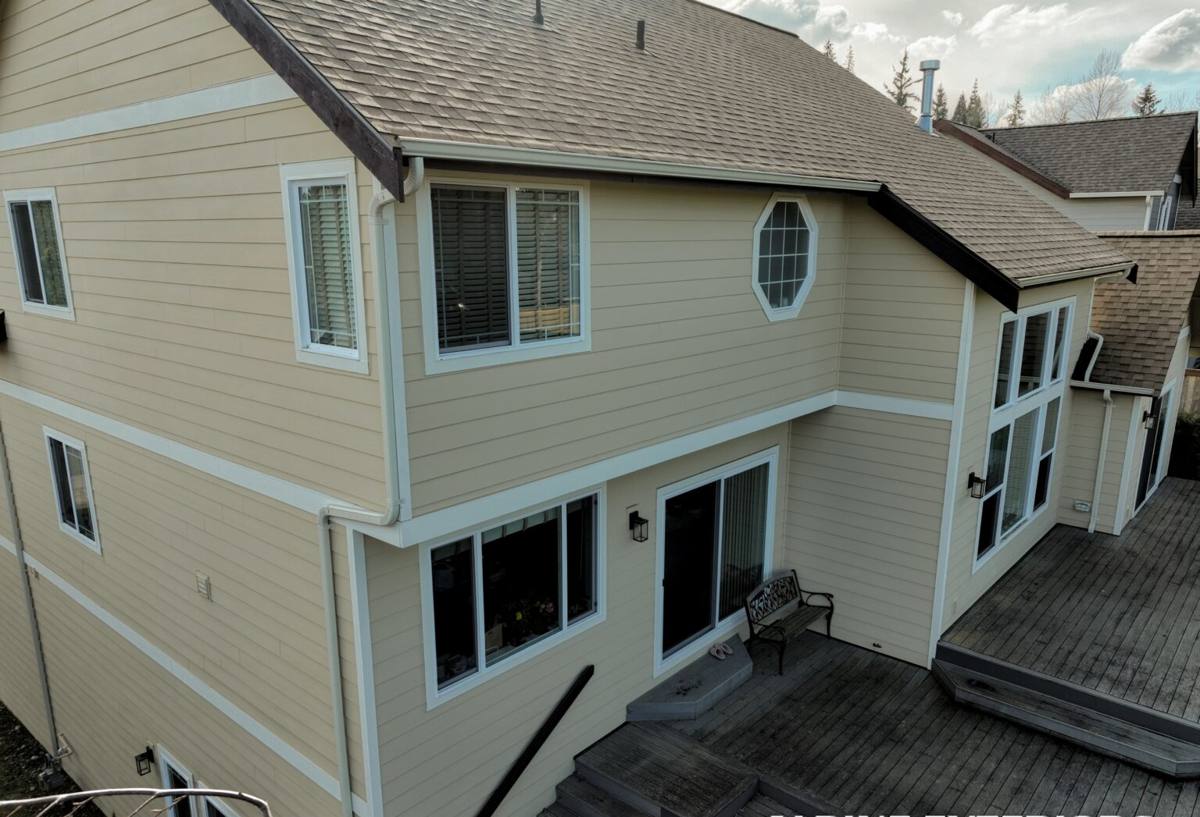
What "Energy-Efficient" Actually Means for This Area
Every code-compliant replacement window carries an NFRC label with two numbers that matter more than any marketing claim: U-factor and Solar Heat Gain Coefficient (SHGC). In the Pacific Northwest's mild, overcast climate, keeping heat inside the house through our long, wet winters usually matters more than blocking solar heat gain, since we don't get the extended, intense summer sun that drives SHGC priorities in other parts of the country. That shifts what "good numbers" look like here compared to a window shopping guide written for the Southwest or the Midwest.
Reading Past the Sales Sheet
A lower U-factor means less heat escapes through the glass and frame — this is the number to prioritize for a Snohomish-area home. SHGC still matters on south- and west-facing openings that get direct sun, but it's a secondary consideration for most Clearview lots, many of which have partial tree cover that already limits direct exposure.
| Glazing Option | Typical U-Factor Range | Best Fit |
|---|---|---|
| Double-pane, standard Low-E | 0.27–0.32 | Most rooms, budget-conscious full replacements |
| Double-pane, argon-filled Low-E | 0.24–0.29 | Whole-house upgrades where comfort is the priority |
| Triple-pane, argon or krypton-filled | 0.15–0.22 | North-facing rooms, additions, noise-sensitive spaces |
Triple-pane isn't automatically "better" for every opening — it adds weight and cost, and on a smaller window the return on that investment is smaller too. We size the glazing package to the room and exposure rather than defaulting to the most expensive option across the whole house.
The Install Is What Makes or Breaks the Efficiency Number
A window's lab-tested rating assumes a correct installation. In practice, most of the drafts and moisture problems we get called out to fix in Clearview aren't a bad window — they're a window that was set without proper flashing or sealed with caulk alone instead of a real water-management detail.
What a Correct Install Includes
- A sloped sill pan under the rough opening so any water that does get past the window drains out and away from the framing, not down into it
- Flashing tape integrated with the house's weather-resistive barrier in the correct shingle-lap order, so water sheds outward at every layer
- Backer rod and low-expansion foam or approved insulation in the gap between the window and framing — not just spray foam packed in with no air gap
- Exterior sealant used as a final water-shedding layer, not as the only line of defense
- Interior air-sealing so conditioned air isn't leaking out around the frame even when the window itself is a good performer
Skip any one of these steps and you can install the most efficient window on the market and still end up with a draft, a stain, or rot at the sill inside a few wet seasons.
What We Commonly Find on Clearview Homes
Every area has its own failure patterns, and the mix of tree cover, moisture, and older housing stock around Clearview produces a fairly consistent list:
Moisture and Rot at the Sill
Older windows installed with caulk-only sealing and no sill pan are the most common source of soft or discolored wood at the bottom corners. By the time it's visible from inside, the sheathing behind it has often been wet for a while.
Moss and Algae Staining
Shaded, tree-covered lots hold moisture longer, and horizontal surfaces on window sills and trim collect the same moss and algae growth that shows up on roofs and north-facing siding. It's mostly cosmetic on vinyl and fiberglass, but on painted wood trim it accelerates paint failure and, eventually, rot.
Failed Seals and Fogging
Double-pane units have a gas seal between the panes. Once that seal fails — usually from age, sun exposure, or a poor original install — moisture gets between the glass and fogs permanently. It can't be cleaned out; the sealed unit has to be replaced.
Drafts Around Older Aluminum Frames
Aluminum conducts heat and cold directly through the frame, and on older homes in this area those frames were rarely installed with modern air-sealing details. They're consistently the coldest, draftiest window type we test.
Our Process, Start to Finish
- On-site assessment: we look at each opening individually — sun exposure, tree cover, existing frame condition, and any visible moisture or rot — rather than quoting off a photo.
- Measurements and product selection: we size glazing packages per room based on exposure, not a single spec across the whole house.
- Removal: old units come out carefully so we can inspect the rough opening and framing underneath before anything new goes in.
- Repair as needed: any soft framing or existing water damage gets addressed before a new window ever goes into that opening — installing a new window over a compromised opening just hides the problem.
- Install with full flashing and sealing details: sill pan, integrated flashing, air-sealing, and exterior sealant as described above.
- Final walkthrough: operation, sealing, and cleanup checked with you before we consider the job done.
Frame Materials — What We Install and Why
We don't install every material on the market, and that's a deliberate standard, not a limitation. Some options carry maintenance burdens or moisture-performance trade-offs that don't make sense for this climate.
| Frame Material | Maintenance | Moisture Performance Here | Typical Use Case |
|---|---|---|---|
| Vinyl | Low — no painting, occasional cleaning | Good; won't rot, handles wet cycles well | Most full-home replacements |
| Fiberglass | Low — very stable, minimal upkeep | Excellent; dimensionally stable through wet/dry cycles | Larger openings, higher-exposure walls |
| Wood-clad | High — exterior cladding still needs monitoring at joints | Good if detailed correctly, but sensitive to installation quality | Homes prioritizing a specific interior wood look |
| Bare aluminum | Low, but poor thermal performance | Prone to condensation; conducts cold directly | Generally not recommended for this climate |
Wood-clad windows can look great and perform well, but they're the least forgiving of installation mistakes — any gap in the cladding's seal becomes a moisture entry point over time. We'll install them when that's the right call for a home, but we're upfront that they demand more attention at the flashing details than vinyl or fiberglass.
What Affects Your Cost
Every window job is a little different. These are the factors that actually move the price, not marketing add-ons:
| Factor | Why It Matters |
|---|---|
| Number and size of openings | More glass and larger units cost more in both material and labor |
| Frame material | Vinyl is typically the most budget-friendly; fiberglass and wood-clad cost more |
| Glazing package | Triple-pane and upgraded coatings add cost per unit |
| Full-frame vs. insert replacement | Full-frame replaces down to the rough opening and allows moisture inspection/repair; inserts are faster but can't address hidden damage |
| Site access | Second-story openings, tree-heavy lots, or tight access add labor time |
| Existing damage | Rot or moisture repair discovered during removal adds cost but prevents a bigger problem later |
We give you the real number after we've actually looked at the openings, not a per-window average that doesn't account for your specific house.
Why a Crew That Already Works This Area Matters
A crew that regularly works Clearview and the surrounding Snohomish area has already seen how this climate treats windows over the long run — which frame materials hold up, which older installs tend to fail first, and how much moss and moisture exposure a given lot's tree cover really produces. That's not something you get from a national installer who's never seen a Snohomish winter play out on a house before. It also means we're a known, reachable name locally if a question comes up after the install, not a call center for a franchise that installed once and moved on.
Before You Sign a Window Contract
- Ask to see the NFRC label and U-factor for the specific product being quoted — not just a brand name
- Ask whether the quote is full-frame replacement or insert replacement, and why that's the right call for your openings
- Ask what flashing and sill-pan details are included, specifically
- Ask what's covered under warranty — glass seal failure, frame defects, and labor are often three separate coverages
- Ask who's actually doing the install — the crew, not just the salesperson
- Get the cost factors above broken out, not bundled into one flat number
If you're weighing new windows for a Clearview-area home, we're glad to come take a look, walk the openings with you, and put together a straightforward, no-pressure estimate — use the form below to get started.