 Snohomish
 Granite Falls Decks Deal With a Different Kind of Wear
Granite Falls sits up in the foothills off the Mountain Loop corridor, and that location changes how a deck ages compared to one closer to town in Snohomish or down toward the Sound. The tree cover is heavier, the ground stays damper longer into the season, and a lot of homes here have decks that spend half the year in partial shade. That combination is hard on wood and hardware in ways a sunny, open lot never sees.
Snohomish County as a whole gets a long wet season and enough humidity to keep moss and algae established most of the year. Closer to the water, salt-tinged air adds another layer of corrosion pressure on fasteners and metal hardware; up in Granite Falls that specific factor is lighter, but the driving rain, standing moisture, and moss are just as real, if not worse, because of the shade and elevation. A deck repair here has to account for what's actually hitting the structure, not a generic list of Pacific Northwest problems.
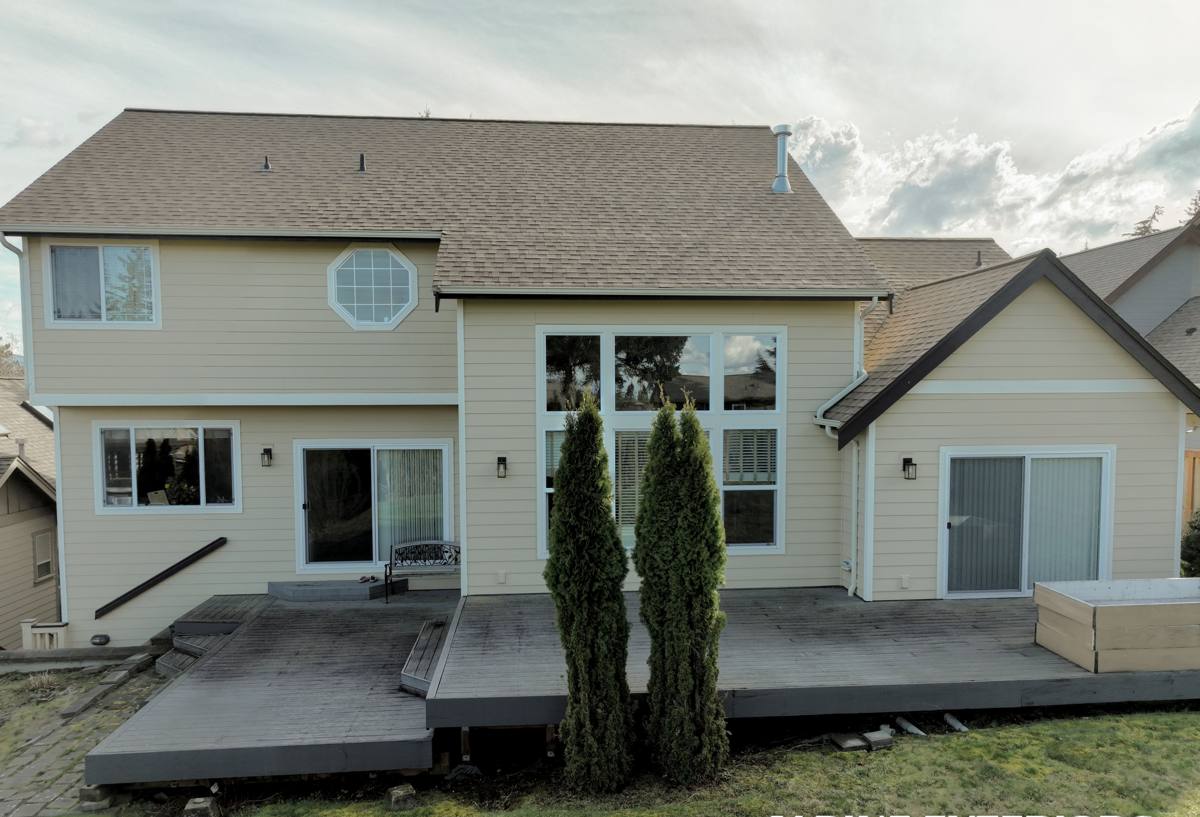
Common Deck Problems We See in This Area
Most of the repair calls we get in and around Granite Falls fall into a handful of categories. None of them are unusual for the region, but they show up earlier and more often on decks that sit in shade or near heavy tree cover.
- Soft or spongy decking boards, usually near the edges or wherever water pools instead of draining
- Rot at the ledger board where the deck attaches to the house — often hidden until flashing is pulled back
- Rusted, stained, or backed-out fasteners on older or improperly coated screws and nails
- Moss and algae buildup on boards and stair treads, which becomes a slip hazard as much as a cosmetic issue
- Loose or wobbly railings and posts from moisture working into post bases over time
- Failed or missing flashing at the house connection, letting water get behind siding and into framing
Signs You Need Repair, Not a Full Rebuild
Not every deck problem means starting over. A deck is usually a good repair candidate — not a teardown — when the main support posts and footings are sound, the framing underneath is intact when you check it, and the damage is limited to surface boards, railings, or isolated soft spots rather than spread across the whole structure.
When Repair No Longer Makes Sense
If the ledger board or multiple joists are rotted, if the frame flexes noticeably underfoot, or if past repairs were patched over rot instead of removing it, a partial or full rebuild is usually the more honest recommendation. We'll tell you straight if that's where your deck is at — patching over a compromised frame just moves the problem down the road and usually costs more in the long run.
What a Correct Deck Repair Actually Involves
A proper repair starts below the decking, not on top of it. That means pulling boards where there's any doubt, checking the ledger board and its flashing, inspecting joists for soft spots, and confirming post bases and hardware are still doing their job. Skipping that step and just swapping out visibly bad boards is how the same problem comes back in a year or two.
Once the structure is confirmed sound, the work shifts to matching materials correctly — replacement boards that match the existing decking's dimensions and fastening pattern, hardware upgraded to something rated for outdoor moisture exposure, and flashing repaired or replaced anywhere it's compromised. Railings get checked against current code requirements for spacing and height, since older decks in this area were often built before those standards tightened up.
Decking Material Considerations for This Climate
When boards need replacing, homeowners usually have a choice between matching the existing material or switching to something more moisture- and moss-resistant. There's no single right answer — it depends on budget, how much shade the deck sits in, and how much maintenance you're willing to keep up with.
| Material | Moisture & Moss Resistance | Maintenance Needed | Typical Repair Cost Tier |
|---|---|---|---|
| Pressure-treated lumber | Moderate — resists rot but still hosts moss/algae without upkeep | Periodic cleaning and re-sealing | Lower |
| Cedar | Good natural rot resistance, but softer and more prone to surface wear in shade | Regular sealing to maintain color and resistance | Moderate |
| Composite/PVC decking | High — doesn't absorb moisture, though moss can still grow on the surface | Occasional washing, no sealing | Higher upfront, lower ongoing |
For a shaded, moss-prone lot like a lot of what we see in Granite Falls, composite is worth considering for the boards taking the most punishment, even if the rest of the deck stays wood. It's a trade-off in upfront cost against long-term maintenance, not a case of one material being "better" outright — we'll walk through what fits your deck and budget rather than push one option.
Our Repair Process
We keep the process straightforward because most homeowners just want to know what's actually wrong and what it'll take to fix it right.
- On-site inspection of the full structure — framing, ledger connection, posts, and decking — not just the boards that look bad from the top
- A clear, written scope of what needs repair versus what's still sound, with honest flags if we think a section is heading toward failure
- A quote broken out by the work involved, so you can see what's driving the cost
- Repair work: structural fixes first, then decking, railings, and fasteners
- Cleanup and a final walkthrough before we call the job done
Materials and Fasteners We Use, and Why
Fastener choice matters more on a Pacific Northwest deck than most people expect. Standard zinc-coated screws and nails corrode faster in a climate this wet, especially in shaded spots where boards stay damp longer between dry spells. We use stainless or heavy-duty coated fasteners rated for exterior, ground-contact-adjacent exposure — it costs a little more upfront but avoids the rust streaks and backed-out screws that show up within a couple seasons on lower-grade hardware.
The same logic applies to flashing at the ledger board. It's a small, mostly invisible part of the job, but it's the single most common source of hidden rot we find when we open up a deck for repair. Doing it right the first time means it doesn't become a bigger structural repair later.
Maintaining Your Deck Between Repairs
A repair holds up longer with a little seasonal attention, especially in a moss-heavy area like this.
- Sweep or rinse debris off the deck regularly — trapped leaves and needles hold moisture against the boards
- Treat moss and algae early in the season before it gets a foothold on stair treads and shaded corners
- Check that water drains off the deck surface and doesn't pool against the house or railing posts
- Re-seal wood decking on a regular schedule rather than waiting until it visibly grays or cracks
- Keep an eye on any gutters or downspouts above or near the deck — misdirected water is a common cause of repeat rot
Why It Matters to Hire a Crew That Already Works Granite Falls
Deck problems in this part of Snohomish County tend to follow patterns — where moss builds up fastest, which ledger connections tend to trap water, how much shade a typical lot gets and what that does to drying time. A crew that already works in Granite Falls has seen those patterns enough times to know where to look first instead of guessing. That saves time during the inspection and helps make sure the estimate reflects what's actually going on, not just what's visible from the top of the deck.
Being local also means we're not driving in from across the county for a follow-up visit or a warranty check. If something needs a second look after the job's done, that's a short trip, not a scheduling headache.
What Affects the Cost of a Deck Repair
Every deck is different, so we don't quote a flat number without seeing the structure, but a few factors consistently move the price up or down.
| Factor | Effect on Cost |
|---|---|
| Structural vs. cosmetic damage | Ledger, joist, or post repair costs more than surface board replacement |
| Extent of the affected area | A few isolated boards is far less than a section-wide rebuild |
| Material choice for replacement | Matching existing wood is typically cheaper upfront than switching to composite |
| Deck height and accessibility | Elevated decks or tight-access lots take more labor time |
| Code compliance updates | Bringing older railings up to current spacing/height standards adds scope |
Isolated board or fastener repairs tend to run in the range of a few hundred dollars, while structural work involving the ledger board, joists, or a significant portion of the decking can run into the thousands. We'd rather give you an honest range after seeing the deck than a number that doesn't hold up once we're under the boards.
Get an Honest Look at Your Deck
If your deck in Granite Falls has soft spots, persistent moss, or hardware that's starting to rust and loosen, it's worth having someone look underneath before the damage spreads. We offer a free, no-pressure estimate — we'll tell you plainly what needs fixing, what can wait, and what it'll take to do it right. Fill out the form below to get started.