 Snohomish
 Composite Decking in Clearview's Climate
Clearview sits in one of the wetter, shadier pockets of Snohomish County. Many lots out here carry heavy second-growth tree cover — fir, cedar, big-leaf maple — that keeps yards cool in summer but also keeps decks damp and slow to dry out for much of the year. Add in the driving, wind-blown rain that comes through the Puget Sound lowlands each fall and winter, plus the salt-tinged marine air that rides inland off the Sound, and you've got a climate that's hard on any outdoor surface. Moss season here isn't a week or two — it's realistically October through April.
Composite decking is a good answer to that climate, but only if it's built correctly. The material itself resists rot at the surface far better than raw wood, and it never needs staining or sealing. What it can't do is fix a bad substructure, a leaking ledger connection, or a deck design that traps moisture underneath. That part is still on the builder, not the boards.
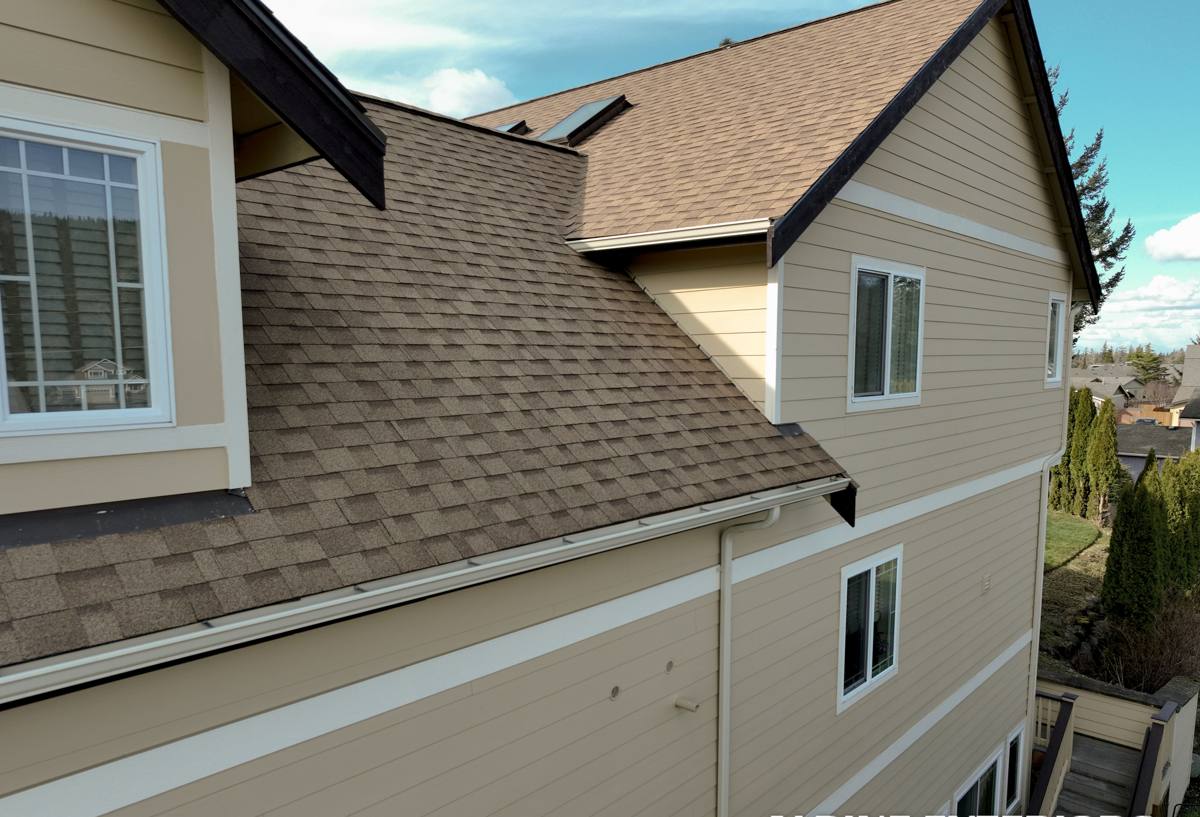
What a Correctly Built Composite Deck Requires
The Substructure Still Matters Most
Underneath every composite deck is a wood-framed structure — joists, beams, posts — and that framing is still just as vulnerable to rot as it would be under any other decking material. The single most common point of failure we see on older decks in this area is moisture wicking into the top of the joists, right under the decking boards, where nobody sees it until the deck starts to feel soft or bounce underfoot. A correct build uses pressure-treated (or approved composite-rated) framing lumber, proper joist spacing for the board and pattern being installed, and self-adhering joist tape over the top of every joist and beam before a single deck board goes down. That tape is inexpensive and it's the difference between framing that lasts and framing that quietly rots for a decade.
Fastening and Expansion Gaps
Composite boards expand and contract with temperature more than most homeowners expect — and our region gives them plenty of range to move through, from near-freezing wet stretches to hot, dry summer afternoons. Hidden fastener systems keep the deck surface free of exposed screw heads and also allow that movement without the boards buckling or pulling loose. Gapping at butt joints and against the house needs to follow the manufacturer's spec, not a "close enough" eyeball measurement, or you'll see problems within a year or two.
Capped vs. Uncapped Composite: What We'll Actually Recommend
Not all composite decking is built the same, and the difference matters more in a climate like ours than it would somewhere dry. "Capped" composite has a polymer shell wrapped around a wood-fiber core, which keeps moisture from soaking into the board itself. Older-style "uncapped" composite is more exposed wood fiber, which can absorb water and is more prone to surface mold and staining over time in a wet climate. We generally steer homeowners toward fully capped boards for anything in Clearview's shadier, wetter lots — the small cost difference upfront is worth it over the life of the deck.
| Material | Moisture Resistance | Moss/Mildew Resistance | Maintenance | Typical Lifespan |
|---|---|---|---|---|
| Capped composite | High — polymer shell sheds water | Good, especially with grooved-free surfaces | Occasional wash | 25-30+ years |
| Uncapped composite | Moderate — core can absorb moisture | Fair — more prone to surface staining | Periodic cleaning, some fade concerns | 15-20 years |
| Pressure-treated wood | Low unless maintained | Poor without regular sealing | Annual stain/seal recommended | 10-15 years before major repair |
Moss and Algae: Clearview's Particular Challenge
Even the best composite decking will grow a film of algae or moss if it sits in shade and moisture long enough without airflow — that's biology, not a product flaw. What changes the outcome is design and board choice. On heavily treed Clearview lots, we lean toward square-edge boards with a hidden fastener groove that's easy to keep clear, rather than deep decorative grooves that trap wet leaf litter and organic debris where moss gets a foothold. We also pay attention to where roof runoff and gutters discharge — water dumping onto one section of deck season after season will grow moss there faster than anywhere else, and it's an easy fix to redirect during the build. Composite decking still needs an occasional wash with plain water and a soft brush; it just never needs re-staining the way wood does.
Ledger Attachment: Where Decking Work Overlaps With Siding
Most of the deck failures we get called out to inspect in this area didn't start with the decking material — they started where the deck ties into the house. The ledger board connection has to be flashed correctly, with metal flashing and a self-adhering membrane integrated behind the house wrap or siding, not just caulked at the surface and hoped for. Get that wrong and you've created a direct path for water to work its way into the rim joist and wall framing behind your siding, which is a far more expensive repair than the deck itself. Because we're a siding contractor first, we treat the ledger connection as part of the home's overall moisture management — not an isolated carpentry detail — which is exactly the mindset a deck-only crew doesn't always bring.
Permits, Footings, and Local Code
Attached decks in Snohomish County generally require a building permit, and that process includes inspections at the footing stage (before you pour) and again before decking goes down over the completed frame. Footings need to be set below the local frost depth, and guardrails and baluster spacing have to meet current code minimums — those numbers can shift with code cycles and local amendments, so we confirm exact requirements with the jurisdiction before finalizing a design rather than relying on last year's numbers. Skipping the permit might save a little time up front, but it can turn into a real problem at resale when an unpermitted structure shows up in a home inspection.
Our Process for a Clearview Deck Project
- On-site assessment — we look at the existing structure (if there is one), the ledger connection, drainage and grading underneath, and how much sun the site actually gets through the day.
- Design and material selection — board type, color, railing style, and pattern, weighing what fits the site's shade and moisture exposure.
- Permitting — we handle the paperwork and any engineering the jurisdiction requires for the design.
- Demo and framing correction — removing failed material and correcting any framing or ledger issues found along the way.
- Moisture detailing — joist tape, ledger flashing, and drainage planning before any decking is installed.
- Decking, railing, and stairs — installed to manufacturer spec with correct gapping and fastening.
- Final walk-through — so you understand what maintenance (if any) the deck actually needs going forward.
What Affects the Cost of a Composite Deck in Clearview
Composite decking costs more upfront than pressure-treated wood, but the total cost of a project depends on more than just the boards.
| Cost Factor | Why It Matters |
|---|---|
| New build vs. resurfacing existing frame | A sound existing frame can sometimes be reused, cutting cost — but only if it passes inspection |
| Square footage and shape | Multi-level decks, curves, or wraparounds add labor and material waste |
| Railing choice | Composite, aluminum, and cable railing all price differently and install differently |
| Board pattern | Diagonal or picture-frame layouts use more material and labor than straight runs |
| Site access | Wooded, sloped, or tight-access lots common in Clearview can add setup and material-handling time |
| Permitting and engineering | Larger or higher decks may need engineered plans, adding to both cost and timeline |
Before You Build: What to Check on an Existing Deck
If you're weighing a full rebuild against a repair, a few warning signs are worth checking before you decide:
- Soft or spongy spots in the decking, especially near the house
- Staining, dark streaks, or peeling on siding directly above the ledger connection
- Heavy moss or algae buildup concentrated in one shaded corner or under a roofline
- Wobble or movement in railing posts when you push on them
- Water that pools on the deck surface instead of draining off
- Visible daylight or gaps where the ledger meets the house
Any one of these can usually be repaired. Several at once, especially near the ledger, usually means it's time to talk about a rebuild rather than another patch.
Why Hire a Crew That Already Works in Clearview
A deck built for a dry, sunny site in another part of the country won't hold up the same way on a shaded, tree-covered lot in Clearview. Knowing which board profiles actually shed moss here, how the local jurisdiction handles deck permits, and how a ledger connection needs to tie into siding to keep water out of the wall — that's local knowledge, built from doing this work in this climate, not something you get from a install manual alone. We'd rather spend an extra ten minutes on flashing details during the build than have a homeowner call us in five years about a soft spot near the back door.
If you're thinking about a new composite deck or want an honest look at what's going on with an existing one, we're happy to come out, take a look, and give you a straightforward estimate — no pressure, no obligation. The form below is the easiest way to get started.