 Snohomish
 Bellingham's Roof-Killing Combination: Salt Air, Rain, and Moss
A roof in Bellingham works harder than a roof almost anywhere inland. Sitting right on the Salish Sea means the air carries fine salt that quietly corrodes exposed fasteners, cheap flashing, and unprotected metal edges year after year. Layer on the driving rain that blows in sideways off the water during fall and winter storms, and any weak seam, gap, or under-built flashing detail becomes a leak point fast. Then there's the moss. Whatcom County's mild, wet winters and shaded, tree-heavy lots create a moss and algae season that can run eight months or longer, and moss that's allowed to establish itself doesn't just look bad — it holds moisture against the roofing material and works its way under shingle tabs and around fasteners.
None of this means a roof here needs to be exotic or over-engineered. It means the basics — the deck, the underlayment, the flashing, the ventilation — have to be done correctly the first time, because this climate finds every shortcut eventually.
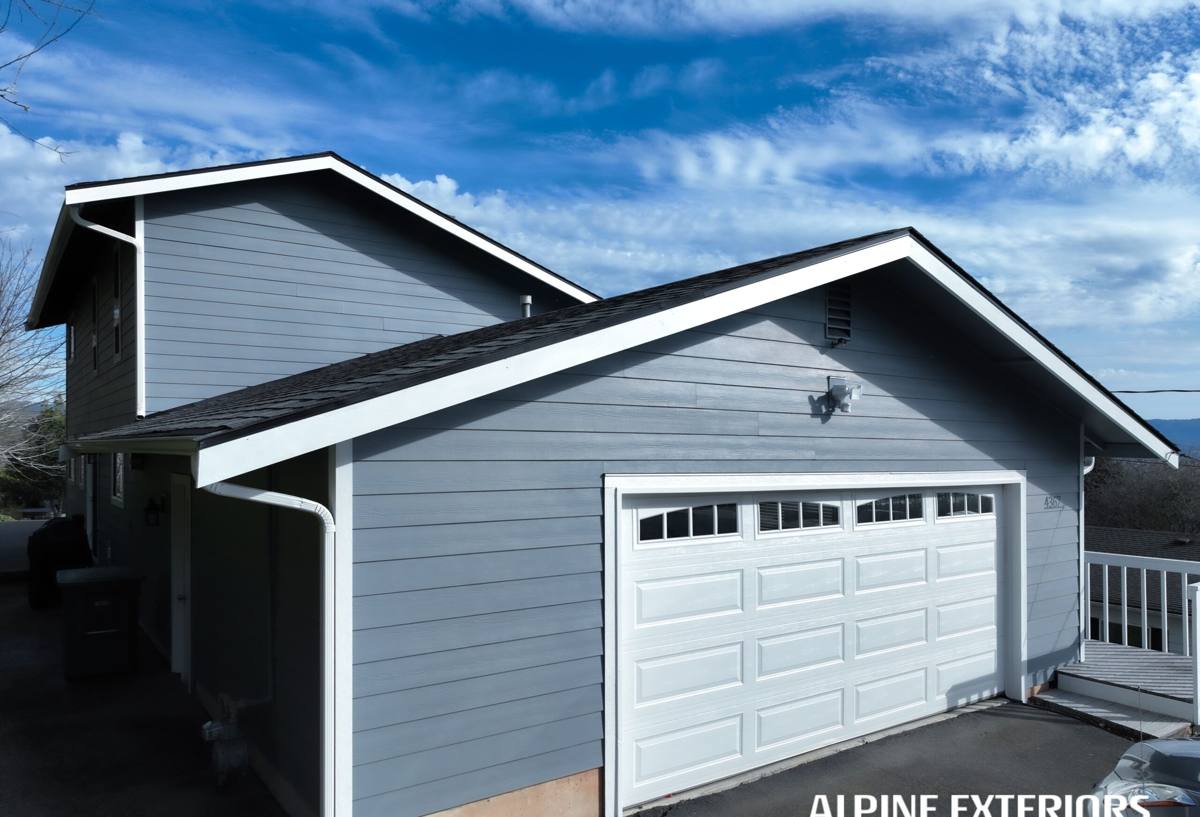
What "Correct" Actually Means for a New Roof Here
It's Rarely the Shingles That Fail First
Most roof failures we get called out for aren't really shingle failures — they're flashing failures, ventilation failures, or deck problems that were never addressed during the last install. A shingle sitting on a solid deck, over proper underlayment, with correctly lapped flashing, can handle years of Whatcom County weather. A shingle installed over a soft deck with reused or undersized flashing will leak regardless of how good the shingle itself is.
The Non-Negotiables
A correct new roof installation for this area includes a full inspection of the decking (not just a glance from the ground), synthetic underlayment across the whole field, self-adhered ice-and-water membrane at eaves, valleys, and around every penetration, new metal flashing everywhere the roof meets a wall, chimney, or skylight, and a ventilation system that actually balances intake and exhaust instead of just adding a ridge vent and calling it done.
Choosing a Roofing Material for This Climate
There's no single "best" roofing material for Bellingham — the right choice depends on your home's style, your budget, and how much long-term maintenance you want to take on. Here's how the common options actually compare once salt air, rain volume, and moss pressure are factored in.
| Material | Moss & Algae Resistance | Salt Air / Coastal Durability | Typical Lifespan Here | Relative Installed Cost |
|---|---|---|---|---|
| Architectural asphalt shingle | Good with algae-resistant (AR) granules; needs zinc/copper strips to stay ahead of moss | Good if flashing and fasteners are corrosion-resistant | 18–25 years in this climate | Lowest to mid |
| Standing-seam metal | Excellent — smooth panels give moss little to grip | Very good with coastal-rated coatings and stainless fasteners | 40–50+ years | Highest |
| Synthetic/composite shingle | Good, similar to asphalt with AR treatment | Good with proper flashing details | 30–40 years | Mid to high |
Whatever material you choose, the moss-resistant granule or coating and the corrosion-resistant hardware matter more in this climate than they would somewhere drier — cutting corners there is where "budget" roofs in Whatcom County tend to age fastest.
Moss and Algae: Designed Out, Not Just Treated
Treating moss after the fact — scraping, chemical washes, pressure washing — is maintenance, not prevention, and pressure washing in particular can strip protective granules and shorten a shingle's service life. Our standard is to design the moss problem out at installation instead: zinc or copper strips near the ridge let rainwater carry trace metal ions down the roof plane, which discourages regrowth for years; algae-resistant shingles handle the airborne algae that causes the dark streaking common on north-facing and shaded slopes; and proper slope, valley design, and drainage keep water moving instead of sitting. Attic ventilation plays a role too — a poorly ventilated attic pushes warm, moist air up against the underside of the deck, which encourages moss and rot from below even when the top side looks fine.
Our New Roof Installation Process
- Inspection and deck assessment — we check the existing deck, flashing, and ventilation before quoting anything, not after tear-off surprises show up.
- Tear-off and disposal — full removal of old roofing material down to the deck, hauled off site.
- Deck repair — any soft, rotted, or delaminated sheathing gets replaced before anything new goes down.
- Underlayment and ice-and-water membrane — synthetic underlayment across the field, self-adhered membrane at eaves, valleys, and penetrations.
- Flashing — new metal flashing at chimneys, skylights, sidewalls, and valleys; no reusing old flashing.
- Field installation — shingles, metal panels, or composite material installed to manufacturer spec and local code.
- Ventilation — balanced intake (soffit) and exhaust (ridge) ventilation confirmed, not assumed.
- Cleanup and magnetic nail sweep — job site and yard cleared, nails swept from the ground and driveway.
- Final walkthrough — we walk the finished roof and the paperwork with you, including warranty documentation.
Ventilation and Moisture: The Half of the Job You Don't See
A roof's ventilation system is invisible from the street, which is exactly why it gets skipped or half-done on cheap installs. In a climate as wet as this one, an attic that can't breathe traps humid air against the underside of the deck. Over a few winters that shows up as premature sheathing rot, mold, and — ironically — more moss growth from below, not just above. Balanced ventilation also helps prevent the ice damming that can happen during the occasional hard cold snap, when warm attic air melts snow that then refreezes at the eaves. Getting the intake-to-exhaust ratio right is a calculation, not a guess, and it's one of the details that separates a roof that lasts to the end of its rated life from one that doesn't.
Permits, Wind Exposure, and Local Code
A full roof replacement in and around Bellingham generally requires a building permit, and inspections are part of the process — that's normal, not a red flag, and any contractor telling you otherwise should raise questions. Because much of Whatcom County sits close to open water, wind exposure can factor into fastening schedules and material selection, particularly on more exposed lots. Snow load in the lowlands here is typically light compared to higher elevations, but code compliance still matters for insurance and resale purposes down the road, regardless of how rarely it snows.
What Drives Roofing Cost in Bellingham
Roofing quotes vary for real reasons. Before you compare bids, it helps to know what's actually driving the number:
- Roof size and pitch — steeper, more complex roofs take longer and need more safety setup
- Number of existing layers — tear-off of two layers costs more than one
- Deck condition — rotted sheathing found during tear-off adds material and labor
- Material choice — asphalt, metal, and composite carry different price points
- Roof complexity — valleys, dormers, chimneys, and skylights all add flashing work
- Access and site conditions — steep lots, mature trees, or tight driveways affect setup time
- Ventilation upgrades — adding proper intake/exhaust where none existed
Be cautious of bids far below the others — in this climate, the gap is almost always in the underlayment, flashing quality, or ventilation, not the shingle itself, and those are exactly the details that determine whether a roof makes it to year 20 or starts leaking at year 8.
Signs Your Roof Needs Replacement, Not Another Repair
- Granule loss or bald patches showing the mat underneath
- Soft or spongy spots when walking the roof, or sagging visible from the ground
- Daylight visible through the roof boards from inside the attic
- Moss returning heavily within a season or two of cleaning
- Curling, cupping, or cracked shingles across multiple slopes
- Leaks showing up in more than one location, especially after storms
- Roof age at or near the end of its rated life for this climate
One or two of these can sometimes be handled with a targeted repair. Several at once usually means the roof system as a whole is done, and patching it further is spending money to delay the inevitable.
Why a Crew That Already Works Bellingham Matters
Roofing crews who work this area regularly know which neighborhoods deal with heavier tree cover and faster moss return, how local wind patterns off the water affect fastening and edge details, and what inspectors here expect to see. That familiarity shows up in fewer surprises during the job and fewer callbacks after it. It also matters for warranty service — if a flashing detail ever needs a look years down the road, you want a crew that's still working in Whatcom County and can get to your roof quickly, not one that only passed through once.
If you're weighing a new roof for your home, we're glad to come take a look and give you a straight, no-pressure estimate — no inflated urgency, just an honest read on what your roof actually needs.