 Snohomish
 Building Decks That Actually Hold Up in Arlington's Climate
Arlington sits close enough to the water and low enough in the valley that its decks take a beating most homeowners don't fully appreciate until a board starts to cup or a ledger board starts to stain. Between the driving rain off Puget Sound, the salt-tinged air moving up the valley, and a moss season that can run from October clear into May, an outdoor deck here is doing real work every single day of the year. A deck built to a generic national spec — the kind you'd see in a builder's catalog for a dry climate — will look fine for a season or two and then start showing problems: soft spots near the house, black streaking on the underside, fasteners weeping rust, and joints that never fully dry out between storms.
We build decks specifically for this part of Snohomish County. That means thinking about drainage before we think about railing style, choosing fastening hardware that won't corrode in salt-laden air, and detailing the ledger connection — the single most failure-prone spot on any deck — so water can't sit against your house framing. None of this is exotic. It's just discipline, and it's the difference between a deck that needs real repair work in year six and one that's still tight and quiet in year twenty.
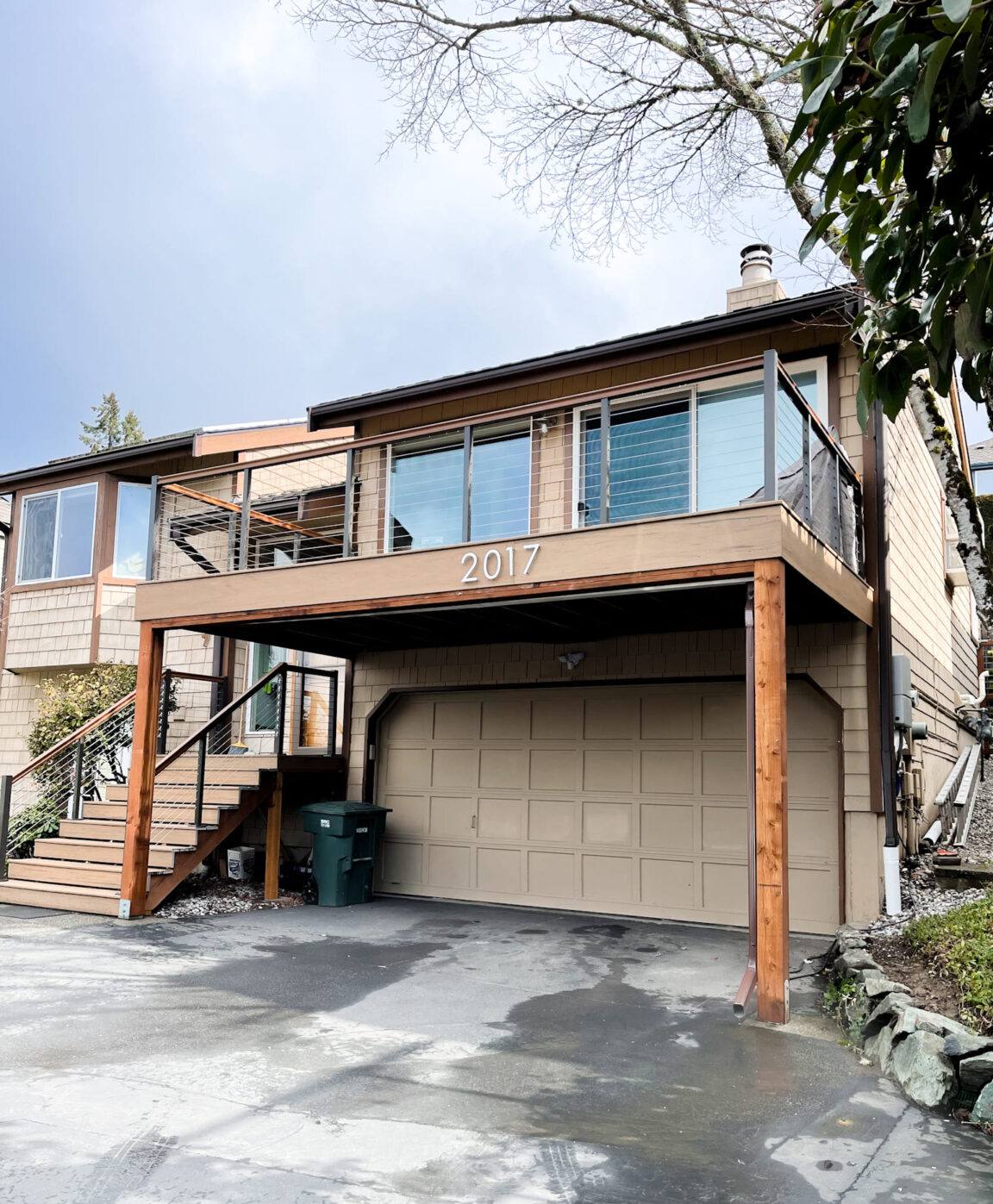
What Arlington's Weather Actually Does to a Deck
Driving Rain and Standing Moisture
Rain here rarely falls straight down. Wind off the Sound and up the valley pushes it sideways, which means it gets up under railings, into end grain, and behind fascia boards that a calmer climate wouldn't have to worry about. Decks that don't shed water fast enough stay damp for days after a storm passes, and that prolonged dampness is what actually causes rot — not the rain event itself.
Salt Air and Metal Fasteners
Arlington isn't oceanfront, but the marine air that moves through the valley still carries enough salt to accelerate corrosion on the wrong grade of hardware. Cheap or mismatched fasteners will bleed rust streaks down your decking within a couple of years and weaken over time as the metal degrades. This is one of those things that's invisible on installation day and very visible five years later.
Moss, Algae, and Shade
Long moss season means anything that stays shaded and damp — north-facing decks, areas under mature trees, spots tucked against the house — will grow a slick green film if the surface can't dry out between rains. That's a safety issue as much as a cosmetic one, and it's largely preventable with the right board spacing, drainage, and surface choice.
What a Correctly Built Deck Requires Here
A deck that's going to hold up to Snohomish County weather isn't about buying more expensive materials across the board — it's about getting a handful of details right that a rushed or out-of-town crew tends to skip.
- Proper ledger flashing: The ledger board (where the deck attaches to your house) needs correctly layered flashing that directs water out and away from the house sheathing, not just a bead of caulk and a prayer.
- Corrosion-resistant fasteners and hardware: Hot-dip galvanized or stainless hardware rated for treated lumber and coastal-influenced air, matched correctly to the metal in your joist hangers so you're not creating a corrosion reaction between dissimilar metals.
- Real drainage slope: A slight pitch away from the house so water sheets off instead of pooling against ledger or posts.
- Ventilated framing: Enough airflow underneath the deck structure that joists and beams can actually dry out between rain events instead of staying perpetually damp.
- Board spacing suited to our rainfall: Gaps sized to let water drain quickly and reduce the damp, shaded conditions moss needs to take hold.
- Post bases off the ground: Posts set on proper post bases rather than buried in or resting directly on wet soil or concrete, which pulls moisture up into the wood.
Decking Material Options for This Climate
There's no single "right" decking material for Arlington — it depends on your budget, how much maintenance you want to take on, and how the deck will be used. Here's how the common options stack up against our specific rain-and-moss conditions.
| Material | How It Handles Our Climate | Maintenance | General Cost Position |
|---|---|---|---|
| Pressure-treated lumber | Good rot resistance when properly sealed; needs consistent upkeep to stay ahead of moss and graying | Annual cleaning and re-sealing recommended | Lower upfront cost |
| Cedar | Naturally moisture- and insect-resistant; still needs sealing to prevent moss growth and UV graying | Periodic cleaning and refinishing | Mid-range |
| Composite decking | Doesn't absorb water or rot; some early-generation composites held surface moss more than solid wood, so board selection matters | Occasional washing, no sealing or staining | Higher upfront, lower long-term labor |
| PVC/synthetic decking | Fully moisture-resistant surface; performs well in wet, shaded conditions | Low — mostly rinsing | Highest upfront cost |
Whichever material you choose, the framing underneath matters more than the surface material for long-term durability. We've seen expensive composite decking installed over poorly flashed, poorly ventilated framing fail structurally while the boards on top still looked fine.
Our Deck Building Process
1. On-Site Assessment
We walk the property, look at drainage patterns, sun exposure, existing structure if you're replacing a deck, and how the space connects to your house. Ledger location and house framing condition get a close look here, since that's where most long-term problems start.
2. Design and Material Selection
We talk through decking material, railing style, and layout based on how you'll actually use the space — entertaining, grilling, a quiet spot off a bedroom — and walk through the honest maintenance trade-offs of each material option rather than just upselling the priciest one.
3. Permitting
Most deck projects in Snohomish County require a permit, especially anything attached to the house or elevated more than a couple feet. We handle the permitting process so you're not stuck decoding county requirements yourself.
4. Framing and Flashing
This is where the durability of your deck actually gets decided. Correct ledger flashing, properly sized and spaced joists, post bases set correctly, and fastener selection matched to our climate.
5. Decking, Railing, and Finish Details
Surface material goes down with attention to spacing and drainage, followed by railing installation and any stairs, skirting, or trim.
6. Final Walkthrough
We walk the finished deck with you, cover basic maintenance expectations for your chosen material, and make sure everything meets what was discussed at the start.
Cost Factors Worth Understanding Before You Budget
Deck pricing varies a lot based on a handful of factors, and it's worth understanding what actually drives the number before you start comparing quotes.
- Size and shape: Multi-level decks, curves, and wraparound layouts cost more in labor than a simple rectangle.
- Height off the ground: Taller decks need more substantial framing, railing (often required by code above a certain height), and sometimes stairs.
- Material choice: Pressure-treated framing with composite or PVC decking on top will cost more than an all-wood build, but often costs less over ten years in maintenance labor and materials.
- Site access: Decks on slopes, over existing landscaping, or in tight side-yard access add labor time.
- Demolition: Removing an old deck, especially one with rot or structural issues, adds cost but is often necessary to build on a sound foundation.
- Permitting and inspection: County permit fees and required inspections are a fixed cost of doing the job correctly.
Signs Your Existing Deck Needs Attention
If you already have a deck and you're not sure whether it needs repair or full replacement, a few warning signs are worth checking for before the wet season sets in.
- Soft or spongy spots when you walk across the boards, especially near the house
- Visible gaps or staining around the ledger board where it meets the house
- Rust streaking coming from screw or nail heads
- Persistent green or black film that returns quickly after cleaning
- Wobbly railings or posts that shift under pressure
- Boards that stay damp long after the rest of the yard has dried
Any one of these on its own might just mean a repair. Several together, especially near the ledger or support posts, usually mean it's time for a real structural evaluation before someone gets hurt.
Why Hiring a Crew That Knows Arlington Matters
A deck built by a crew unfamiliar with this part of Snohomish County will often look fine on the day it's finished — the problems show up later, once a full wet season has had a chance to find every shortcut. Crews who work here regularly already know which fastener grades hold up to our air, how to detail flashing for our rain patterns, and where moss tends to take hold on a given lot orientation. That local repetition is what keeps a deck performing the way it should, year after year, instead of needing early repairs that a properly built deck shouldn't need for decades.
If you're planning a new deck or want an honest look at whether your current one needs repair or replacement, we're happy to come take a look. Fill out the form below for a free, no-pressure estimate — we'll walk the site with you and tell you straight what we see.