 Snohomish
 Siding Replacement in Lynden Isn't a Cosmetic Job
Homeowners in Lynden often start looking into siding replacement because something looks bad — a faded color, a warped board, a patch of green creeping up the north wall. Those are real problems, but they're symptoms. The siding on your home is a weather system, not a wall covering. Its job is to shed water, resist wind-driven rain, keep moisture out of your wall cavity, and hold up through decades of freeze-thaw cycles and long wet stretches without trapping moisture behind it. When siding starts failing cosmetically, it's usually because it's already failing functionally, and the clock is running on hidden damage to sheathing, framing, and insulation you can't see from the driveway.
That's why we treat siding replacement as a system-level project, not a re-skinning. Get it right and you get 30-50 years of low-maintenance protection. Get it wrong — wrong materials, wrong flashing details, wrong fastening — and you're looking at a repeat job in 10-15 years, often with rot repair added to the bill.
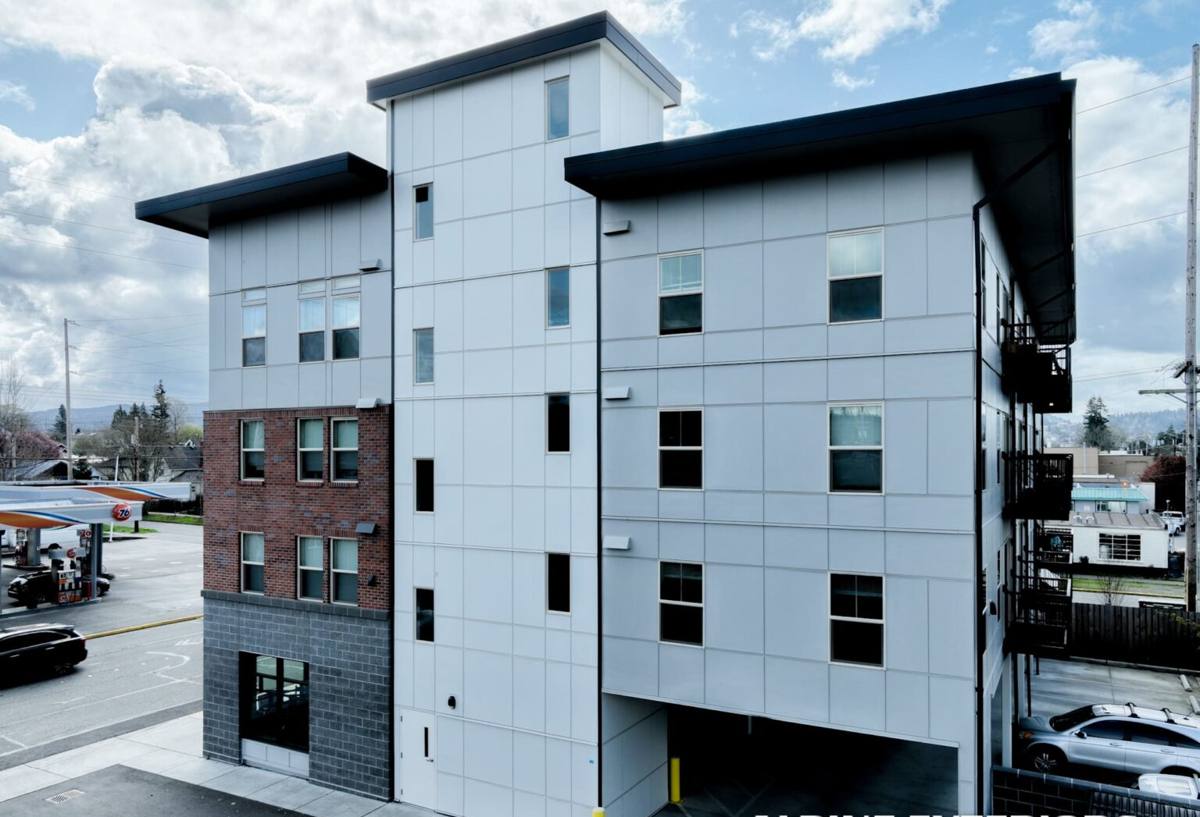
What Whatcom County's Climate Actually Does to Siding
Homes around Lynden deal with a specific combination of stresses that not every siding product handles equally well:
Salt Air
Proximity to the Salish Sea and Puget Sound means airborne salt is a real factor for a lot of homes in this region, not just waterfront properties. Salt-laden moisture accelerates corrosion of fasteners and metal flashing, and it degrades paint and finish coatings faster than inland climates. Any siding product used here needs a finish system built to hold color and integrity under that exposure, and the fasteners and flashing behind it need to be corrosion-resistant, not just standard-grade.
Driving Rain
Whatcom County doesn't just get rain — it gets sideways rain, pushed by wind off the water. Driving rain finds every gap in a siding installation: unsealed butt joints, missing kick-out flashing, siding installed too close to grade, or panels nailed without proper clearance. A siding product can be excellent on paper and still fail here if the installation doesn't account for wind-driven moisture at every transition, corner, and penetration.
Long Moss Season
The mild, wet stretch that runs a good chunk of the year here means moss, algae, and mildew have a long runway to establish themselves on any surface that stays damp — north-facing walls, shaded elevations, areas under overhangs that don't get sun exposure. Some siding materials are far more hospitable to moss growth than others, and once moss takes hold it holds moisture against the surface, which compounds the problem instead of just being unsightly.
Signs a Lynden Home Needs Siding Replacement, Not Just Repair
- Boards that are soft, spongy, or crumbling when pressed — a sign of moisture intrusion into the material itself
- Persistent moss or algae growth that returns within weeks of cleaning
- Visible warping, cupping, or buckling panels, especially on north or west-facing walls
- Paint that won't hold — recurring peeling or blistering within a year or two of repainting
- Gaps opening up at butt joints, corners, or around windows and doors
- Rising energy bills with no other explanation, suggesting compromised insulation behind the siding
- Interior signs — musty smell, staining, or soft drywall near exterior walls — that point to moisture getting past the siding entirely
One or two of these on their own might mean a repair. Several together, or any sign of soft/rotting material, usually means the wall assembly has been compromised and a full replacement is the honest recommendation.
What a Correct Siding Replacement Job Actually Involves
A siding replacement done right is a sequence of steps, and skipping or rushing any one of them is where most failures come from years later.
1. Tear-Off and Inspection
Old siding comes off completely so the sheathing underneath can be inspected. This is the point where hidden rot, insect damage, or failed old flashing gets found and dealt with — not covered over. Any compromised sheathing gets replaced before anything new goes up.
2. Weather-Resistive Barrier
A proper drainage plane and weather-resistive barrier go over the sheathing, lapped correctly from bottom to top so water is directed out and down, never into a seam. In a driving-rain climate like this one, this layer matters as much as the siding itself.
3. Flashing at Every Penetration
Windows, doors, vents, hose bibs, light fixtures — every penetration through the wall is a place water can get in if it isn't flashed correctly. Kick-out flashing where roof lines meet walls is one of the most commonly skipped details in lower-quality installs, and it's one of the most common sources of hidden rot.
4. Correct Fastening and Clearances
Fiber cement siding has manufacturer-specified fastener patterns, nail penetration depth, and minimum clearances from grade, roofing, and decking. These aren't suggestions — they're what the product warranty is conditioned on, and what keeps the siding performing through wind and moisture cycles for decades.
5. Finish and Trim Details
Corners, trim boards, and caulking at joints all need to be done to spec, with materials and sealants rated for the same lifespan as the siding itself. A beautiful install with the wrong caulk at the joints is still a callback waiting to happen.
Why We Install Only James Hardie Fiber Cement
We get asked why we don't offer vinyl, LP SmartSide, or cedar as options. The honest answer is that we standardized on one product because we were tired of doing repeat work on materials that couldn't hold up to this climate long-term.
Non-Combustible and Dimensionally Stable
James Hardie fiber cement is non-combustible, which matters for insurance and peace of mind, and it doesn't expand and contract with moisture and temperature the way wood-based products do. That stability is what keeps joints tight and paint lines clean over time instead of opening gaps that driving rain can exploit.
ColorPlus Factory Finish
Hardie's ColorPlus finish is baked on in a factory-controlled process, which gives it better fade and chip resistance than field-applied paint — a real advantage in a salt-air environment where site-painted finishes tend to weather faster. It also means less recoating over the life of the siding.
Climate-Engineered HZ Product Lines
Hardie makes HZ5 and HZ10 formulations engineered for different climate zones, addressing freeze-thaw performance and moisture behavior specific to regions like the Pacific Northwest. That's a level of climate-specific engineering that generic fiber cement or wood-composite products don't offer.
Strong, Transferable Warranty
Hardie backs its siding with a long non-prorated warranty on the product and the ColorPlus finish, and it's transferable to a new owner if the home sells — a real asset when it's time to list the house.
We won't install LP SmartSide, vinyl, Cemplank, Allura, primed spruce, or cedar. Each of those has situations where it makes sense for someone, but between maintenance burden, moisture sensitivity, installation tolerances, or shorter effective lifespans in this climate, none of them met the standard we wanted to put our name on.
Material Comparison for a Wet, Salt-Air Climate
| Factor | James Hardie Fiber Cement | Vinyl | Wood / LP-Style Composite |
|---|---|---|---|
| Moisture resistance | Engineered for wet climates (HZ lines) | Doesn't absorb water, but seams and fasteners are failure points | Vulnerable to swelling, rot at cut edges and joints |
| Salt air / coastal exposure | Factory finish holds up well | Can chalk and fade faster near salt air | Finish and substrate both degrade faster |
| Moss/algae resistance | Hard, dense surface resists growth better | Can host moss/algae in seams and laps | Porous surface is more hospitable to growth |
| Fire resistance | Non-combustible | Combustible, can melt/deform in heat | Combustible |
| Expected lifespan (installed to spec) | 30-50+ years | 20-30 years | 15-25 years, climate-dependent |
| Maintenance | Occasional wash, minimal recoating | Low maintenance but limited repair options | Regular painting/sealing required |
Our Process for a Lynden Siding Replacement
- On-site assessment — we walk the exterior, check for hidden moisture and sheathing condition, and note problem areas like shaded walls or roof-to-wall transitions
- Written estimate — scope, product line, color, and timeline laid out clearly before any work starts
- Tear-off and sheathing repair — old material removed, any damaged sheathing replaced
- Weather barrier and flashing installation — done to manufacturer and code specifications, not shortcuts
- Hardie siding installation — correct fastening, clearances, and joint treatment throughout
- Final walkthrough — we go over the finished job with you before calling it done
Cost Factors for Siding Replacement
Every home is different, but the main variables that move the price on a Lynden siding replacement are consistent from job to job:
| Factor | Why It Matters |
|---|---|
| Home size and wall complexity | More square footage and more corners, gables, and trim details mean more labor |
| Sheathing condition | Hidden rot found during tear-off adds repair scope before new siding goes up |
| Siding profile and accessories | Lap width, trim style, and corner details affect material cost |
| Access and site conditions | Steep lots, tight setbacks, or multi-story walls affect labor and equipment needs |
| Existing flashing and moisture barrier work | Full replacement of these details adds time but is not optional for a correct install |
We give a written, itemized estimate before any work starts so there are no surprises once tear-off begins.
Why Hire a Crew That Already Works in Lynden
Siding installation details that matter in a dry climate don't always matter here, and vice versa. A crew that regularly works Whatcom County homes already knows where driving rain tends to find weak spots, which elevations need extra attention for moss and moisture, and how salt air affects fastener and finish choices over time. That local pattern recognition shows up in the details — where kick-out flashing gets added even when it's not strictly required, how clearances are handled near grade on a wet lot, which color finishes actually hold up on a shaded north wall in this area.
It also matters for accountability. A contractor with an ongoing presence in the area is easier to reach if a question comes up five years down the road, and has a real reputation on the line with every job, not just a one-time transaction.
Ready for a Straight Answer on Your Siding?
If your Lynden home is showing signs of siding wear — moss that won't quit, boards that feel soft, paint that won't hold — we'll come take a look and give you a straight, no-pressure assessment of what's going on and what it would take to fix it right. Use the form below to request a free estimate.