 Snohomish
 Why Ferndale Homes Need Siding Built for This Climate
Ferndale sits close enough to the water and the marine air pattern that homes here take a different kind of beating than siding fifty miles inland. Salt-laden air accelerates corrosion on fasteners and trim metal. Driving rain, pushed sideways by wind off the Strait and the bay, finds every gap in a siding system that wasn't detailed correctly. And the long, damp shoulder seasons — the stretch from October through May when surfaces rarely fully dry out — turn north-facing walls and shaded siding into moss and algae magnets. Any siding product can look fine in a showroom. What matters in Ferndale is how it performs after its fifth or tenth wet season in a row.
We install James Hardie fiber cement exclusively, and this page is about what that means specifically for a home in this part of Whatcom County — not a generic pitch, but the actual considerations that come up when we're bidding and installing jobs here.
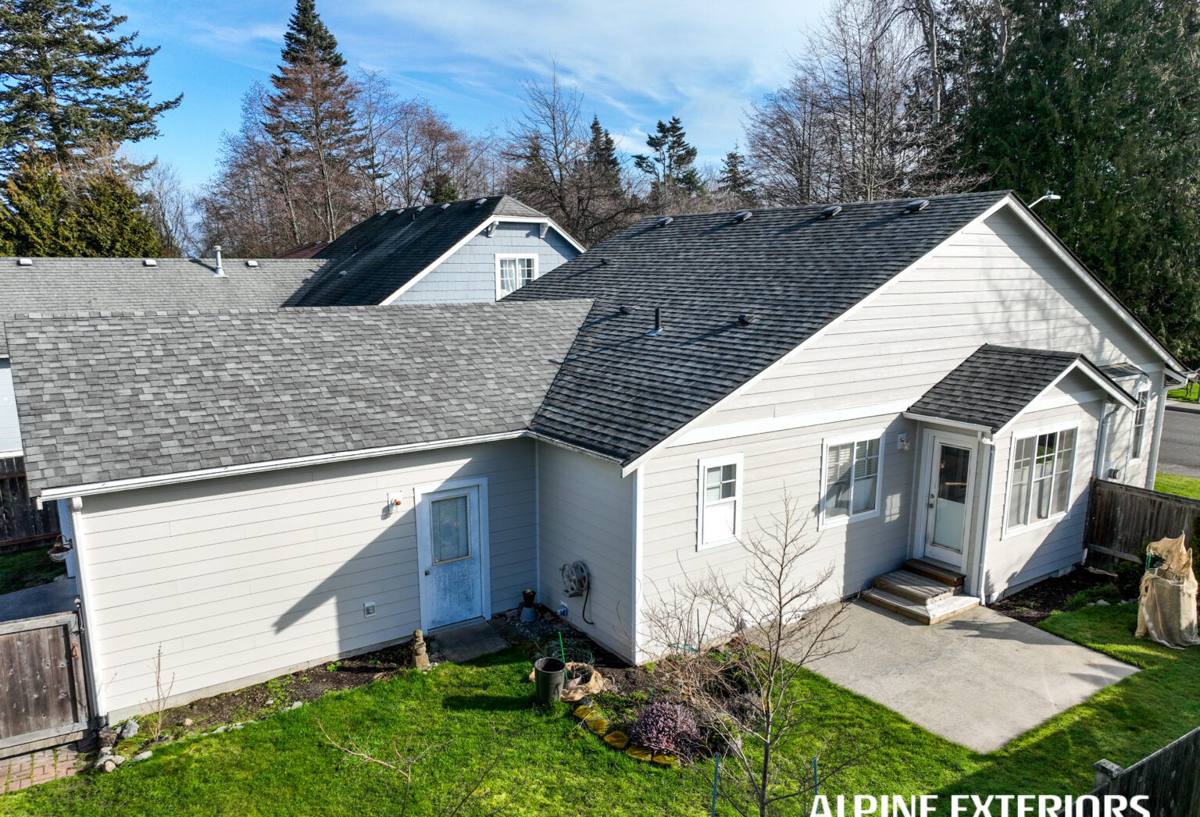
What Salt Air and Moisture Actually Do to Siding
Salt Air
Airborne salt is corrosive to exposed metal — nail heads, flashing, trim fasteners — and it accelerates the breakdown of finishes that aren't engineered to resist it. Over years, this shows up as rust streaking, pitted fasteners, and premature fading or chalking on lower-grade coatings. It's a slow process, which is exactly why it gets underestimated: nobody notices salt air damage after one winter. They notice it in year seven or eight, when repairs start piling up.
Driving Rain and Wind-Driven Moisture
Rain that falls straight down is manageable for almost any siding. Rain that gets pushed horizontally by wind is a different problem — it tests every seam, every piece of flashing, every inch of caulk joint. A siding system with weak water-shedding details (undersized laps, poorly sealed penetrations, trim that traps water instead of directing it away) will let moisture behind the cladding. Once that happens, the sheathing and framing behind the siding are at risk, and that's a far more expensive repair than the siding itself.
Moss and Algae
Ferndale's long wet season means siding stays damp for extended stretches, especially on shaded and north-facing elevations. Moss and algae need moisture and organic material to take hold. Porous or textured surfaces give them more to grip onto; smooth, factory-sealed surfaces give them less. This is one of the most visible differences homeowners notice between a well-chosen siding product and one that wasn't suited to this climate — some sidings go green within a few seasons no matter how often you wash them.
Why James Hardie Fiber Cement Fits This Environment
We didn't choose to install only James Hardie by accident. Fiber cement is dimensionally stable — it doesn't expand and contract with moisture the way wood-based products do, which matters when a wall is cycling between soaked and dry for months at a time. It's non-combustible, which is a real consideration anywhere in Western Washington as wildfire smoke seasons have become more common even on the wet side of the state. And Hardie's ColorPlus factory finish is baked on and warrantied against fading and peeling in a way field-applied paint isn't — which matters for a surface that's going to sit in salt air and UV for decades.
Hardie also makes climate-specific product lines. Its HZ5 formulation is engineered for regions with more freeze-thaw cycling, while HZ10 is built for the wetter, more humid coastal and Pacific Northwest conditions we actually have here. Specifying the right HZ line for Ferndale, rather than whatever a supplier happens to have on the truck, is part of doing the job correctly.
What a Correct Installation Involves
The siding material is only part of the equation. A huge share of siding failures we get called out to inspect aren't material failures — they're installation failures. In a climate like Ferndale's, installation details are what actually keep water out.
- Correct weather-resistive barrier installed and lapped properly behind the siding, not just stapled up as an afterthought
- Rainscreen or drainage gap where conditions call for it, so any moisture that does get behind the cladding can drain and dry instead of sitting against the sheathing
- Proper flashing at every window, door, and roof-to-wall intersection — the majority of moisture intrusion happens at these transitions, not through the flat field of siding
- Correct nailing pattern and fastener spacing per Hardie's installation specifications, using fasteners rated for coastal exposure
- Manufacturer-specified gaps at butt joints and trim, caulked with a product rated for the application — not painted-over gaps that look sealed but aren't
- Bottom clearance from grade, decks, and roof lines held to spec so the siding isn't wicking up moisture from below
Any one of these done wrong can undermine an otherwise good material. This is why we treat installation quality, not just product selection, as the actual deliverable.
Our Process for a Ferndale Siding Project
1. On-Site Assessment
We walk the exterior, check current siding condition, look at trouble spots (north walls, areas near grade, anywhere trim meets siding), and talk through what's actually driving the need for new siding — cosmetic, functional, or both.
2. Product and Line Selection
We spec the Hardie product and HZ line, panel or lap style, and ColorPlus finish that fits the home and this climate, and walk through the options with you rather than defaulting to whatever's cheapest to source.
3. Detailed Estimate
You get a written scope covering tear-off (if applicable), water barrier and flashing details, fastening approach, and trim work — not just a square-footage number.
4. Installation
Crew follows Hardie's published installation guidelines to the letter, since that's also what keeps the manufacturer's warranty intact. We don't cut corners on flashing or fastening to save time.
5. Final Walkthrough
We go over the finished job with you before calling it done, including care and cleaning guidance specific to a coastal, moss-prone environment.
Cost Factors for a Ferndale Siding Job
Every home is different, but these are the variables that actually move a siding estimate up or down. We won't quote a number without seeing the house, but this gives you a sense of what to expect to discuss.
| Factor | Why It Matters |
|---|---|
| Existing siding removal | Tear-off, disposal, and any sheathing repair add labor and material cost beyond the new siding itself |
| Home size and wall complexity | More corners, dormers, and roof-wall intersections mean more flashing and trim detail work |
| Siding profile (lap vs. panel, exposure width) | Different profiles have different material and labor costs per square foot |
| Trim and accessory scope | Corner boards, window trim, and fascia work are often priced separately from the field siding |
| Substrate condition | Rot or water damage found once old siding comes off can add repair scope that wasn't visible beforehand |
| Access and site conditions | Multi-story sections, tight lot lines, or landscaping obstacles affect staging and labor time |
Signs Ferndale Homeowners Should Watch For
You don't need to wait for a full replacement to be obviously necessary. Catching problems early usually means a smaller repair instead of a bigger one.
- Persistent moss or algae growth that comes back within weeks of cleaning
- Soft spots or visible warping, especially near the bottom courses or around windows
- Paint that's peeling or bubbling rather than just fading — often a sign moisture is trapped underneath
- Rust streaking below nail heads or trim fasteners
- Visible gaps at seams, corners, or trim joints
- Musty smell or discoloration on interior walls that share an exterior wall with problem siding
Why a Crew That Already Works Ferndale Matters
Installation quality is the single biggest factor in how siding performs over time, and installation quality depends on understanding the conditions it has to survive. A crew that's worked coastal Whatcom County jobs knows to pay extra attention to flashing on north and west elevations, knows which details tend to fail first in salt air, and isn't guessing at how much clearance to leave at grade in a climate that stays wet for most of the year. That local pattern recognition is what turns a correct installation into a durable one.
If your Ferndale home needs new siding — or you're just trying to figure out whether what you have is holding up the way it should — we're happy to take a look and give you a straight answer. Reach out for a free, no-pressure estimate using the form below.